Bi Rads
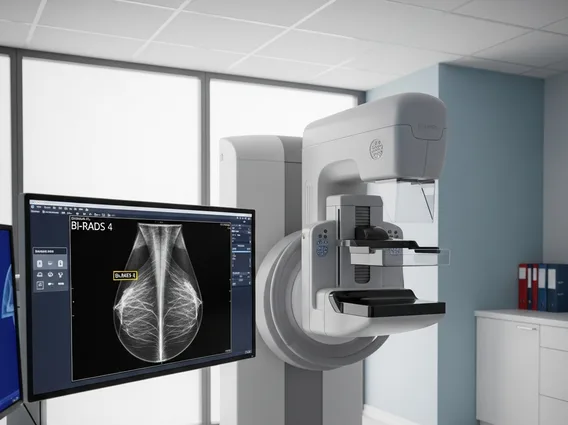
The Breast Imaging Reporting and Data System, commonly known as BI-RADS, is a standardized quality assurance tool used by radiologists to interpret and report mammography, ultrasound, and MRI findings of the breast. It provides a common language for describing imaging findings, facilitating clear communication among healthcare providers and guiding patient management.
Key Takeaways
- BI-RADS is a standardized system for reporting breast imaging results, developed by the American College of Radiology (ACR).
- It assigns a numerical category from 0 to 6, indicating the level of suspicion for malignancy.
- Each category provides a clear recommendation for follow-up or further action.
- Higher BI-RADS categories (e.g., 4 and 5) suggest an increased likelihood of breast cancer.
- The system helps standardize communication, reduce ambiguity, and guide appropriate patient care.
What is BI-RADS?
BI-RADS, an acronym for Breast Imaging Reporting and Data System, is a comprehensive, standardized system created by the American College of Radiology (ACR). Its primary purpose is to provide a uniform way for radiologists to describe breast imaging findings, assess the likelihood of malignancy, and recommend appropriate follow-up. This system applies to mammography, breast ultrasound, and breast MRI, ensuring consistency in reporting across different imaging modalities and institutions. By standardizing terminology and reporting, BI-RADS aims to improve patient care by reducing confusion, facilitating research, and enabling effective quality control in breast imaging.
Understanding BI-RADS Categories and Scores
The BI-RADS system assigns a numerical category, or score, ranging from 0 to 6, to each breast imaging report. Each category has a specific meaning and a corresponding recommendation for patient management. Understanding the **BI-RADS score meaning** is crucial for both patients and healthcare providers, as it directly influences the next steps in care. These categories are designed to reflect the level of suspicion for breast cancer, from benign findings to confirmed malignancy.
Below is a table summarizing the **BI-RADS categories explained**, their typical findings, and the recommended course of action:
| BI-RADS Category | Finding Description | Recommendation |
|---|---|---|
| 0: Incomplete | Additional imaging evaluation and/or prior mammograms are needed for comparison. | Requires further imaging (e.g., additional views, ultrasound) or comparison with previous studies. |
| 1: Negative | Breasts are symmetrical with no masses, distortions, or suspicious calcifications. | Routine annual screening. |
| 2: Benign Finding | Benign (non-cancerous) findings are present (e.g., fibroadenoma, benign calcifications), but no signs of malignancy. | Routine annual screening. |
| 3: Probably Benign | A finding has a very high probability of being benign (typically <2% chance of malignancy). | Short-interval follow-up (e.g., 6 months) to confirm stability. |
| 4: Suspicious Abnormality | Abnormality that does not definitively look like cancer but has a definite probability of being malignant (2-95% chance). | Biopsy should be considered. Subdivided into 4A (low suspicion), 4B (intermediate suspicion), and 4C (moderate concern). |
| 5: Highly Suggestive of Malignancy | Finding has a very high probability of being malignant (>95% chance). | Appropriate action to prove malignancy (biopsy and treatment) is strongly recommended. |
| 6: Known Biopsy-Proven Malignancy | Malignancy has been proven by biopsy prior to definitive treatment. | Surgical excision or other definitive treatment is indicated. |
BI-RADS and Breast Cancer Risk Assessment
The BI-RADS classification plays a critical role in **BI-RADS breast cancer risk** assessment, guiding clinicians in determining the likelihood of cancer and planning subsequent patient care. Categories 1 and 2 indicate a very low risk of malignancy, essentially confirming that no suspicious findings are present or that any findings are definitively benign. For these categories, routine screening is typically recommended.
Category 3, “Probably Benign,” signifies a finding with a very low but non-zero risk of malignancy, generally less than 2%. This category often warrants a short-interval follow-up, such as a repeat mammogram or ultrasound in six months, to monitor for any changes. If the finding remains stable over time, it is usually downgraded to a BI-RADS 2. Conversely, categories 4 and 5 indicate an increasing probability of malignancy, necessitating further diagnostic work-up, most often a biopsy. For instance, Category 5 findings have a greater than 95% chance of being cancerous, making biopsy and subsequent treatment urgent. By standardizing this risk assessment, BI-RADS helps ensure that patients receive timely and appropriate care based on their individual imaging findings, thereby optimizing outcomes in breast cancer detection and management.