
Barium Sulfate
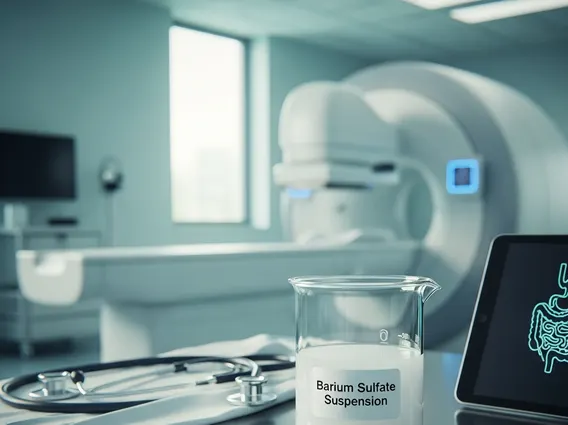
Barium Sulfate is a naturally occurring inorganic compound primarily recognized for its critical role as a radiocontrast agent in medical imaging. This compound allows healthcare professionals to visualize the gastrointestinal tract and other internal structures during X-ray examinations.
Key Takeaways
- Barium Sulfate is a chemical compound used as a contrast agent in medical imaging.
- It is insoluble in water, making it safe for oral or rectal administration for diagnostic purposes.
- Primary uses include enhancing visibility of the gastrointestinal tract in X-rays and CT scans.
- Its unique chemical properties allow it to absorb X-rays, creating clear images of soft tissues.
- Despite containing barium, its insolubility prevents systemic absorption, ensuring patient safety.
What is Barium Sulfate?
Barium Sulfate is an inorganic chemical compound with the formula BaSO₄. In the medical field, it is widely known as a radiocontrast agent, a substance used to enhance the visibility of internal structures during diagnostic imaging procedures. When administered, Barium Sulfate coats the lining of organs such as the esophagus, stomach, and intestines, making them opaque to X-rays. This allows radiologists to detect abnormalities, blockages, or other conditions that would otherwise be invisible on standard X-ray images.
The compound is typically prepared as a suspension that patients drink or receive rectally, depending on the area of the body being examined. Its effectiveness stems from barium’s high atomic number, which causes it to absorb X-ray photons more readily than surrounding soft tissues. This differential absorption creates a clear contrast on the imaging film or digital display, providing valuable diagnostic information without being absorbed into the bloodstream.
Barium Sulfate Uses and Medical Applications
The primary **barium sulfate medical applications** revolve around its use as a contrast medium for imaging the gastrointestinal (GI) tract. It is indispensable for diagnosing a range of conditions affecting the digestive system. The specific method of administration depends on the part of the GI tract being investigated.
Common diagnostic procedures utilizing Barium Sulfate include:
- Barium Swallow (Esophagram): Used to examine the esophagus for issues like strictures, tumors, or swallowing difficulties.
- Upper GI Series: Involves drinking Barium Sulfate to visualize the esophagus, stomach, and duodenum, helping to identify ulcers, polyps, or reflux disease.
- Small Bowel Follow-Through: Tracks the passage of Barium Sulfate through the small intestine to detect conditions such as Crohn’s disease, tumors, or malabsorption issues.
- Barium Enema: Administered rectally to coat the large intestine (colon and rectum) for the detection of polyps, diverticulitis, or inflammatory bowel disease.
These studies provide detailed anatomical and functional information, aiding clinicians in making accurate diagnoses and formulating appropriate treatment plans. The ability of Barium Sulfate to provide clear visualization of the GI tract makes it a cornerstone in gastroenterological diagnostics.
Barium Sulfate: Chemical Properties and Compound Information
Understanding the **barium sulfate chemical compound information** is crucial to appreciating its medical utility. Barium Sulfate (BaSO₄) is a white, crystalline solid that is virtually insoluble in water and other common solvents. This insolubility is a critical safety feature; although barium ions are toxic if absorbed into the bloodstream, the sulfate compound’s extreme insolubility prevents significant systemic absorption when taken orally or rectally. This makes it safe for internal diagnostic use, as it passes through the digestive system and is excreted from the body without being absorbed.
The key **barium sulfate properties and uses** are directly linked to its chemical structure and physical characteristics. Its high density and ability to absorb X-rays efficiently are due to the heavy barium atom. When suspended in water, it forms a stable, milky liquid that can effectively coat the mucosal lining of the GI tract, creating the necessary contrast for imaging. The particle size and formulation of the suspension are carefully controlled to ensure optimal coating, palatability, and flow characteristics, which are essential for high-quality diagnostic images. This combination of chemical stability, insolubility, and radiopacity makes Barium Sulfate an ideal and safe contrast agent for medical imaging.



















