Balloon Angioplasty
Balloon Angioplasty is a minimally invasive medical procedure used to widen narrowed or obstructed arteries and veins, improving blood flow to vital organs. This intervention plays a crucial role in managing various cardiovascular conditions.
Key Takeaways
- Balloon Angioplasty is a procedure to open blocked arteries, primarily in the heart, using a balloon-tipped catheter.
- It helps restore proper blood flow, alleviating symptoms like chest pain and reducing the risk of heart attack or stroke.
- The procedure involves inserting a catheter, guiding it to the blockage, inflating a balloon to compress plaque, and often placing a stent.
- Recovery typically involves a short hospital stay, followed by a gradual return to normal activities and adherence to lifestyle changes.
- Success rates are high, with significant improvement in symptoms and long-term outcomes for many patients.
What is Balloon Angioplasty?
Balloon Angioplasty is a medical procedure designed to open arteries that have become narrowed or blocked due to the buildup of plaque, a condition known as atherosclerosis. This intervention is most commonly performed on the coronary arteries, which supply blood to the heart muscle, but it can also be used in other arteries throughout the body, such as those in the legs, kidneys, or neck. The primary goal is to restore adequate blood flow, thereby reducing symptoms like chest pain (angina) and shortness of breath, and preventing serious cardiovascular events like heart attacks or strokes.
According to the American Heart Association, coronary angioplasty is one of the most common procedures performed in the United States, with hundreds of thousands performed annually, significantly improving the quality of life and prognosis for many patients with coronary artery disease.
How Balloon Angioplasty Works
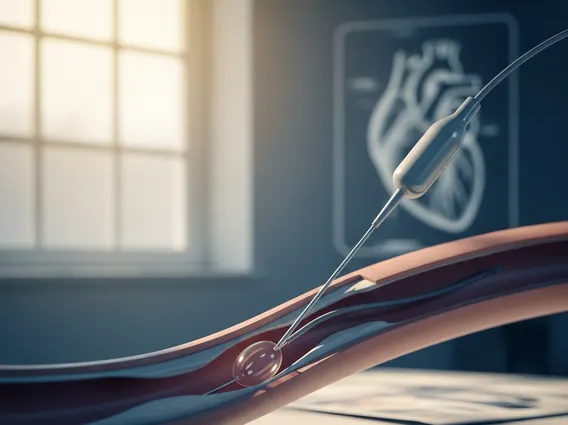
The mechanism of Balloon Angioplasty involves the use of a thin, flexible tube called a catheter, which has a small balloon at its tip. This catheter is carefully guided through blood vessels to the site of the blockage. Once positioned, the balloon is inflated, compressing the plaque against the artery walls and stretching the artery open. This action widens the vessel lumen, allowing blood to flow more freely. After the artery is widened, the balloon is deflated and the catheter is removed. In many cases, a small mesh tube called a stent is deployed at the site of the blockage to help keep the artery open and prevent it from narrowing again.
The Balloon Angioplasty Procedure
The balloon angioplasty procedure is typically performed in a hospital’s cardiac catheterization laboratory under local anesthesia and sedation. Patients are usually awake but relaxed during the procedure. An interventional cardiologist makes a small incision, often in the groin or wrist, to access an artery. A guide wire is then inserted into the artery and advanced to the blocked vessel under X-ray guidance. The balloon-tipped catheter is threaded over the guide wire to the site of the narrowing.
Once the catheter is in place, the balloon is inflated for a short period, typically 30 seconds to a few minutes, to compress the plaque. This process may be repeated several times. If a stent is to be placed, it is usually mounted on a balloon catheter and expanded at the same time as the angioplasty. After successful dilation and stent placement (if applicable), the balloon is deflated, and the catheter and guide wire are removed. The access site is then closed, often with a special device or manual pressure.
Balloon Angioplasty Recovery and Aftercare
The balloon angioplasty recovery time varies among individuals, but most patients can expect to stay in the hospital for one to two days after the procedure. During this time, medical staff monitor for any complications, such as bleeding at the access site or heart rhythm issues. Patients are typically advised to rest and avoid strenuous activities for a few days to a week. It is common to experience some bruising or soreness at the catheter insertion site.
Long-term aftercare is crucial for maintaining the benefits of the angioplasty. This often includes taking prescribed medications, such as antiplatelet drugs (e.g., aspirin, clopidogrel) to prevent blood clots, and cholesterol-lowering medications. Lifestyle modifications are also highly recommended, including adopting a heart-healthy diet, regular physical activity, maintaining a healthy weight, managing stress, and quitting smoking. Regular follow-up appointments with a cardiologist are essential to monitor recovery and overall cardiovascular health.