
Stereotaxic Radiosurgery
Stereotaxic Radiosurgery is an advanced, non-invasive form of radiation therapy that delivers highly focused radiation to target specific abnormalities, often in the brain or spine, with extreme precision.
Key Takeaways
- Stereotaxic Radiosurgery is a non-surgical radiation treatment that targets tumors and other lesions with high precision.
- It utilizes advanced imaging and computer planning to deliver concentrated doses of radiation while sparing healthy tissue.
- The procedure is typically performed in one to five sessions, depending on the condition being treated.
- Side effects are generally milder and more localized compared to traditional surgery or conventional radiation.
- Recovery is often rapid, allowing patients to return to their daily activities relatively quickly.
What is Stereotaxic Radiosurgery?
Stereotaxic Radiosurgery (SRS) is a highly precise medical procedure that uses focused radiation beams to treat tumors and other lesions without the need for surgical incisions. It is not a surgical procedure in the traditional sense, but rather a radiation therapy technique that delivers a very high dose of radiation to a small, well-defined target area. This method is particularly effective for treating conditions that are difficult to reach with conventional surgery or for patients who may not be candidates for invasive procedures.
This advanced technique relies on sophisticated imaging and computer-guided systems to pinpoint the exact location of the target within the body, most commonly in the brain (known as Stereotactic Radiosurgery) or spine (Stereotactic Body Radiotherapy, SBRT). The goal is to deliver enough radiation to destroy the abnormal cells or shrink the lesion, while minimizing damage to surrounding healthy tissues. This precision allows for effective treatment with potentially fewer side effects than traditional radiation therapy or open surgery.
How Stereotaxic Radiosurgery Works
The process of Stereotaxic Radiosurgery involves several critical steps, beginning with detailed imaging and precise treatment planning. Patients first undergo high-resolution imaging, such as MRI, CT scans, or angiography, to create a detailed three-dimensional map of the target area and surrounding structures. This imaging data is then fed into specialized computer software, which oncologists and radiation physicists use to design a customized treatment plan.
During the planning phase, the medical team determines the exact shape, size, and location of the radiation beams. The treatment itself involves delivering multiple, finely focused radiation beams from different angles, all converging precisely on the target. This convergence ensures that the highest dose of radiation is concentrated at the lesion, while the dose to adjacent healthy tissue is significantly reduced. Depending on the specific condition and equipment used, the radiation can be delivered in a single session or across several fractions (typically 2-5 sessions) over a few days.
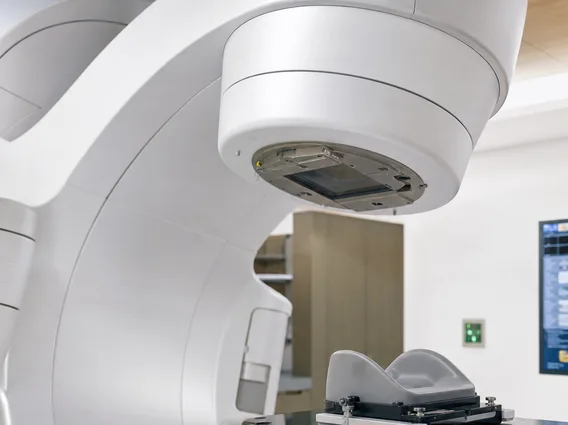
To ensure accuracy during treatment, patients are typically fitted with a custom immobilization device, such as a head frame or body mold, to prevent movement. The radiation is then delivered by a specialized machine, such as a linear accelerator (LINAC), Gamma Knife, or CyberKnife, which precisely directs the beams according to the treatment plan. The entire procedure is non-invasive, and patients typically experience no pain during the radiation delivery.
Side Effects and Recovery from Stereotaxic Radiosurgery
The side effects associated with Stereotaxic Radiosurgery are generally milder and more localized than those experienced with conventional radiation therapy or invasive surgery. Common side effects are often temporary and may include fatigue, mild headache, or nausea, particularly if the treatment area is near sensitive brain structures. Some patients might experience localized skin irritation at the treatment site, although this is less common due to the precision of the therapy. More serious side effects are rare but can occur, depending on the location and size of the treated area.
Recovery from Stereotaxic Radiosurgery is typically much quicker than recovery from traditional surgery. Most procedures are performed on an outpatient basis, meaning patients can return home the same day. Patients are generally able to resume their normal daily activities within a few days, though some may require a brief period of rest. Follow-up appointments are crucial to monitor the effectiveness of the treatment and manage any lingering side effects. The full therapeutic effect, such as tumor shrinkage, may take several weeks or months to become apparent, as the radiation works gradually to damage and eliminate abnormal cells.



















