
Stereotactic Radiosurgery
Stereotactic Radiosurgery (SRS) is an advanced form of radiation therapy that delivers highly focused radiation beams to treat various medical conditions, primarily tumors, with extreme precision. This non-surgical approach aims to destroy target cells while minimizing damage to surrounding healthy tissue.
Key Takeaways
- Stereotactic Radiosurgery (SRS) is a non-invasive radiation therapy that precisely targets abnormal growths.
- It uses high-dose radiation delivered in one to five sessions, guided by advanced imaging.
- The procedure is highly accurate, minimizing exposure to healthy surrounding tissues.
- Common side effects are generally mild and temporary, such as fatigue or headache.
- SRS boasts high success rates for tumor control, often exceeding 80-90% for many indications.
What is Stereotactic Radiosurgery (SRS)?
Stereotactic Radiosurgery (SRS) refers to a highly precise form of radiation therapy that uses focused radiation beams to treat tumors and other abnormalities, most commonly in the brain and spine, but also in other areas of the body. Despite its name, it is a non-surgical procedure that does not involve incisions. Instead, it delivers a very high dose of radiation to a small, well-defined target, often in a single session or a few fractions (known as fractionated stereotactic radiosurgery or FSR).
The primary goal of SRS is to destroy or control the growth of abnormal cells while sparing adjacent healthy tissue. This precision is achieved through advanced imaging techniques and sophisticated treatment planning software, which allow radiation oncologists and neurosurgeons to pinpoint the exact location, shape, and size of the target with sub-millimeter accuracy.
How Stereotactic Radiosurgery Works
The stereotactic radiosurgery procedure involves several key steps, beginning with detailed imaging to map the target area. Patients typically undergo high-resolution MRI, CT, or PET scans to create a precise 3D model of the tumor or lesion. This imaging data is then used by a multidisciplinary team, including radiation oncologists, neurosurgeons, and medical physicists, to develop a customized treatment plan.
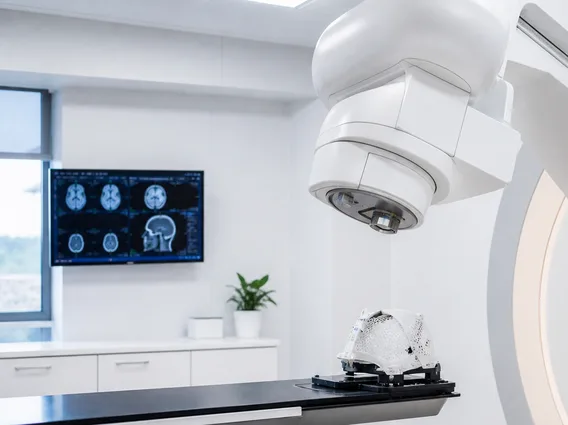
During the treatment, specialized equipment such as a Gamma Knife, CyberKnife, or a linear accelerator (LINAC) delivers multiple, precisely aimed radiation beams. Each individual beam is relatively weak, but where they converge at the target, they deliver a potent dose of radiation sufficient to damage the DNA of the abnormal cells, causing them to shrink or die over time. The patient’s head or body is often immobilized using a custom-fitted mask or frame to ensure no movement during the procedure, guaranteeing the highest level of accuracy.
Potential Side Effects and Success Rates
While SRS is generally well-tolerated, patients may experience stereotactic radiosurgery side effects, which are typically mild and temporary. The specific side effects depend on the treated area, the radiation dose, and individual patient factors. Most side effects resolve within days or weeks following the treatment. Long-term or severe side effects are rare due to the precision of the therapy.
Common side effects can include:
- Fatigue
- Headache
- Nausea or vomiting (especially with brain treatments)
- Scalp or skin irritation at the treatment site
- Temporary swelling in the treated area
The stereotactic radiosurgery success rates are generally very high, particularly for small to medium-sized tumors. For many benign and malignant brain tumors, medical literature indicates local tumor control rates often range from 80% to over 90% (Source: American Society for Radiation Oncology (ASTRO) and American Association of Neurological Surgeons (AANS) consensus statements). Success rates can vary based on the type, size, and location of the lesion, as well as the patient’s overall health. Patients typically undergo follow-up imaging to monitor the treatment’s effectiveness over time.



















