
Stereotactic Injection
Stereotactic Injection is a highly precise medical procedure that utilizes advanced imaging techniques to guide the delivery of substances or the placement of instruments into specific, often deep-seated, targets within the body. This minimally invasive approach enhances accuracy and minimizes damage to surrounding healthy tissues.
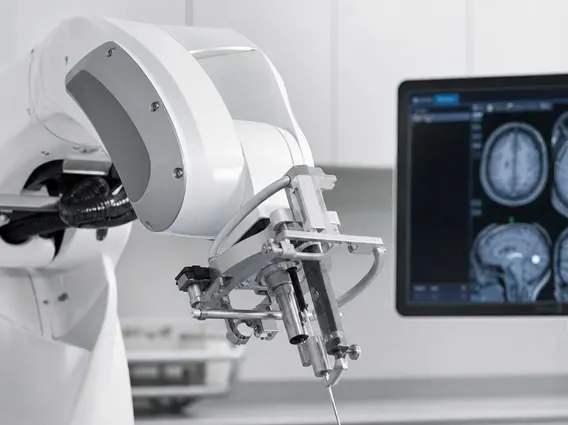
Key Takeaways
- Stereotactic Injection is a precise medical technique using 3D imaging for targeted delivery of substances or instruments.
- The procedure involves advanced imaging (MRI, CT) to map the target, followed by guided needle or catheter insertion.
- It is primarily used in neurosurgery for conditions like brain tumors, movement disorders, and for biopsies in hard-to-reach areas.
- Benefits include high precision, minimal invasiveness, and reduced damage to healthy tissue.
- Potential risks, though generally low, include bleeding, infection, and adverse reactions to injected substances.
What is Stereotactic Injection?
Stereotactic Injection refers to a sophisticated medical procedure that employs a three-dimensional coordinate system to precisely locate a target within the body, most commonly in the brain, and then guide a needle or catheter to that exact point. This technique allows for the accurate delivery of medications, gene therapies, stem cells, or other therapeutic agents, as well as the aspiration of fluid or biopsy of tissue, with minimal disruption to surrounding structures. The core principle involves creating a detailed 3D map of the patient’s anatomy, often using advanced imaging modalities, to plan the safest and most effective trajectory to the target.
The method is distinguished by its exceptional accuracy, often achieving sub-millimeter precision. This level of control is crucial when treating delicate organs or structures where even minor deviations could have significant consequences. It represents a cornerstone in modern neurosurgery and is increasingly finding applications in other fields requiring highly localized intervention.
Stereotactic Injection Procedure: How It Works and Its Uses
The stereotactic injection procedure explained typically begins with detailed pre-operative imaging, such as magnetic resonance imaging (MRI) or computed tomography (CT) scans, to create a comprehensive 3D map of the patient’s anatomy and identify the exact target coordinates. In some cases, a stereotactic frame may be temporarily affixed to the patient’s head or body to provide a stable reference point for the coordinate system. Alternatively, frameless stereotaxy systems use sophisticated software and real-time tracking to guide instruments.
Once the target is precisely localized, the surgeon plans the optimal trajectory, avoiding critical blood vessels or eloquent brain regions. A small incision is made, and a specialized needle or catheter is then advanced along the planned path, guided by the stereotactic system. Real-time imaging or physiological monitoring may be used during the insertion to confirm accurate placement before the substance is injected or the biopsy is performed. The procedure is usually performed under local or general anesthesia, depending on the patient’s condition and the specific target area.
The uses of stereotactic injection are diverse and continue to expand, particularly in neuro-oncology and functional neurosurgery. Common applications include:
- Brain Tumor Treatment: Delivering chemotherapy drugs directly into tumors or surrounding tissue, or injecting gene therapy agents.
- Biopsies: Obtaining tissue samples from deep-seated or difficult-to-reach brain lesions for diagnostic purposes.
- Movement Disorders: Precisely implanting electrodes for deep brain stimulation (DBS) in conditions like Parkinson’s disease or essential tremor, or injecting therapeutic agents.
- Pain Management: Injecting pain-relieving substances into specific neural pathways.
- Cyst Aspiration: Draining fluid from brain cysts.
- Epilepsy Treatment: Targeting specific areas of the brain responsible for seizure activity.
Benefits and Risks of Stereotactic Injection
The stereotactic injection benefits risks profile highlights its advantages while acknowledging potential complications. The primary benefit is its unparalleled precision, which allows for highly targeted interventions while minimizing damage to surrounding healthy tissue. This leads to a less invasive procedure compared to traditional open surgery, often resulting in smaller incisions, reduced blood loss, shorter hospital stays, and faster recovery times for patients.
Furthermore, stereotactic injection enables access to areas of the brain or body that would be extremely difficult or dangerous to reach with conventional surgical techniques. By delivering therapeutic agents directly to the target site, it can also reduce systemic side effects that might occur with oral or intravenous administration, particularly for potent medications.
Despite its advantages, like any medical procedure, stereotactic injection carries potential risks, though they are generally low due to the precision involved. These can include:
- Bleeding: Hemorrhage at the injection site or along the needle trajectory.
- Infection: Risk of infection at the incision site or within the target area.
- Damage to Surrounding Tissue: Although minimized, there is a slight risk of injury to adjacent critical structures.
- Adverse Reaction: Potential allergic or adverse reactions to the injected substance or anesthetic.
- Inaccurate Targeting: While rare, there is a minimal chance of the needle not reaching the exact intended target.
- Seizures: Particularly in brain procedures, there is a small risk of inducing seizures.
Patients are thoroughly evaluated before the procedure, and medical teams take extensive precautions to mitigate these risks, ensuring the safest possible outcome.



















