Radiography
Radiography is a fundamental medical imaging technique that utilizes X-rays to create images of the internal structures of the body. It plays a crucial role in diagnosing a wide range of medical conditions, from bone fractures to certain types of cancer.
Key Takeaways
- Radiography uses X-rays to produce images of the body’s internal structures.
- The technique relies on the differential absorption of X-rays by various tissues.
- Common imaging modalities include conventional X-rays, fluoroscopy, and mammography.
- Radiography is widely applied in diagnosing fractures, infections, and certain cancers.
- It is a quick, non-invasive, and essential diagnostic tool in modern medicine.
What is Radiography?
Radiography refers to the process of using X-rays to generate images of the inside of an object, most commonly the human body. This diagnostic imaging technique is indispensable in medicine for visualizing bones, organs, and soft tissues, aiding in the detection and diagnosis of diseases and injuries. The fundamental principle involves a controlled beam of X-rays passing through the body, where different tissues absorb varying amounts of radiation. The remaining X-rays then strike a detector, creating a two-dimensional image. This process allows clinicians to observe internal structures without invasive procedures.
Principles of Radiography and Imaging Modalities
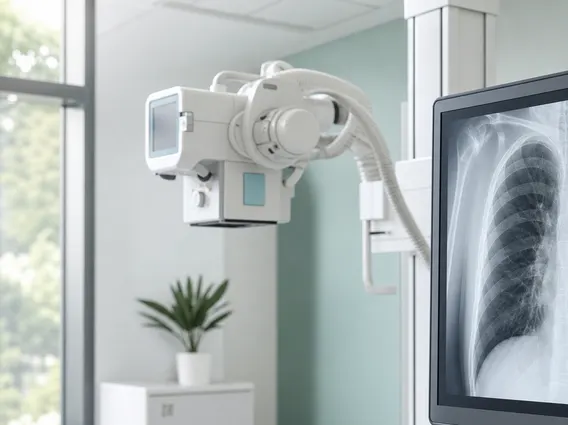
The core principle behind how radiography works involves the interaction of X-rays with matter. X-rays are a form of electromagnetic radiation with high energy, allowing them to penetrate tissues. When an X-ray beam passes through the body, denser structures like bones absorb more X-rays, appearing white or light on the image. Softer tissues, such as muscles and organs, absorb fewer X-rays, appearing darker. Air, being the least dense, appears black. This differential absorption creates contrast, forming a diagnostic image.
Several types of radiography imaging modalities exist, each tailored for specific diagnostic needs:
- Conventional X-ray: Produces static, two-dimensional images, primarily used for bone fractures, chest conditions, and dental imaging.
- Fluoroscopy: Provides real-time, moving X-ray images, often used during surgical procedures, catheter insertions, or to observe organ function (e.g., barium swallow studies).
- Mammography: A specialized X-ray technique for breast imaging, crucial for early detection of breast cancer.
- Computed Tomography (CT): While often considered distinct, CT scans also use X-rays, but they take multiple images from different angles to create cross-sectional, detailed 3D images.
Clinical Applications of Radiography
The radiography uses and applications are extensive across various medical specialties, making it a cornerstone of diagnostic medicine. It is frequently the first-line imaging test due to its speed, accessibility, and cost-effectiveness.
Common clinical applications include:
- Orthopedics: Diagnosing fractures, dislocations, arthritis, and monitoring bone healing.
- Pulmonology: Identifying lung infections (like pneumonia), chronic obstructive pulmonary disease (COPD), lung cancer, and fluid accumulation in the chest.
- Cardiology: Assessing heart size and shape, detecting calcifications, and evaluating placement of medical devices.
- Gastroenterology: Using contrast agents (e.g., barium) to visualize the digestive tract for conditions like ulcers, blockages, or tumors.
- Urology: Detecting kidney stones or structural abnormalities in the urinary system.
- Oncology: Assisting in the detection and staging of various cancers, particularly in the chest and bones, and monitoring treatment response.
According to the World Health Organization (WHO), medical imaging procedures, including radiography, are performed billions of times annually worldwide, highlighting their critical role in global healthcare delivery. Radiography remains an invaluable tool for clinicians, providing essential insights for accurate diagnosis and effective treatment planning.