
Radioactive Palladium
Radioactive Palladium refers to a specific isotope of the element palladium that emits radiation, primarily used in medical oncology for targeted cancer treatment. Its unique properties allow for precise delivery of therapeutic radiation with minimal impact on surrounding healthy tissues.
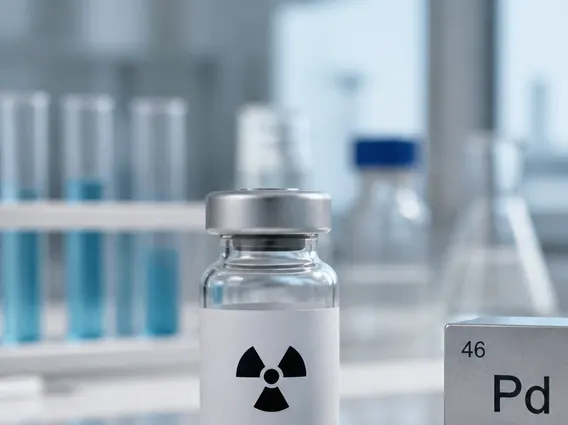
Key Takeaways
- Radioactive Palladium, specifically Palladium-103 (Pd-103), is a radioisotope used in medicine.
- It is primarily utilized in brachytherapy, a form of internal radiation therapy for certain cancers.
- Pd-103 emits low-energy X-rays and Auger electrons, providing a highly localized radiation dose.
- Its relatively short half-life ensures that the radiation activity diminishes quickly over time.
- The main application is in the treatment of prostate cancer, where it is implanted as “seeds” directly into the tumor.
What is Radioactive Palladium?
Radioactive Palladium refers to specific isotopes of the metallic element palladium that undergo radioactive decay, emitting radiation. While naturally occurring palladium is stable and not radioactive, certain isotopes like Palladium-103 (Pd-103) are artificially produced for medical applications. Pd-103 is a commonly used radioisotope in oncology, valued for its distinctive decay characteristics that make it suitable for internal radiation therapy. It decays primarily through electron capture, emitting low-energy X-rays and Auger electrons, which have a very short range in tissue. This localized energy deposition is crucial for targeted treatments, ensuring that the therapeutic effect is concentrated within the tumor while sparing adjacent healthy cells.
The question, “Is palladium radioactive?” can be answered by distinguishing between naturally occurring palladium and its isotopes. Naturally occurring palladium consists of six stable isotopes and is not radioactive. However, specific isotopes, such as Pd-103, are engineered to be radioactive for therapeutic purposes, making them invaluable tools in modern medicine. The controlled radioactivity and decay properties of Pd-103 are what make it a powerful agent in the fight against certain cancers.
Key Properties of Radioactive Palladium
The therapeutic efficacy of Radioactive Palladium stems from its specific physical and radiological properties. Palladium-103 (Pd-103) is characterized by a half-life of approximately 17 days, meaning that half of its radioactivity decays every 17 days. This relatively short half-life ensures that the radiation dose is delivered over a manageable period, and the radioactivity in the body diminishes completely within a few months. The primary emissions are low-energy X-rays (20-23 keV) and Auger electrons. These low-energy emissions have a very short tissue penetration depth, typically only a few millimeters, which is ideal for delivering a highly localized dose of radiation directly to a tumor.
These Radioactive palladium properties are critical for its use in brachytherapy. The limited range of radiation minimizes the dose to surrounding healthy tissues and organs, thereby reducing potential side effects compared to external beam radiation therapy. The encapsulated form of Pd-103, often as small titanium seeds, also ensures biocompatibility and prevents the radioisotope from migrating within the body. This combination of short half-life, low-energy emissions, and localized effect makes Pd-103 an effective and precise tool for internal radiation therapy.
Medical Applications of Radioactive Palladium
The primary Uses of radioactive palladium are found within the field of oncology, specifically in a treatment modality known as brachytherapy. Brachytherapy involves placing radioactive sources directly inside or next to the area requiring treatment. For Pd-103, this typically involves implanting small, encapsulated “seeds” into cancerous tumors. This method allows for a very high dose of radiation to be delivered directly to the tumor while minimizing exposure to surrounding healthy tissues, a significant advantage over external beam radiation therapy.
One of the most prominent applications of Radioactive Palladium is in the treatment of prostate cancer. In this context, numerous Pd-103 seeds are permanently implanted into the prostate gland. The localized radiation effectively targets and destroys cancer cells within the prostate. According to the American Cancer Society, brachytherapy with isotopes like Pd-103 is a well-established and effective treatment option for early-stage prostate cancer, often resulting in favorable long-term outcomes with fewer side effects compared to other radiation modalities. The precise delivery and short range of Pd-103 radiation make it an invaluable tool for localized tumor control, improving patient quality of life during and after treatment.



















