Deoxyribonucleic Acid
Deoxyribonucleic Acid is a fundamental molecule essential for life, carrying the genetic instructions used in the growth, development, functioning, and reproduction of all known organisms and many viruses. Understanding its nature is crucial for advancements in medicine and biology.
Key Takeaways
- Deoxyribonucleic Acid (DNA) is the hereditary material in humans and almost all other organisms.
- It stores the instructions for building and maintaining an organism.
- DNA’s double helix structure, composed of nucleotides, allows for accurate replication and information transfer.
- Its primary function is to encode genetic information, directing protein synthesis and enabling heredity.
- DNA plays a vital role in health, disease, and the evolution of life.
What is Deoxyribonucleic Acid (DNA)?
Deoxyribonucleic Acid (DNA) is a complex molecule that contains all of the information necessary to build and maintain an organism. It is the hereditary material in humans and almost all other organisms, found in the nucleus of eukaryotic cells and the cytoplasm of prokaryotic cells. The dna meaning and importance lies in its role as the blueprint of life, dictating the characteristics and functions of every living thing. This remarkable molecule stores genetic information in a coded sequence, which is then translated into proteins that perform most of the work in cells and are required for the structure, function, and regulation of the body’s tissues and organs.
Deoxyribonucleic Acid Structure and Function
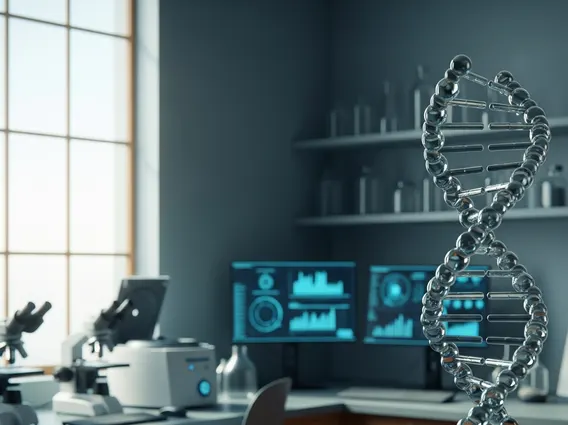
The deoxyribonucleic acid structure function is intricately linked. DNA is organized into a double helix, a structure resembling a twisted ladder. Each side of this ladder is composed of a backbone of alternating sugar (deoxyribose) and phosphate groups. Attached to each sugar is one of four nitrogenous bases: adenine (A), guanine (G), cytosine (C), or thymine (T). These bases pair specifically across the two strands: adenine always pairs with thymine (A-T), and guanine always pairs with cytosine (G-C). This complementary base pairing is fundamental to DNA’s ability to replicate and transmit genetic information accurately.
The primary function of DNA is to store and transmit genetic information. This information is encoded in the sequence of the nitrogenous bases. When a cell divides, the DNA double helix unwinds, and each strand serves as a template for synthesizing a new complementary strand, ensuring that each new cell receives an identical copy of the genetic material. This process, known as DNA replication, is remarkably precise, though errors can occur, leading to mutations. Furthermore, DNA acts as a template for the synthesis of RNA (ribonucleic acid) in a process called transcription. RNA then guides the synthesis of proteins, which are the workhorses of the cell, carrying out a vast array of functions.
- Key Components of DNA:
- Deoxyribose sugar
- Phosphate group
- Nitrogenous bases (Adenine, Guanine, Cytosine, Thymine)
- Base Pairing Rules:
- Adenine (A) always pairs with Thymine (T)
- Guanine (G) always pairs with Cytosine (C)
The Role and Importance of Deoxyribonucleic Acid
The role of deoxyribonucleic acid extends across all aspects of biology, from individual cellular processes to the evolution of species. It is the central molecule of heredity, passing genetic traits from parents to offspring. In medicine, understanding DNA is critical for diagnosing and treating genetic diseases, developing gene therapies, and advancing personalized medicine. For instance, genetic testing can identify predispositions to certain conditions or confirm diagnoses of inherited disorders. The study of DNA has also revolutionized forensic science, allowing for precise identification in criminal investigations.
Beyond its direct role in heredity and disease, DNA is crucial for the ongoing adaptation and evolution of life. Variations in DNA sequences, arising from mutations or recombination, provide the raw material for natural selection. This continuous process allows populations to adapt to changing environments over generations. The profound impact of DNA is evident in its ubiquitous presence and its fundamental role in defining what life is and how it persists. According to the National Human Genome Research Institute, the human genome contains approximately 3 billion base pairs, encoding around 20,000 to 25,000 protein-coding genes, highlighting the immense information stored within this molecule.