Charged Particle Radiation Therapy
Charged Particle Radiation Therapy represents an advanced form of cancer treatment that precisely targets malignant cells while minimizing damage to surrounding healthy tissues. This innovative approach utilizes specific types of particles to deliver highly conformal radiation doses, offering significant advantages in various oncological settings.
Key Takeaways
- Charged Particle Radiation Therapy uses protons or heavy ions to precisely target tumors, reducing damage to healthy tissue.
- Its primary advantage lies in the Bragg peak phenomenon, which allows for a concentrated dose delivery at a specific depth.
- This therapy is particularly beneficial for tumors near critical organs or in pediatric cases due to its reduced exit dose.
- While generally well-tolerated, potential side effects are typically localized and managed with supportive care.
- Ongoing research continues to expand the applications and refine the techniques of charged particle radiation.
What is Charged Particle Radiation Therapy?
Charged Particle Radiation Therapy is an advanced form of external beam radiation therapy for cancer. Unlike conventional photon (X-ray) radiation, it uses accelerated subatomic particles, such as protons or heavier ions like carbon ions, to deliver radiation. Its effectiveness stems from the unique physical properties of these charged particles, enabling precise and localized energy deposition within the tumor. This precision is vital for treating tumors near sensitive organs or in complex anatomical sites, minimizing radiation exposure to healthy tissues. Charged particle therapy has significantly advanced radiation oncology, offering new possibilities for challenging cancer diagnoses.
Mechanism of Action and Clinical Advantages
The efficacy of charged particle radiation therapy stems from the Bragg peak phenomenon. Charged particles, like protons or carbon ions, deposit most of their energy at a specific, controllable depth within tissue, with a rapid dose fall-off beyond that point. This sharply defined dose deposition contrasts with photon radiation, which deposits energy along its entire path, affecting tissues beyond the tumor.
How Charged Particle Therapy Works
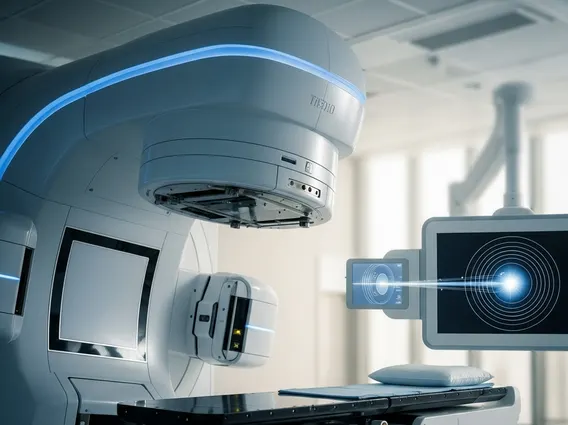
A particle accelerator generates a beam of charged particles, which is then directed at the tumor. The particle energy is precisely adjusted to control the Bragg peak’s depth, ensuring maximum radiation dose delivery directly to the tumor while sparing healthy tissues. This precise targeting is a major clinical advantage, especially for tumors near critical structures (e.g., brain, spinal cord, heart, optic nerves). In pediatric cancers, minimizing the “exit dose” significantly reduces risks like growth impairments or secondary cancers.
The benefits of charged particle radiation include improved local tumor control and reduced toxicity. Clinical studies demonstrate its utility across various cancer types, such as brain, head and neck, prostate, and pediatric malignancies. This precise dose delivery allows for higher, more effective doses to the tumor, potentially leading to better outcomes.
Potential Side Effects and Management
While generally well-tolerated due to its precision, charged particle therapy side effects can occur, similar to other radiation therapies. These effects are typically localized to the treated area, varying with tumor location, dose, and patient health. Minimizing radiation exposure to healthy tissues often reduces the severity and incidence of side effects compared to conventional radiation.
Common acute (short-term) side effects include:
- Skin irritation (redness, dryness) in the treatment field.
- Fatigue.
- Temporary hair loss in the treated area.
- Localized inflammation or discomfort (e.g., swallowing difficulty for head and neck, urinary changes for pelvic treatments).
Long-term side effects are less common but may include tissue fibrosis or nerve damage. The risk of secondary cancers is generally considered lower due to reduced healthy tissue exposure. Side effect management involves supportive care like topical creams, pain relievers, and nutritional support. Patients are closely monitored by their oncology team to address symptoms promptly, ensuring optimal quality of life.