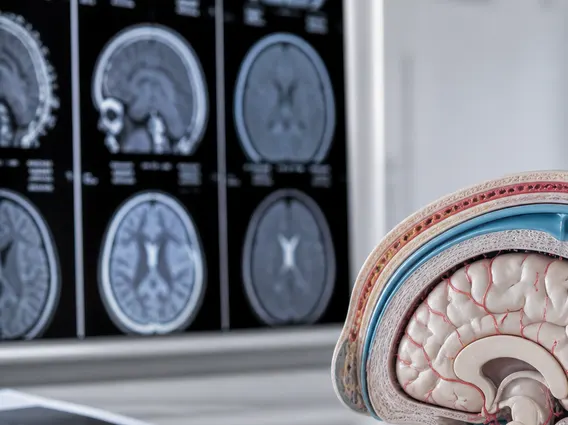
Cerebrospinal Fluid
Cerebrospinal Fluid (CSF) is a clear, colorless body fluid found within the brain and spinal cord, playing a vital role in protecting the central nervous system. It acts as a cushion, provides nutrients, and removes waste products.

Key Takeaways
- Cerebrospinal Fluid (CSF) is a crucial fluid surrounding the brain and spinal cord, offering protection and support.
- Its primary functions include cushioning the brain, transporting nutrients, and removing metabolic waste.
- CSF is continuously produced by the choroid plexus and circulates through the ventricles and subarachnoid space.
- Disorders related to CSF can indicate various neurological conditions, from infections to autoimmune diseases.
- Cerebrospinal fluid analysis is a key diagnostic tool, often performed via lumbar puncture, to assess the health of the central nervous system.
What is Cerebrospinal Fluid (CSF)?
Cerebrospinal Fluid (CSF) is a specialized fluid that bathes the brain and spinal cord, forming a protective environment for the central nervous system (CNS). It is primarily composed of water, along with small amounts of proteins, glucose, electrolytes, and a few lymphocytes. This clear fluid fills the ventricles within the brain and the subarachnoid space surrounding both the brain and spinal cord, ensuring mechanical protection and maintaining a stable chemical environment.
The total volume of CSF in adults is typically around 125-150 milliliters, though it is constantly being produced and reabsorbed. The continuous circulation and renewal of CSF are essential for its various physiological roles, preventing the accumulation of waste products and maintaining intracranial pressure within normal limits. Understanding the composition and dynamics of this fluid is fundamental to diagnosing and managing numerous neurological conditions.
Functions and Production of Cerebrospinal Fluid
The function of cerebrospinal fluid is multifaceted, serving several critical roles for the central nervous system. One of its primary roles is to provide buoyancy to the brain, effectively reducing its net weight and preventing it from being crushed by its own mass. This buoyancy also protects the brain from impact and sudden movements by acting as a shock absorber. Beyond mechanical protection, CSF is crucial for the chemical stability of the CNS.
CSF is continuously produced by specialized capillaries called the choroid plexus, located within the ventricles of the brain. Approximately 500 milliliters of CSF are produced daily, meaning the entire volume is replaced several times a day. After production, CSF circulates through the ventricular system and then into the subarachnoid space, eventually being reabsorbed into the bloodstream primarily through arachnoid granulations. This constant flow ensures efficient nutrient delivery and waste removal. Key functions include:
- Mechanical Protection: Cushions the brain and spinal cord against physical trauma.
- Buoyancy: Reduces the effective weight of the brain, preventing compression of nerves and blood vessels.
- Chemical Stability: Maintains a stable extracellular environment for neurons and glial cells.
- Waste Removal: Transports metabolic waste products away from the brain tissue.
- Nutrient Supply: Delivers nutrients and hormones to the brain.
Cerebrospinal Fluid Disorders and Diagnostic Analysis
Various conditions can lead to cerebrospinal fluid disorders, impacting the health and function of the central nervous system. These disorders can arise from imbalances in CSF production or reabsorption, infections, inflammation, or structural abnormalities. For instance, hydrocephalus occurs when there is an excessive accumulation of CSF, often due to obstruction of its flow or impaired reabsorption, leading to increased intracranial pressure and potential brain damage. Other conditions like meningitis (inflammation of the meninges) or encephalitis (inflammation of the brain) can alter CSF composition significantly.
To diagnose these conditions, cerebrospinal fluid analysis is a crucial diagnostic procedure, most commonly performed via a lumbar puncture (spinal tap). During this procedure, a small amount of CSF is collected from the lower back and sent to a laboratory for examination. The analysis typically involves evaluating several parameters:
| Parameter | Normal Findings | Potential Abnormalities (Examples) |
|---|---|---|
| Appearance | Clear, colorless | Cloudy (infection), bloody (hemorrhage) |
| Protein Levels | Low (15-45 mg/dL) | Elevated (inflammation, infection, tumor) |
| Glucose Levels | ~2/3 of blood glucose | Decreased (bacterial meningitis, tumor) |
| Cell Count | Few lymphocytes (0-5 cells/µL) | Increased white blood cells (infection, inflammation), red blood cells (hemorrhage) |
| Microbiology | Sterile | Presence of bacteria, fungi, or viruses (infection) |
Abnormal findings in CSF analysis can provide critical clues for diagnosing a wide range of neurological conditions, including infections (bacterial, viral, fungal meningitis), autoimmune diseases (e.g., multiple sclerosis), subarachnoid hemorrhage, and certain cancers affecting the CNS. According to the Centers for Disease Control and Prevention (CDC), CSF analysis is a cornerstone in the diagnosis of acute bacterial meningitis, allowing for prompt and life-saving treatment.