Cerebral Hemisphere
The cerebral hemispheres represent the two largest divisions of the human brain, playing a crucial role in nearly all aspects of human experience, from thought and emotion to movement and sensation. Understanding their structure and function is fundamental to comprehending brain health and neurological conditions.
Key Takeaways
- Each Cerebral Hemisphere is one of two large, symmetrical halves of the cerebrum, responsible for higher cognitive functions.
- The anatomy of cerebral hemispheres includes the cerebral cortex, white matter, and deep nuclei, organized into distinct lobes.
- Cerebral hemisphere function encompasses processing sensory information, controlling motor responses, and enabling complex cognitive processes like language and memory.
- The left vs right cerebral hemisphere exhibit lateralization, with each specializing in different cognitive domains, though they work collaboratively.
- Various diseases of cerebral hemispheres, such as stroke and neurodegenerative disorders, can significantly impair brain function and overall quality of life.
What is a Cerebral Hemisphere?
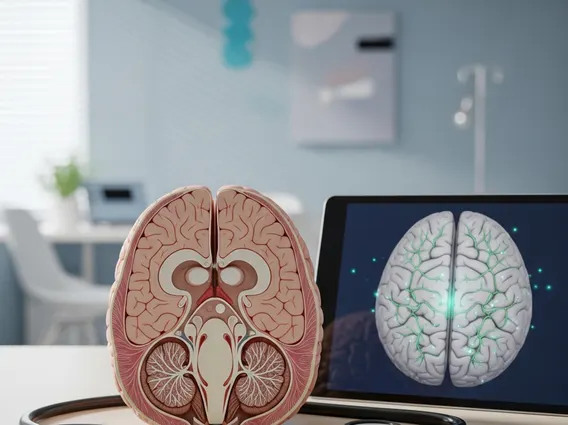
A Cerebral Hemisphere refers to one of the two large, symmetrical halves that constitute the cerebrum, the uppermost and largest part of the brain. These hemispheres are separated by a deep groove known as the longitudinal fissure and are connected by a thick band of nerve fibers called the corpus callosum. Each hemisphere is responsible for processing sensory information, controlling motor functions, and enabling complex cognitive abilities such as memory, language, and problem-solving. Their intricate structure allows for the integration and interpretation of vast amounts of information, forming the basis of human consciousness and behavior.
Anatomy, Function, and Lateralization of Cerebral Hemispheres
The anatomy of cerebral hemispheres is complex, comprising several distinct layers and structures. The outermost layer is the cerebral cortex, a highly convoluted sheet of gray matter responsible for most higher-level brain functions. Beneath the cortex lies the white matter, composed of myelinated nerve fibers that transmit signals between different brain regions. Deep within the white matter are subcortical structures like the basal ganglia and thalamus, which play vital roles in motor control and sensory relay. Each hemisphere is further divided into four main lobes—frontal, parietal, temporal, and occipital—each associated with specific functions.
The comprehensive cerebral hemisphere function includes a wide array of processes. The frontal lobe is crucial for executive functions, planning, decision-making, and voluntary movement. The parietal lobe processes sensory information such as touch, temperature, and pain, and is involved in spatial awareness. The temporal lobe is essential for processing auditory information, memory formation, and language comprehension. Finally, the occipital lobe is primarily dedicated to processing visual information. Together, these regions ensure coordinated and efficient brain activity.
Left vs Right Cerebral Hemisphere
The concept of left vs right cerebral hemisphere highlights the phenomenon of hemispheric lateralization, where each hemisphere tends to specialize in different cognitive functions. While both hemispheres work in constant communication, certain tasks are predominantly handled by one side. The left hemisphere is typically dominant for language, logic, analytical thinking, and mathematical abilities. Conversely, the right hemisphere is often associated with spatial awareness, facial recognition, artistic and musical abilities, and processing emotions. It is important to note that this lateralization is not absolute, and most complex tasks require integrated activity from both hemispheres.
| Hemisphere | Primary Functions |
|---|---|
| Left Hemisphere | Language (speech, comprehension), Logic, Analytical Thinking, Mathematics, Sequential Processing |
| Right Hemisphere | Spatial Awareness, Facial Recognition, Creativity, Musicality, Emotional Processing, Holistic Thinking |
Conditions Affecting the Cerebral Hemispheres
A wide range of diseases of cerebral hemispheres can lead to significant neurological deficits, impacting an individual’s cognitive abilities, motor control, and overall quality of life. These conditions can arise from various causes, including vascular events, trauma, infections, and neurodegenerative processes. Understanding the specific hemisphere and region affected is critical for accurate diagnosis and effective treatment strategies.
Common conditions that can affect the cerebral hemispheres include:
- Stroke: Occurs when blood flow to a part of the brain is interrupted, either by a clot (ischemic stroke) or a ruptured blood vessel (hemorrhagic stroke), leading to brain cell death. Globally, stroke is a leading cause of disability and the second leading cause of death, accounting for approximately 11% of total deaths, according to the World Health Organization (WHO).
- Traumatic Brain Injury (TBI): Results from a sudden trauma to the head that causes brain damage, often affecting specific lobes or diffuse areas of the hemispheres.
- Neurodegenerative Diseases: Conditions such as Alzheimer’s disease and Parkinson’s disease involve the progressive degeneration of neurons within the cerebral hemispheres, leading to cognitive decline and motor impairments.
- Brain Tumors: Abnormal growths that can develop within the cerebral hemispheres, compressing brain tissue and disrupting normal function.
- Epilepsy: Characterized by recurrent seizures resulting from abnormal electrical activity in the brain, often originating in specific areas of one or both hemispheres.
Early diagnosis and appropriate medical intervention are crucial for managing these conditions and mitigating their impact on cerebral hemisphere function. Treatment approaches vary widely depending on the specific disease and may include medication, surgery, rehabilitation therapies, or a combination thereof.