
Cell Cycle Regulation
Cell Cycle Regulation is a fundamental biological process that governs the orderly progression of cells through their growth and division phases. This intricate system ensures the faithful replication of genetic material and the proper distribution of chromosomes to daughter cells, maintaining cellular integrity and organismal health.
Key Takeaways
- Cell Cycle Regulation is the precise control system overseeing cell growth, DNA replication, and division.
- It relies on a network of molecular checkpoints and regulatory proteins like cyclins and cyclin-dependent kinases (CDKs).
- Proper regulation is crucial for preventing errors in DNA replication and chromosome segregation.
- Dysregulation of the cell cycle can lead to severe consequences, including uncontrolled cell proliferation and cancer.
- Understanding these mechanisms is vital for developing therapies for various diseases.
What is Cell Cycle Regulation?
Cell Cycle Regulation refers to the complex network of molecular processes that control the progression of a cell through the cell cycle. The cell cycle is a series of events that take place in a cell leading to its division and duplication of its DNA to produce two daughter cells. This process is essential for growth, tissue repair, and the maintenance of multicellular organisms. Without precise regulation, cells could divide uncontrollably, leading to diseases like cancer, or fail to divide when necessary, impairing tissue function.
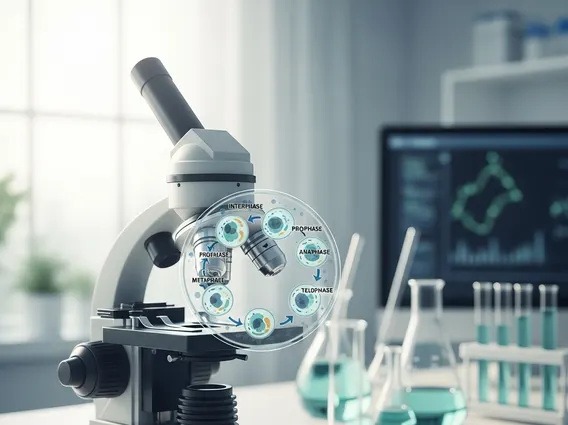
The cell cycle is typically divided into four main phases: G1 (Gap 1), S (Synthesis), G2 (Gap 2), and M (Mitosis). During G1, the cell grows and prepares for DNA replication. In the S phase, DNA synthesis occurs, resulting in the duplication of chromosomes. G2 involves further growth and preparation for cell division, while the M phase encompasses mitosis (nuclear division) and cytokinesis (cytoplasmic division). Checkpoints strategically placed throughout these phases ensure that each step is completed accurately before the cell proceeds to the next.
Mechanisms of Cell Cycle Control
The intricate processes governing the cell cycle are orchestrated by a sophisticated set of molecular components, forming the core of cell cycle regulation mechanisms. Key among these are cyclin-dependent kinases (CDKs) and their regulatory partners, cyclins. CDKs are enzymes that, when activated by binding to specific cyclins, phosphorylate target proteins, thereby driving the cell from one phase to the next. Different cyclins are expressed at different stages of the cell cycle, ensuring temporal control.
Cell cycle checkpoints are critical surveillance mechanisms that monitor the integrity of the cell and ensure that all necessary processes, such as DNA replication and chromosome segregation, are completed accurately. Major checkpoints include:
- G1 Checkpoint: Monitors cell size, nutrient availability, growth factors, and DNA damage before committing to DNA replication.
- G2/M Checkpoint: Ensures DNA replication is complete and DNA is undamaged before entering mitosis.
- Spindle Assembly Checkpoint (SAC): Verifies that all sister chromatids are correctly attached to the mitotic spindle before anaphase.
Beyond cyclins and CDKs, other regulatory proteins such as tumor suppressor genes (e.g., p53, Rb) and proto-oncogenes also play crucial roles. Tumor suppressor genes halt cell cycle progression in response to damage, while proto-oncogenes promote cell growth and division. Imbalances or mutations in these regulatory components can disrupt normal cell cycle control, leading to uncontrolled cell proliferation.
Importance of Cell Cycle Regulation
The precise importance of cell cycle control cannot be overstated, as it is fundamental to the health and survival of all eukaryotic organisms. Accurate cell division is essential for growth, development, and tissue homeostasis. For instance, in humans, billions of cells divide daily to replace old or damaged cells in tissues like the skin, blood, and gut lining. This continuous renewal process relies entirely on properly regulated cell cycles to maintain tissue integrity and function.
When cell cycle regulation fails, the consequences can be severe. Uncontrolled cell proliferation is a hallmark of cancer, where cells bypass checkpoints and divide relentlessly, forming tumors. Conversely, insufficient cell division can impair tissue repair and regeneration, leading to degenerative conditions. For example, errors in chromosome segregation during mitosis, often due to faulty spindle checkpoint function, can result in aneuploidy, a condition where cells have an abnormal number of chromosomes, contributing to developmental disorders and cancer progression. Therefore, understanding and manipulating cell cycle regulation is a critical area of research for developing new therapeutic strategies for various diseases.



















