Cell
Cell is the fundamental unit of life, forming the building blocks of all living organisms, from the simplest bacteria to complex multicellular beings like humans. Understanding cells is crucial for comprehending biology, health, and disease.
Key Takeaways
- Cells are the basic structural and functional units of all known organisms.
- They contain specialized components called organelles that perform specific tasks to maintain life.
- Human cells exhibit diverse structures and functions, tailored to their roles in tissues and organs.
- The study of cells, known as cell biology, is essential for understanding physiological processes and disease mechanisms.
What is a Cell?
A Cell refers to the smallest structural and functional unit of an organism, typically microscopic and consisting of cytoplasm and a nucleus enclosed in a membrane. It is the basic unit of life, capable of independent existence and performing all necessary life functions. The comprehensive study of cells, their structure, function, and behavior, is known as what is a cell biology. This field explores how cells grow, divide, and interact, providing foundational knowledge for medicine and biotechnology.
In humans and other complex organisms, cells are eukaryotic, meaning they possess a true nucleus and other membrane-bound organelles. These intricate internal structures allow for a high degree of specialization and organization, enabling the formation of tissues, organs, and entire systems.
Cell Structure and Function
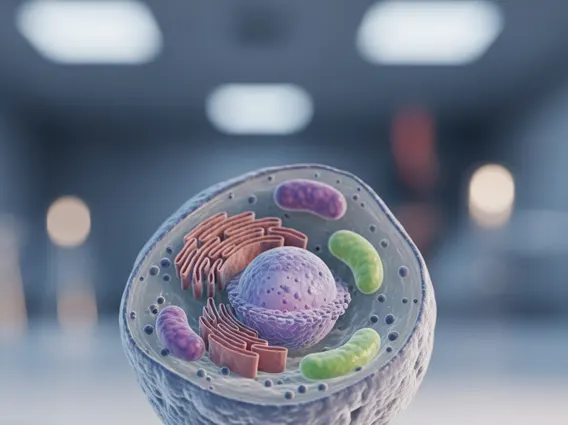
The intricate internal organization of a cell is fundamental to its ability to sustain life. Cell structure and function explained involves understanding the roles of various organelles that work in concert to carry out essential processes. The cell membrane encloses the cell, regulating the passage of substances in and out. Within the cell, the cytoplasm is a jelly-like substance that fills the cell and surrounds the organelles.
How do cells work is determined by the coordinated activities of these organelles. For instance, the nucleus houses the cell’s genetic material (DNA) and controls cell growth and reproduction. Mitochondria are often called the “powerhouses” of the cell because they generate most of the chemical energy needed to power the cell’s biochemical reactions through cellular respiration. Ribosomes are responsible for protein synthesis, while the endoplasmic reticulum and Golgi apparatus are involved in protein modification, packaging, and transport. Lysosomes break down waste materials and cellular debris.
Here is a summary of some key cellular components and their primary functions:
| Component | Primary Function |
|---|---|
| Cell Membrane | Regulates passage of substances, maintains cell integrity. |
| Nucleus | Stores genetic material (DNA), controls cell activities. |
| Mitochondria | Generates ATP (energy) through cellular respiration. |
| Ribosomes | Synthesizes proteins. |
| Endoplasmic Reticulum | Synthesizes and modifies proteins and lipids. |
| Golgi Apparatus | Packages and distributes proteins and lipids. |
Types of Cells in the Human Body
The human body is composed of trillions of cells, each specialized to perform specific functions. Understanding the types of cells in the human body is essential for comprehending human physiology and pathology. These cells vary significantly in size, shape, and internal organization, reflecting their diverse roles. For example, nerve cells are elongated to transmit electrical signals over long distances, while red blood cells are biconcave discs optimized for oxygen transport.
Some prominent types of cells found in the human body include:
- Nerve Cells (Neurons): Transmit electrical and chemical signals throughout the body, forming the basis of the nervous system.
- Muscle Cells (Myocytes): Specialized for contraction, enabling movement, maintaining posture, and pumping blood. There are skeletal, cardiac, and smooth muscle cells.
- Blood Cells: Include red blood cells (erythrocytes) for oxygen transport, white blood cells (leukocytes) for immune defense, and platelets (thrombocytes) for blood clotting.
- Epithelial Cells: Form protective linings and coverings for organs and body cavities, and are involved in secretion, absorption, and excretion.
- Bone Cells (Osteocytes): Maintain bone tissue, while osteoblasts form new bone and osteoclasts resorb bone.
- Fat Cells (Adipocytes): Store energy in the form of lipids, provide insulation, and cushion organs.
This cellular diversity allows the human body to perform a vast array of complex functions, from thought and movement to digestion and immunity, all orchestrated at the microscopic level.