Immunocytochemistry
Immunocytochemistry is a vital laboratory technique used across various fields of biological and medical research. It allows scientists and clinicians to visualize specific proteins or antigens within cells, providing crucial insights into cellular structure and function.

Key Takeaways
- Immunocytochemistry (ICC) is a technique that uses antibodies to detect specific antigens in cells.
- It relies on the highly specific binding of an antibody to its target antigen, followed by visualization using a label.
- The methodology involves cell preparation, antibody incubation, and detection, often employing fluorescent dyes or enzyme-linked substrates.
- ICC is widely applied in cancer research, neuroscience, infectious disease diagnostics, and developmental biology.
- This technique is crucial for understanding disease mechanisms and identifying biomarkers.
What is Immunocytochemistry?
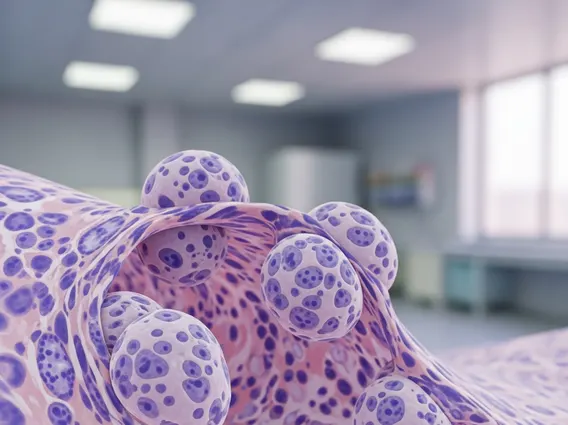
Immunocytochemistry (ICC) is a laboratory technique that utilizes specific antibodies to detect and visualize target antigens (proteins, peptides, or other molecules) within cells. This method allows researchers and clinicians to determine the presence, localization, and relative abundance of specific cellular components, providing critical information about cellular processes, disease states, and therapeutic responses. By directly observing antigens within their cellular context, ICC offers a powerful tool for understanding cell biology at a molecular level. It is distinct from immunohistochemistry, which applies the same principles to tissue sections rather than isolated cells or cell cultures.
Principle and Methodology of Immunocytochemistry
The fundamental immunocytochemistry principle relies on the highly specific interaction between an antibody and its corresponding antigen. Antibodies are proteins produced by the immune system that can recognize and bind to unique molecular structures. In ICC, a primary antibody is selected to specifically bind to the target antigen within the cell. This binding event is then made visible through various detection methods.
To understand how immunocytochemistry works, it’s helpful to break down the general methodology into several key steps:
- Cell Preparation: Cells are typically grown on slides or coverslips, or prepared as cytospin preparations. They are then fixed to preserve their morphology and antigenicity, often using chemicals like formaldehyde or methanol. Permeabilization may follow to allow antibodies access to intracellular targets.
- Blocking: Non-specific binding sites on the cells are blocked, usually with serum or bovine serum albumin, to reduce background signal and improve specificity.
- Primary Antibody Incubation: The cells are incubated with the primary antibody, which binds specifically to the target antigen.
- Washing: Excess primary antibody is washed away.
- Secondary Antibody Incubation (Indirect Method): For indirect detection, a secondary antibody, conjugated to a detectable label (e.g., a fluorescent dye or an enzyme), is added. This secondary antibody binds to the primary antibody.
- Detection and Visualization: If a fluorescent label is used, the cells are viewed under a fluorescence microscope. If an enzyme (like horseradish peroxidase) is used, a substrate is added, which the enzyme converts into a colored precipitate visible under a light microscope. Counterstaining may be used to visualize cell nuclei.
Applications of Immunocytochemistry
The versatility of ICC makes it an invaluable tool with diverse immunocytochemistry applications across biomedical research and clinical diagnostics. In cancer research, ICC is frequently used to identify specific biomarkers that can aid in tumor classification, prognosis, and prediction of treatment response. For instance, detecting HER2 protein overexpression in breast cancer cells guides targeted therapy decisions. In neuroscience, ICC helps map the distribution of neurotransmitters, receptors, and structural proteins within neurons, contributing to our understanding of brain function and neurodegenerative diseases like Alzheimer’s or Parkinson’s.
Furthermore, ICC plays a crucial role in infectious disease research by identifying viral or bacterial antigens within infected cells, facilitating diagnosis and studying pathogen-host interactions. It is also employed in developmental biology to track gene expression patterns during embryonic development and in drug discovery to assess the cellular effects of novel compounds. The ability to visualize specific molecules within individual cells provides unparalleled spatial resolution, making ICC a cornerstone technique for cellular and molecular pathology.