
Fluorine F 18 Fluoromisonidazole
Fluorine F 18 Fluoromisonidazole is a specialized radiopharmaceutical used in medical imaging, particularly in oncology. It plays a crucial role in visualizing specific physiological conditions within the body, aiding in diagnosis and treatment planning.
Key Takeaways
- Fluorine F 18 Fluoromisonidazole is a radiotracer used in Positron Emission Tomography (PET) scans.
- Its primary application is to detect and visualize hypoxic (low oxygen) regions within tumors.
- Hypoxia is significant because it can indicate tumor aggressiveness and resistance to certain therapies.
- The agent works by being metabolized and trapped in cells under low-oxygen conditions, allowing PET scanners to pinpoint these areas.
- It is generally well-tolerated, with side effects typically mild and transient.
What is Fluorine F 18 Fluoromisonidazole?
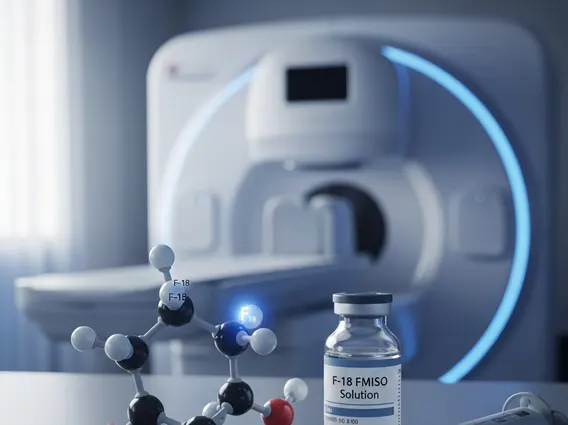
Fluorine F 18 Fluoromisonidazole is a radiopharmaceutical agent specifically designed for use with Positron Emission Tomography (PET) imaging. It is composed of a misonidazole molecule labeled with the radioactive isotope fluorine-18 (F-18). This compound is administered intravenously and allows medical professionals to non-invasively detect and map areas of hypoxia (low oxygen levels) in tissues, particularly within cancerous tumors.
The concept of Fluorine F 18 Fluoromisonidazole explained revolves around its ability to selectively accumulate in cells that are experiencing severe oxygen deprivation. This makes it an invaluable tool in understanding tumor biology, as hypoxia is a well-known characteristic of many aggressive cancers and can influence their response to various treatments, including radiation therapy and chemotherapy. By visualizing these hypoxic regions, clinicians can gain critical insights into a tumor’s microenvironment.
What is Fluorine F 18 Fluoromisonidazole Used For?
Fluorine F 18 Fluoromisonidazole is primarily used in oncology for imaging tumor hypoxia. Hypoxic tumor cells are often more resistant to conventional treatments like radiation and chemotherapy, making their identification vital for effective patient management. By pinpointing these areas, physicians can tailor treatment strategies, potentially leading to improved outcomes.
Specific applications include:
- Treatment Planning: Identifying hypoxic regions allows for dose escalation in radiation therapy to target resistant areas more effectively.
- Prognosis Assessment: The presence and extent of hypoxia can be a prognostic indicator for certain cancers, suggesting a more aggressive disease course.
- Monitoring Treatment Response: Changes in tumor hypoxia after therapy can indicate the effectiveness of treatment or the need for adjustments.
- Drug Development: It can be used in clinical trials to assess the efficacy of new anti-cancer drugs designed to overcome hypoxia.
Its use extends across various cancer types, including head and neck cancers, lung cancer, brain tumors, and sarcomas, where tumor hypoxia is a significant clinical challenge.
Mechanism of Action and Potential Side Effects
The Fluorine F 18 Fluoromisonidazole mechanism of action is based on the biochemical properties of misonidazole under varying oxygen conditions. When administered, fluoromisonidazole diffuses into cells. In well-oxygenated (normoxic) cells, it is rapidly metabolized and cleared from the tissue. However, in hypoxic cells, the low oxygen environment prevents its full metabolism, leading to its reduction and subsequent binding to intracellular macromolecules (proteins, lipids, nucleic acids). This “trapping” effect causes the radiotracer to accumulate within hypoxic cells.
Once trapped, the fluorine-18 isotope emits positrons, which are then detected by a PET scanner. The scanner reconstructs these signals into a detailed image, highlighting the regions of the body with significant hypoxia. This allows for a precise, non-invasive visualization of oxygen-deprived areas, which are often indicative of aggressive tumor growth and resistance to therapy.
Regarding Fluorine F 18 Fluoromisonidazole side effects, the agent is generally considered safe and well-tolerated. Most patients experience no or only mild, transient adverse reactions. Potential side effects are typically related to the injection site or the general experience of receiving a radiopharmaceutical:
- Mild discomfort or pain at the injection site.
- Transient nausea or headache, though these are uncommon.
- Rarely, allergic reactions may occur, similar to those seen with other intravenous medications.
The radiation dose associated with Fluorine F 18 Fluoromisonidazole PET scans is minimal and carefully controlled, comparable to other diagnostic imaging procedures. Medical professionals ensure that the benefits of the diagnostic information outweigh any potential risks from radiation exposure, adhering to strict safety protocols.



















