False Negative Test Result
A False Negative Test Result can have significant implications in healthcare, potentially delaying necessary treatment or intervention. Understanding this phenomenon is crucial for both medical professionals and patients.
Key Takeaways
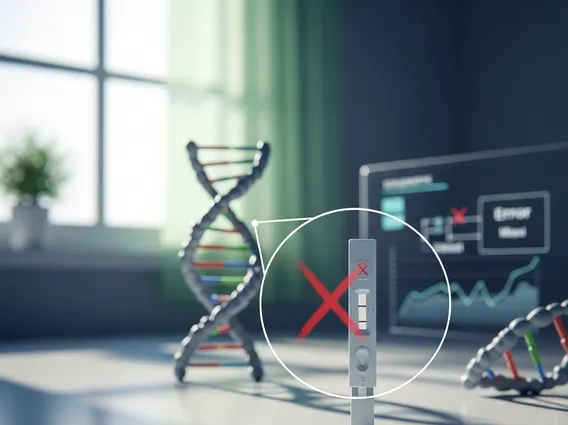
- A False Negative Test Result indicates the absence of a condition when it is actually present.
- Causes range from early testing and sample quality to test sensitivity and biological factors.
- Such results can lead to delayed diagnosis, inadequate treatment, and potential health complications.
- The accuracy of tests varies, and factors like prevalence and test design influence the likelihood of false negatives.
- Interpreting test results requires considering clinical context and, sometimes, repeat testing or alternative diagnostics.
Understanding What a False Negative Test Result Is
A False Negative Test Result occurs when a medical test indicates that a particular condition or disease is not present, even though the individual actually has it. This outcome can be particularly concerning as it may provide a false sense of security, leading to delayed diagnosis and treatment. For instance, in cancer screening, a false negative might mean a tumor goes undetected, allowing it to progress. The broader concept of understanding false negative test results involves recognizing that no diagnostic test is 100% perfect, and every test has inherent limitations regarding its sensitivity and specificity. Sensitivity refers to a test’s ability to correctly identify those with the disease, while specificity refers to its ability to correctly identify those without the disease. A test with lower sensitivity is more prone to yielding false negatives.
Common Causes of False Negative Test Results
Several factors can contribute to causes of false negative test results, making accurate diagnosis challenging. These can broadly be categorized into issues related to the patient, the sample, the test itself, and the timing of the test.
- Early Testing: If a test is performed too early in the disease progression, the levels of the marker or pathogen being detected might be too low to register, even if the condition is present. For example, some viral tests might not detect the virus until a certain viral load is reached.
- Sample Quality or Collection: Improper collection, storage, or handling of a sample can degrade its quality, leading to insufficient material for detection. Contamination or dilution can also affect results.
- Test Sensitivity: The inherent design of a test dictates its sensitivity. Some tests are simply less sensitive than others, meaning they require a higher concentration of the target substance to produce a positive result.
- Biological Factors: Individual biological variations, such as a suppressed immune response or genetic mutations in the pathogen, can sometimes interfere with the test’s ability to detect the target.
- Technical Errors: Although less common with automated systems, human error during laboratory processing can also contribute to inaccurate results.
Assessing the Accuracy and Impact of False Negative Tests
The accuracy of tests that produce false negatives is not a fixed value but varies significantly depending on the specific test, the condition being screened for, and the population being tested. For example, the sensitivity of rapid antigen tests for COVID-19 can range from 50% to 80% depending on the viral load and timing of infection, meaning 20-50% of infected individuals might receive a False Negative Test Result, especially early in the infection or if asymptomatic (Source: CDC). In contrast, PCR tests generally boast higher sensitivities, often above 90%.
The impact of a False Negative Test Result can be profound, both for the individual and public health. For the individual, it can lead to:
- Delayed Treatment: Critical conditions, such as infections or cancers, might go untreated, allowing the disease to progress and potentially worsen outcomes.
- Continued Transmission: In the case of infectious diseases, an infected individual receiving a false negative might unknowingly continue to spread the pathogen to others, contributing to outbreaks.
- Psychological Stress: The eventual correct diagnosis after a false negative can cause significant emotional distress and erode trust in medical testing.
Healthcare providers must consider the pre-test probability of a disease and clinical symptoms when interpreting test results. If there is a strong suspicion of a condition despite a negative test, further diagnostic steps, such as repeat testing, using a different type of test, or clinical observation, are often warranted to mitigate the risks associated with a false negative.