
Cleaved
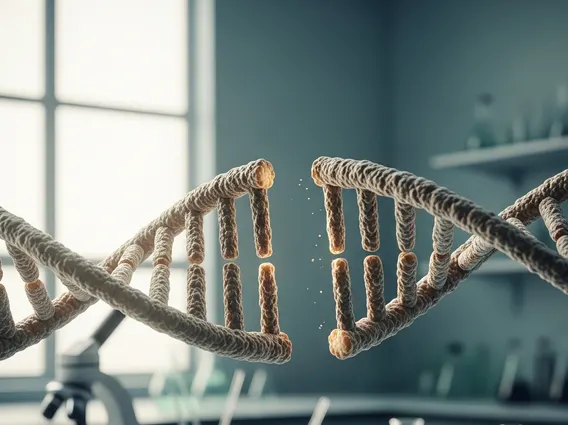
In the fields of biology and medicine, the term Cleaved refers to the process or state of being divided or separated, typically at a specific point, often by enzymatic action. This fundamental biological mechanism plays a crucial role in numerous physiological processes, from protein activation to DNA repair.
Key Takeaways
- Cleaved signifies a precise biochemical separation or division, often mediated by enzymes.
- This process is essential for activating proteins, processing nucleic acids, and regulating cellular functions.
- Examples include the cleavage of proenzymes into active forms and the fragmentation of DNA during apoptosis.
- Understanding cleavage is vital for studying disease mechanisms, drug development, and diagnostic procedures.
What is Cleaved?
Cleaved refers to the act of splitting or dividing a larger molecule into smaller components. In a biological context, this often involves the breaking of covalent bonds within a macromolecule, such as a protein, nucleic acid, or lipid. The process is typically highly specific, catalyzed by enzymes known as hydrolases or proteases, which recognize particular sequences or structures within their substrates. The outcome of cleavage can be diverse, leading to the activation or inactivation of a protein, the maturation of a precursor molecule, or the degradation of cellular components.
The cleaved definition and usage are central to understanding molecular biology. For instance, many proteins are synthesized as inactive precursors (proproteins) that require cleavage to become functionally active. This precise enzymatic scission ensures that proteins are activated only when and where they are needed, preventing uncontrolled activity that could be detrimental to the cell or organism. This fundamental concept underpins a vast array of biological processes, from digestion to immune responses.
Medical Applications and Usage of Cleaved
The concept of Cleaved is profoundly important across various medical and biological disciplines, influencing everything from normal physiological function to disease pathology. Understanding when and how molecules are cleaved provides critical insights into health and disease. For example, in oncology, the cleavage of specific proteins can be indicative of cancer progression or metastasis, making these cleavage events potential diagnostic markers or therapeutic targets.
The meaning of cleaved word extends to numerous vital biological processes, including:
- Protein Activation: Many enzymes, hormones, and signaling molecules are synthesized as inactive precursors that become active only after specific proteolytic cleavage. For instance, proinsulin is cleaved to yield active insulin and C-peptide.
- Apoptosis (Programmed Cell Death): During apoptosis, specific proteins like caspases are activated by cleavage, leading to a cascade of events that systematically dismantle the cell. DNA is also cleaved into fragments.
- Immune Response: Components of the complement system and various cytokines are activated through proteolytic cleavage, playing key roles in the body’s defense mechanisms.
- Blood Coagulation: The intricate cascade of blood clotting involves numerous proteins that are activated sequentially through cleavage, ultimately leading to the formation of a fibrin clot.
- Viral Replication: Many viruses rely on host or viral proteases to cleave their polyproteins into functional individual proteins, a critical step for their replication cycle.
Dysregulation of cleavage processes can lead to various diseases. For instance, aberrant protein cleavage is implicated in neurodegenerative disorders like Alzheimer’s disease, where amyloid precursor protein (APP) is abnormally cleaved, leading to amyloid plaque formation. Similarly, in infectious diseases, targeting viral proteases that cleave viral polyproteins has proven to be an effective antiviral strategy, as seen with HIV protease inhibitors.
Cleaved in a Sentence: Examples from Biology and Medicine
To illustrate the practical application and context of the term, here are several cleaved in a sentence example instances from scientific and medical literature:
- “The precursor protein was cleaved by a specific protease, yielding two active fragments.”
- “During apoptosis, DNA is systematically cleaved into nucleosome-sized fragments by activated endonucleases.”
- “Activation of the zymogen involves the removal of an inhibitory peptide, which is cleaved off by an upstream enzyme.”
- “Researchers observed that the viral polyprotein was efficiently cleaved by the host cell’s machinery, facilitating viral replication.”
- “Mutations preventing the proper cleavage of the receptor can lead to its constitutive activation, contributing to disease pathology.”
These examples highlight how “cleaved” is used to describe a precise, often enzyme-mediated, scission event that is fundamental to biological regulation and cellular function. The specificity and timing of these cleavage events are critical determinants of cellular fate and physiological outcomes.



















