
Extraocular
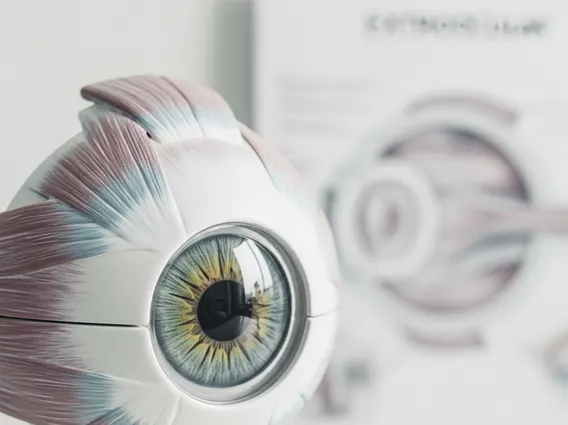
The term Extraocular refers to structures or processes located outside the eyeball itself, yet intimately involved with its function. This concept is fundamental in ophthalmology and neuroanatomy, primarily describing the muscles responsible for eye movement.
Key Takeaways
- Extraocular refers to structures outside the eyeball, most commonly the muscles controlling eye movement.
- There are six extraocular muscles for each eye, enabling precise and coordinated vision.
- These muscles facilitate a wide range of eye movements, including elevation, depression, adduction, abduction, and rotation.
- Proper function of extraocular muscles is crucial for binocular vision, depth perception, and tracking objects.
- Dysfunction in these muscles can lead to conditions like strabismus or diplopia, impacting visual clarity and coordination.
What is Extraocular?
In a medical context, the extraocular definition medical describes anything pertaining to the exterior of the eye. While it can broadly refer to surrounding tissues, its most common and significant application is in relation to the extraocular muscles. These specialized muscles are situated within the orbit but outside the globe of the eye, acting to control its precise movements. Understanding the extraocular components is vital for diagnosing and treating various ocular conditions, as their health and coordinated function are indispensable for normal vision.
The term differentiates these external structures from intraocular components, which are located inside the eyeball itself, such as the lens, iris, and retina. The distinction is crucial for anatomical classification and clinical assessment, allowing healthcare professionals to pinpoint the location of a condition or injury. For instance, an extraocular tumor would be located outside the eyeball, whereas an intraocular tumor would be within it.
Extraocular Muscles: Function and Eye Movement
The intricate ballet of vision relies heavily on the precise coordination of the extraocular muscles function. Each eye is equipped with six distinct extraocular muscles, working in concert to facilitate a vast range of movements. These muscles are responsible for directing our gaze, allowing us to track moving objects, shift focus between near and far, and maintain stable vision even when our head moves. The coordinated action of these muscles ensures that both eyes move together, a process known as conjugate gaze, which is essential for binocular vision and accurate depth perception.
The extraocular eye movement explained involves a complex interplay of these six muscles, each innervated by specific cranial nerves (Oculomotor nerve III, Trochlear nerve IV, and Abducens nerve VI). Their actions allow for movements along three axes: vertical (up and down), horizontal (side to side), and torsional (rotation). The precise control over these movements is critical for tasks ranging from reading to driving, where rapid and accurate shifts in gaze are constantly required.
Here is a breakdown of the six extraocular muscles and their primary actions:
| Muscle Name | Primary Action |
|---|---|
| Superior Rectus | Elevates, adducts (inward), internally rotates |
| Inferior Rectus | Depresses, adducts (inward), externally rotates |
| Medial Rectus | Adducts (inward) |
| Lateral Rectus | Abducts (outward) |
| Superior Oblique | Depresses, abducts (outward), internally rotates |
| Inferior Oblique | Elevates, abducts (outward), externally rotates |
Dysfunction of these muscles, whether due to nerve damage, muscle weakness, or structural abnormalities, can lead to significant visual impairments. Conditions such as strabismus (misalignment of the eyes) or diplopia (double vision) often stem from issues with extraocular muscle coordination. According to the American Academy of Ophthalmology, strabismus affects approximately 4% of children in the United States, highlighting the prevalence and impact of extraocular muscle disorders on visual health.



















