
Mitochondria
Mitochondria are fundamental organelles within eukaryotic cells, often recognized for their critical role in energy production. Understanding these cellular components is essential for comprehending basic biological processes and their implications for health.
Key Takeaways
- Mitochondria are often called the “powerhouses” of the cell, primarily responsible for generating adenosine triphosphate (ATP).
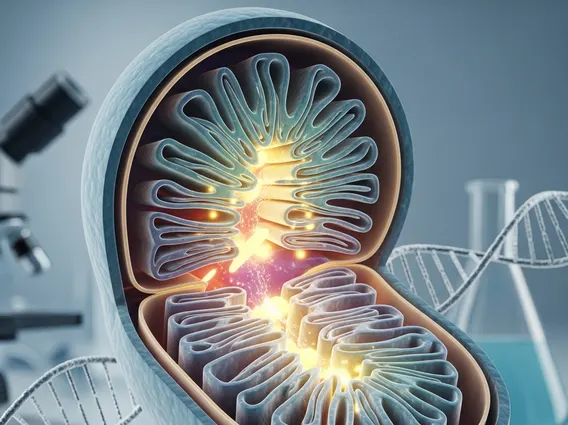
- They possess a unique double-membrane structure, including an inner membrane folded into cristae, which increases surface area for energy production.
- Mitochondria are found in nearly all eukaryotic cells, with their abundance varying based on the cell’s energy demands.
- Their vital functions extend beyond energy, influencing cellular metabolism, signaling, and programmed cell death.
- Dysfunctional Mitochondria are implicated in a wide range of diseases, highlighting their importance for overall cellular health.
What is Mitochondria: Structure and Primary Functions
Mitochondria are specialized organelles found in the cytoplasm of nearly all eukaryotic cells. These intricate structures are crucial for sustaining life, primarily by converting nutrients into usable energy for the cell. The term mitochondria function in cells encompasses their role in generating the vast majority of the cell’s supply of adenosine triphosphate (ATP), which is used as a source of chemical energy.
Structurally, Mitochondria are characterized by their distinctive double-membrane system. The outer mitochondrial membrane encloses the entire organelle, acting as a protective barrier and containing various transport proteins. The inner mitochondrial membrane is highly folded into structures called cristae, significantly increasing its surface area. This increased surface area is vital because it houses the protein complexes involved in the electron transport chain and ATP synthase, the machinery responsible for oxidative phosphorylation. The space between the outer and inner membranes is known as the intermembrane space, while the innermost compartment, enclosed by the inner membrane, is the mitochondrial matrix. The matrix contains enzymes for the citric acid cycle, mitochondrial DNA, ribosomes, and various ions.
- Outer Membrane: Permeable to small molecules, contains transport proteins.
- Inner Membrane: Highly folded into cristae, site of electron transport chain and ATP synthesis.
- Intermembrane Space: Area between the two membranes.
- Matrix: Innermost compartment, contains enzymes for metabolic cycles, mitochondrial DNA.
Location and Vital Importance of Mitochondria in Cells
Mitochondria are ubiquitous, found in almost all eukaryotic cells, from simple yeast to complex human cells. Their distribution and number within a cell are directly correlated with the cell’s energy requirements. For instance, cells with high energy demands, such as muscle cells, liver cells, and neurons, contain hundreds to thousands of Mitochondria, strategically positioned near sites of ATP utilization. Conversely, cells with lower energy needs may have fewer Mitochondria. This strategic placement ensures efficient energy delivery where it is most needed, for example, adjacent to myofibrils in muscle cells or synapses in neurons.
The importance of Mitochondria extends far beyond their primary role as cellular powerhouses. They are central to numerous critical cellular processes, making them indispensable for cellular health and organismal survival. Beyond ATP production, Mitochondria are involved in:
- Calcium Homeostasis: They regulate intracellular calcium levels, which is crucial for cell signaling, muscle contraction, and neurotransmission.
- Apoptosis (Programmed Cell Death): Mitochondria play a pivotal role in initiating and executing programmed cell death, a fundamental process for development and removing damaged or unwanted cells.
- Metabolic Regulation: They participate in various metabolic pathways, including fatty acid oxidation, amino acid metabolism, and heme synthesis, integrating with the cell’s overall metabolic state.
- Reactive Oxygen Species (ROS) Production and Scavenging: While generating some ROS as byproducts, Mitochondria also house antioxidant defense systems to manage oxidative stress, maintaining cellular balance.
Dysfunction in Mitochondria can have profound effects on cellular function and is implicated in a wide array of human diseases, including neurodegenerative disorders like Parkinson’s and Alzheimer’s, metabolic diseases such as type 2 diabetes, cardiovascular diseases, and various cancers. According to research published in the journal Nature Reviews Molecular Cell Biology, mitochondrial dysfunction is a common underlying factor in many chronic and age-related diseases, underscoring their critical role in maintaining health.



















