
2 D Mammography
2D Mammography, also known as conventional mammography, is a widely used medical imaging technique that plays a crucial role in the early detection and diagnosis of breast cancer. It provides a two-dimensional X-ray image of the breast, helping healthcare professionals identify abnormalities.
Key Takeaways
- 2D Mammography is a standard X-ray imaging method for breast cancer screening and diagnosis.
- The procedure involves gentle breast compression and X-ray exposure to create flat, two-dimensional images.
- It works by detecting differences in tissue density, highlighting potential tumors or calcifications.
- Benefits include its widespread availability, established effectiveness, and role in early detection.
- Regular screening with 2D mammography can significantly reduce breast cancer mortality rates.
What is 2D Mammography?
2D Mammography refers to a specialized medical imaging technique that uses low-dose X-rays to examine breast tissue. It is the traditional form of mammography, capturing images from two standard views for each breast: craniocaudal (top-to-bottom) and mediolateral oblique (side-to-side). This imaging method is fundamental in both screening for breast cancer in asymptomatic women and diagnosing breast conditions in those with symptoms or concerns.
This diagnostic tool helps in identifying various breast abnormalities, including calcifications, masses, and architectural distortions, which can be indicators of breast cancer. Its long history of use has established it as a cornerstone in breast health, contributing significantly to early detection efforts globally.
The 2D Mammography Procedure and How It Works
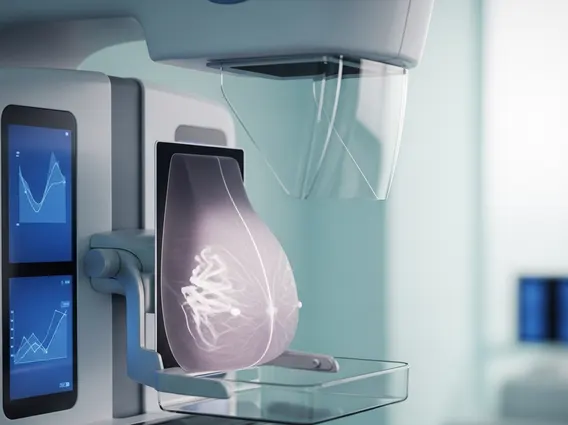
The 2D mammography procedure is typically performed in a dedicated imaging center by a trained technologist. During the examination, the patient’s breast is positioned on a special platform and gently compressed between two plates. This compression is essential for several reasons: it flattens the breast tissue to ensure all areas are visible, reduces the amount of radiation needed, minimizes motion blur, and spreads out the tissue to help visualize abnormalities more clearly.
Once the breast is positioned, an X-ray beam passes through the tissue, and a detector on the opposite side captures the attenuated X-rays. This process generates a single, flat, two-dimensional image. How 2D mammography works relies on the principle that different types of breast tissue (fat, glandular tissue, and potential tumors) absorb X-rays to varying degrees. Dense tissues, like tumors or calcifications, appear whiter on the image, while fatty tissues appear darker. Radiologists then analyze these images for any suspicious findings, comparing them with previous mammograms if available.
Benefits of 2D Mammography
2D Mammography offers several significant benefits, particularly in the realm of breast cancer screening and early detection. Its widespread availability and established efficacy make it a critical tool in public health initiatives aimed at reducing breast cancer mortality.
- Early Detection: 2D mammography is highly effective at detecting breast cancers at an early stage, often before they can be felt during a physical exam. Early detection is crucial for successful treatment outcomes.
- Reduced Mortality: Regular screening mammograms have been shown to significantly reduce breast cancer mortality rates. According to the American Cancer Society, mammography has contributed to a substantial decline in breast cancer deaths since 1990.
- Accessibility and Cost-Effectiveness: As a long-standing and widely adopted technology, 2D mammography is generally more accessible and less costly than newer imaging modalities, making it a viable option for a broad population.
- Established Track Record: Decades of research and clinical use have validated the effectiveness of 2D mammography, providing a robust evidence base for its continued use in screening programs.
Despite the emergence of newer technologies like 3D mammography (tomosynthesis), 2D mammography remains a valuable and often primary screening tool, especially in regions where advanced imaging may not be readily available. Its ability to provide clear images of breast tissue continues to save lives by facilitating timely diagnosis and intervention.



















