
Strontium
Strontium is a fascinating chemical element with a diverse range of applications, from industrial uses to significant roles in medical science. This article explores its fundamental characteristics, where it is found, and its various practical applications.
Key Takeaways
- Strontium is a soft, silvery-white alkaline earth metal, highly reactive and never found free in nature.
- It exhibits distinct physical and chemical properties, including a characteristic red flame in fireworks.
- Naturally occurring strontium is primarily found in minerals such as celestine and strontianite.
- Its uses span various industries, including pyrotechnics, metallurgy, and glass manufacturing.
- Medically, certain strontium isotopes and compounds are used in bone health and cancer treatment, highlighting its clinical relevance.
What is Strontium?
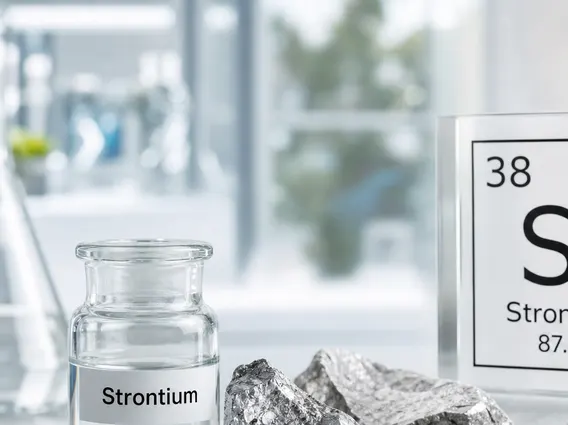
Strontium is a chemical element with the atomic number 38 and the symbol Sr. It belongs to the group of alkaline earth metals, positioned in Group 2 of the periodic table. As a soft, silvery-white metal, the Strontium element is highly reactive, readily combining with oxygen and water, which means it is never found in its pure, elemental form in nature. Its reactivity causes it to quickly tarnish when exposed to air, forming a yellowish oxide layer. This element shares chemical similarities with its neighbors in the periodic table, calcium and barium, particularly in its tendency to form divalent cations (Sr²⁺) in compounds.
The name Strontium originates from Strontian, a village in Scotland where the mineral strontianite was first discovered. While often discussed in the context of its elemental properties, Strontium also holds specific importance in clinical and medical fields, particularly concerning bone metabolism and certain therapeutic applications, which underscores its multifaceted nature.
Strontium Properties, Uses, and Natural Occurrence
The unique characteristics of Strontium contribute to its varied applications. Among its notable physical strontium uses and properties, it is known for producing a brilliant crimson red color when heated in a flame, making it a key component in fireworks and signal flares. Chemically, Strontium is highly electropositive and readily loses its two valence electrons to form ionic compounds. It reacts vigorously with water to produce strontium hydroxide and hydrogen gas, and it burns in air to form strontium oxide and strontium nitride.
The applications of Strontium are diverse:
- Pyrotechnics: As mentioned, it’s essential for the red color in fireworks.
- Metallurgy: Used as an alloy in aluminum casting to improve the castability and strength of the metal.
- Glass and Ceramics: Strontium carbonate is used in the production of cathode ray tubes (CRTs) for televisions and computer monitors, though this use has declined with the advent of flat-panel displays. It also finds use in special glasses and glazes.
- Medical Applications: This is where strontium facts and information become particularly relevant to health. Strontium ranelate has been used in the treatment of osteoporosis, a condition characterized by brittle bones, due to its ability to both inhibit bone resorption and stimulate bone formation. However, its use is restricted in some regions due to potential cardiovascular side effects. Additionally, the radioactive isotope Strontium-89 (Metastron) is employed in palliative care for bone pain associated with metastatic prostate and breast cancer, providing targeted pain relief.
Regarding where is strontium found, it is a relatively abundant element, making up about 0.034% of the Earth’s crust. It does not occur as a free element but is found combined in various minerals. The two most significant naturally occurring strontium minerals are celestine (strontium sulfate, SrSO₄) and strontianite (strontium carbonate, SrCO₃). Celestine is the more common of the two and is the primary source for commercial strontium production. These minerals are mined globally, with significant deposits found in countries like China, Spain, Mexico, and Turkey. Strontium is also present in seawater and in trace amounts in certain foods, reflecting its natural distribution within the environment and biological systems.



















