
Stromal Tumor
Stromal tumors represent a heterogeneous group of growths that originate from the connective tissues, or stroma, which provide structural support to organs throughout the body. These tumors can manifest in various locations and exhibit a wide range of behaviors, from benign to malignant.
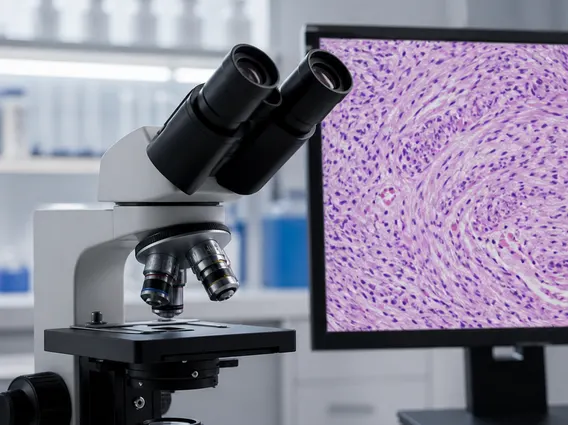
Key Takeaways
- Stromal tumors are neoplasms derived from the supportive connective tissues of organs.
- They encompass a broad spectrum, including benign and malignant forms, affecting diverse anatomical sites.
- Clinical manifestations, or stromal tumor symptoms and signs, are highly dependent on the tumor’s location and size.
- Accurate identification of types of stromal tumors explained is critical for guiding treatment decisions.
- Causes and diagnosis of stromal tumors typically involve a combination of imaging, biopsy, and specialized pathological analysis.
What is a Stromal Tumor?
A Stromal Tumor refers to a growth that develops from the stromal cells, which are the connective tissue cells that form the supporting framework of organs. Unlike tumors arising from the functional cells of an organ (parenchyma), stromal tumors originate from the surrounding matrix. These tumors can occur in virtually any part of the body where connective tissue is present, including the gastrointestinal tract, uterus, ovaries, and soft tissues. They are classified based on their cellular origin and behavior, which can range from benign (non-cancerous) to malignant (cancerous). The specific characteristics of a stromal tumor, such as its growth rate and potential to spread, are crucial for determining its clinical significance and appropriate management.
Types, Symptoms, Causes, and Diagnosis of Stromal Tumors
Stromal tumors exhibit considerable diversity, impacting various organ systems. Understanding the types of stromal tumors explained is essential for proper classification and treatment. Some of the most well-known examples include:
- Gastrointestinal Stromal Tumors (GISTs): These are the most common mesenchymal tumors of the gastrointestinal tract, originating from the interstitial cells of Cajal. They can occur anywhere from the esophagus to the anus, with the stomach and small intestine being the most frequent sites.
- Uterine Stromal Tumors: These arise from the connective tissue of the uterus. Examples include endometrial stromal nodules (benign) and endometrial stromal sarcomas (malignant), which can be low-grade or high-grade.
- Ovarian Stromal Tumors: Developing from the specialized connective tissue of the ovary, these tumors can produce hormones, leading to specific endocrine symptoms. Granulosa cell tumors and Sertoli-Leydig cell tumors are examples.
The stromal tumor symptoms and signs vary significantly based on the tumor’s location, size, and whether it’s benign or malignant. For instance, GISTs in the stomach might cause abdominal pain, bleeding, or a palpable mass, while uterine stromal tumors could lead to abnormal vaginal bleeding or pelvic discomfort. Ovarian stromal tumors might present with abdominal distension, pain, or symptoms related to hormone production, such as virilization (development of male characteristics) or abnormal uterine bleeding. Many small stromal tumors, especially benign ones, may be asymptomatic and discovered incidentally during imaging for other conditions.
The precise causes and diagnosis of stromal tumors are often complex. While the exact etiology for many stromal tumors remains unknown, some are linked to specific genetic mutations. For example, GISTs are frequently associated with mutations in the KIT or PDGFRA genes. Diagnosis typically begins with imaging studies, such as ultrasound, CT scans, or MRI, to identify the tumor’s location and size. However, a definitive diagnosis almost always requires a biopsy, where a tissue sample is extracted and examined under a microscope by a pathologist. Immunohistochemistry, a technique that uses antibodies to detect specific antigens in the tissue, plays a crucial role in distinguishing different types of stromal tumors and determining their malignant potential. Molecular testing for specific genetic mutations may also be performed, particularly for GISTs, to guide targeted therapy.



















