
Stage I Pancreatic Cancer
Stage I Pancreatic Cancer represents the earliest and most localized form of pancreatic cancer, offering the best opportunities for curative treatment. Understanding this stage is crucial for patients and healthcare providers alike, as early diagnosis significantly impacts treatment outcomes.
Key Takeaways
- Stage I Pancreatic Cancer is characterized by a small tumor confined to the pancreas, without spread to lymph nodes or distant sites.
- Early detection is challenging due to often vague or absent symptoms, making awareness of subtle signs important.
- Surgical removal of the tumor is the primary treatment for Stage I, often followed by adjuvant chemotherapy.
- The prognosis for Stage I Pancreatic Cancer is generally more favorable compared to later stages, emphasizing the importance of early diagnosis.
What is Stage I Pancreatic Cancer?
Stage I Pancreatic Cancer refers to a condition where a malignant tumor is found exclusively within the pancreas and has not spread to nearby lymph nodes or distant organs. This early stage is further categorized into Stage IA and Stage IB, primarily based on the tumor’s size. In Stage IA, the tumor measures 2 centimeters or less, while in Stage IB, the tumor is larger than 2 centimeters but still confined to the pancreas. This classification is vital for determining the most appropriate treatment strategy and predicting patient outcomes.
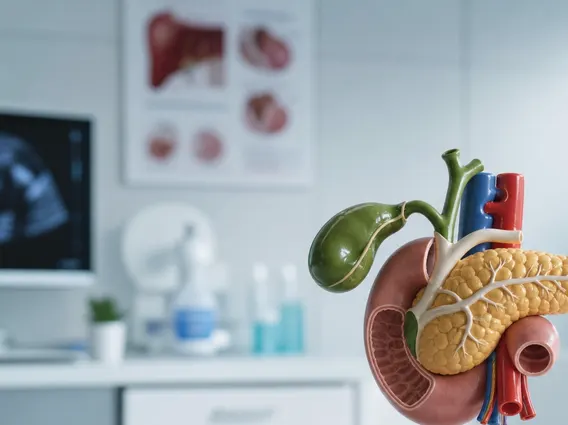
The pancreas is a gland located behind the stomach, playing a crucial role in digestion and blood sugar regulation. When cancer develops in the pancreas, it often goes undetected until advanced stages due to its deep location and the non-specific nature of early symptoms. However, identifying the disease at Stage I is critical because it means the cancer is still localized and potentially resectable, offering the best chance for a cure through surgery.
Symptoms and Early Detection of Stage I Pancreatic Cancer
Detecting Stage I Pancreatic Cancer can be particularly challenging because symptoms of early pancreatic cancer are often subtle, non-specific, or entirely absent. The pancreas’s location deep within the abdomen means that tumors can grow to a significant size before causing noticeable issues. When symptoms do appear, they can easily be mistaken for less serious conditions.
Common symptoms that may indicate early pancreatic cancer, though not exclusive to it, include:
- Jaundice: Yellowing of the skin and eyes, often accompanied by dark urine and pale stools, caused by a tumor blocking the bile duct.
- Abdominal or Back Pain: A dull ache in the upper abdomen that may radiate to the back.
- Unexplained Weight Loss: Significant weight loss without changes in diet or exercise.
- New-Onset Diabetes or Worsening of Existing Diabetes: The pancreas produces insulin, and a tumor can affect its function.
- Loss of Appetite: Feeling full quickly or having a general disinterest in food.
Due to the elusive nature of these signs, early detection often relies on incidental findings during imaging for other conditions or when symptoms become more pronounced. Diagnostic tools such as computed tomography (CT) scans, magnetic resonance imaging (MRI), endoscopic ultrasound (EUS), and biopsy are crucial for confirming a diagnosis and staging the cancer.
Treatment Options and Prognosis for Stage I Pancreatic Cancer
The primary goal of stage 1 pancreatic cancer treatment is to remove the tumor entirely, as this offers the best chance for long-term survival. For patients diagnosed with Stage I, surgical resection is the cornerstone of therapy. The specific surgical procedure depends on the tumor’s location within the pancreas:
| Tumor Location | Surgical Procedure | Description |
|---|---|---|
| Head of the pancreas | Whipple procedure (pancreaticoduodenectomy) | Removal of the head of the pancreas, duodenum, gallbladder, and part of the bile duct. |
| Body or tail of the pancreas | Distal pancreatectomy | Removal of the body and tail of the pancreas, often with the spleen. |
Following surgery, adjuvant chemotherapy is typically recommended to eliminate any remaining microscopic cancer cells and reduce the risk of recurrence. Regimens often involve drugs like gemcitabine or FOLFIRINOX. In some cases, radiation therapy may also be considered.
The prognosis for stage 1 pancreatic cancer is generally more favorable than for later stages, largely due to the possibility of complete surgical removal. While pancreatic cancer remains a challenging disease, early diagnosis significantly improves outcomes. According to the American Cancer Society, the 5-year relative survival rate for localized pancreatic cancer (which includes Stage I) is approximately 44%. This figure underscores the critical importance of early detection and aggressive treatment strategies to improve patient survival and quality of life.



















