Septate
The term Septate refers to a structure that is divided by a septum or septa, which are partition-like walls. This anatomical feature is observed across various biological contexts, from microscopic organisms to complex organ systems.
Key Takeaways
- Septate describes structures divided by internal walls called septa.
- In biology, septate definition biology often refers to the presence of cross-walls in fungal hyphae.
- Fungi are categorized as either septate or nonseptate based on the presence or absence of these hyphal divisions.
- The heart contains vital septa, such as the interatrial and interventricular septa, which separate its chambers.
- Understanding septate structures is crucial for comprehending biological organization and medical conditions.
What is Septate?
Septate describes any biological structure that is divided by one or more septa (singular: septum). A septum is a partition or wall that separates two cavities or masses of softer tissue. This structural characteristic is fundamental across many biological disciplines, influencing function and classification. For instance, in microbiology, the presence or absence of septa can differentiate types of organisms, while in anatomy, septa are critical for the proper functioning of organs.
The septate definition biology encompasses a wide range of applications, from the cellular level to macroscopic anatomy. These dividing walls can be complete or incomplete, rigid or flexible, depending on their biological role. Their primary function is often to provide structural support, compartmentalize functions, or regulate the passage of substances between different sections of an organism or organ.
Septate vs. Nonseptate Fungi
Fungi exhibit diverse structural organizations, particularly within their hyphae, which are the thread-like filaments forming the fungal body (mycelium). The presence or absence of septa within these hyphae is a key characteristic used for fungal classification and understanding their growth patterns. Septate fungi possess cross-walls (septa) that divide their hyphae into individual cells, though these septa often have pores allowing for cytoplasmic streaming and nutrient exchange between cells. In contrast, nonseptate fungi, also known as coenocytic fungi, lack these septa, resulting in a continuous, multinucleate cytoplasmic mass within their hyphae.
The structural difference between septate and nonseptate hyphae has implications for how fungi grow, reproduce, and interact with their environment. For example, septa can provide a degree of protection, as damage to one hyphal compartment may not immediately affect the entire mycelium. Conversely, the continuous cytoplasm of nonseptate fungi allows for rapid distribution of nutrients and organelles.
| Feature | Septate Fungi | Nonseptate Fungi (Coenocytic) |
|---|---|---|
| Hyphal Structure | Hyphae divided by cross-walls (septa) | Hyphae lack cross-walls, continuous cytoplasm |
| Cellularity | Multicellular, with individual cells separated by septa (often porous) | Multinucleate, appearing as a single, large cell |
| Cytoplasm | Cytoplasm flows through pores in septa | Cytoplasm is continuous throughout the hypha |
| Examples | Ascomycetes, Basidiomycetes | Zygomycetes |
Septate Structures in the Heart
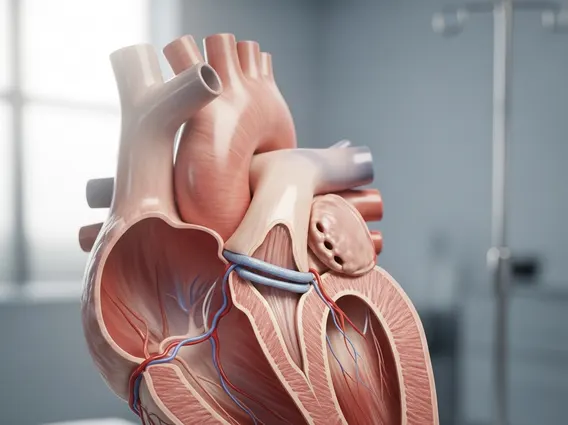
In the context of human anatomy, particularly the cardiovascular system, septa play a crucial role in maintaining proper blood flow and heart function. The septate heart meaning refers to the presence of muscular or membranous walls that divide the heart into distinct chambers. The two primary septa in the heart are the interatrial septum and the interventricular septum.
- Interatrial Septum: This wall separates the right atrium from the left atrium, preventing the mixing of oxygen-poor blood from the body with oxygen-rich blood from the lungs at the atrial level.
- Interventricular Septum: A much thicker, muscular wall that separates the right ventricle from the left ventricle. This septum is essential for maintaining the high-pressure system of the left ventricle, which pumps blood to the entire body, separate from the lower-pressure system of the right ventricle, which pumps blood to the lungs.
Congenital heart defects, such as atrial septal defects (ASDs) or ventricular septal defects (VSDs), involve abnormalities in these septa. These defects can lead to inefficient blood circulation, causing symptoms like shortness of breath, fatigue, and in severe cases, heart failure. According to the Centers for Disease Control and Prevention (CDC), approximately 1 in 100 babies born in the United States each year has a congenital heart defect, with septal defects being among the most common types. Early diagnosis and intervention are critical for managing these conditions and improving patient outcomes.