Reticular Dermis
The Reticular Dermis is a crucial layer of the skin, forming the deeper and thicker part of the dermis. It plays a vital role in providing the skin with its strength, elasticity, and overall structural integrity.
Key Takeaways
- The Reticular Dermis is the dense, deeper layer of the dermis, primarily composed of thick collagen fibers.
- It provides the skin with significant tensile strength and elasticity, preventing tearing and allowing for movement.
- Key components include collagen type I, elastic fibers, fibroblasts, and a rich supply of blood vessels and nerves.
- This layer anchors the epidermis to the subcutaneous tissue and houses various accessory structures.
- Its structural integrity is essential for maintaining skin health, appearance, and protective functions.
What is Reticular Dermis?
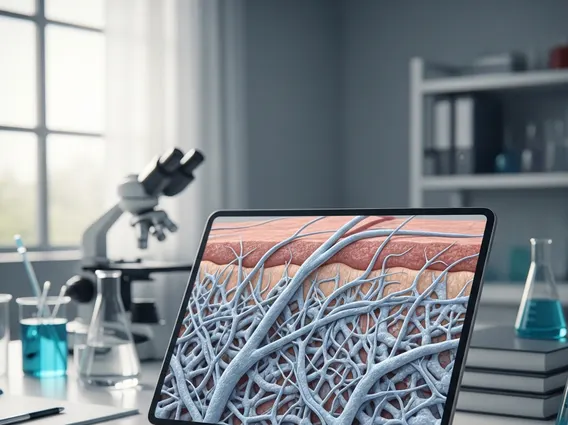
The Reticular Dermis is the lower, thicker layer of the dermis, situated beneath the papillary dermis and above the subcutaneous tissue. It is characterized by its dense, irregular connective tissue, which primarily consists of tightly packed bundles of collagen fibers. This robust structure is responsible for the skin’s resistance to stretching and its ability to return to its original shape after being deformed.
Understanding the reticular layer of dermis anatomy reveals its complexity, as it is not merely a passive support layer. It is a dynamic tissue that houses a network of blood vessels, lymphatic vessels, nerves, and various accessory structures of the skin, such as hair follicles, sebaceous glands, and sweat glands. The arrangement of collagen fibers in this layer provides multidirectional strength, making the skin resilient against mechanical stress from different angles. This structural organization is vital for protecting underlying tissues and organs from external forces.
The term “reticular” refers to the dense network of collagen and elastic fibers that interlace throughout this layer, creating a strong, mesh-like framework. This intricate weaving is what gives the skin its characteristic toughness and flexibility, distinguishing it from the looser, more superficial papillary dermis. The integrity of the Reticular Dermis is fundamental to overall skin health and its protective functions.
Anatomy and Key Functions of the Reticular Dermis
The reticular dermis function and structure are intrinsically linked, with its anatomical composition directly dictating its physiological roles. This layer is predominantly made up of:
- Collagen Fibers: Primarily type I collagen, these thick, coarse bundles are arranged in a dense, irregular pattern, providing significant tensile strength and resistance to tearing.
- Elastic Fibers: Interspersed among the collagen, these fibers provide elasticity, allowing the skin to stretch and recoil.
- Fibroblasts: These are the main cells responsible for synthesizing the collagen and elastic fibers, as well as the ground substance that fills the spaces between them.
- Ground Substance: Composed of proteoglycans and glycosaminoglycans (like hyaluronic acid), it provides hydration and lubrication within the tissue.
The Reticular Dermis serves several critical functions that are essential for maintaining skin health and overall body protection. These functions include:
The layers of the dermis explained highlight the reticular dermis as the primary contributor to the skin’s mechanical properties. It provides the bulk of the skin’s strength and elasticity, which is crucial for resisting physical trauma and allowing for body movement without damage. For instance, the skin’s ability to stretch over joints and then return to its original state is largely due to the elastic fiber network within this layer.
Furthermore, the Reticular Dermis plays a significant role in thermoregulation through its rich vascular network, which can dilate or constrict to regulate heat loss. It also houses nerve endings responsible for sensing pressure, vibration, and pain, contributing to the skin’s sensory capabilities. The accessory structures embedded within this layer, such as hair follicles and glands, perform functions ranging from hair growth and oil secretion to sweat production, all vital for protection and homeostasis.
The structural support provided by the Reticular Dermis also anchors the epidermis firmly to the underlying subcutaneous tissue, preventing shear forces from separating the layers. This deep anchoring is a key aspect of the skin’s barrier function, protecting the body from pathogens, UV radiation, and dehydration.