Pulmonary Function Test
Pulmonary Function Tests (PFTs) are a group of diagnostic procedures that measure how well your lungs work. These tests assess lung volume, capacity, rates of flow, and gas exchange, providing crucial information about respiratory health.
Key Takeaways
- Pulmonary Function Tests (PFTs) evaluate lung function, including air movement, volume, and gas exchange.
- They are essential for diagnosing and monitoring various lung conditions like asthma, COPD, and restrictive lung diseases.
- Common PFTs include spirometry, lung volume measurements, and diffusion capacity tests.
- PFTs involve breathing into specialized equipment that measures different aspects of lung performance.
- Interpreting PFT results requires a healthcare professional to understand their implications for diagnosis and treatment.
What is a Pulmonary Function Test (PFT)?
A Pulmonary Function Test (PFT) is a non-invasive diagnostic tool used to assess the overall health and function of a person’s lungs. These tests measure how much air your lungs can hold, how quickly you can move air in and out, and how well your lungs add oxygen to your blood and remove carbon dioxide. The purpose of pulmonary function testing is multifaceted: it helps diagnose lung diseases, monitor the progression of known conditions, evaluate the effectiveness of treatment, and assess lung function before surgery. PFTs can identify patterns consistent with obstructive lung diseases (like asthma or chronic obstructive pulmonary disease, COPD) or restrictive lung diseases (like pulmonary fibrosis), providing critical insights into the underlying cause of respiratory symptoms.
How Pulmonary Function Tests Work
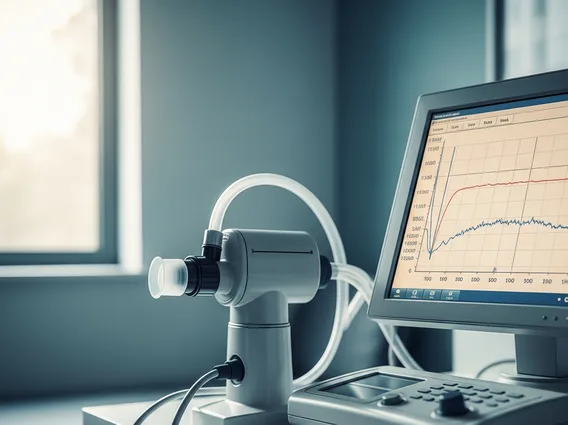
Pulmonary Function Tests involve a series of breathing maneuvers performed by the patient while connected to specialized equipment called a spirometer or a plethysmograph. The most common PFT is spirometry, which measures how much air you can exhale forcefully after a deep breath (Forced Vital Capacity, FVC) and how quickly you can do it (Forced Expiratory Volume in one second, FEV1). These measurements are crucial for identifying airflow obstruction. Other tests measure static lung volumes and capacities, such as the total amount of air your lungs can hold (Total Lung Capacity, TLC) or the amount of air remaining in the lungs after a maximal exhalation (Residual Volume, RV). Another important component is the diffusion capacity test (DLCO), which assesses how efficiently oxygen moves from the tiny air sacs (alveoli) in the lungs into the bloodstream.
Here are some common types of PFTs:
- Spirometry: Measures forced vital capacity (FVC) and forced expiratory volume in one second (FEV1), crucial for detecting airflow obstruction.
- Lung Volume Tests: Determine the total amount of air in the lungs (TLC) and how much air remains after exhalation (RV), indicating restrictive patterns or air trapping.
- Diffusion Capacity (DLCO): Evaluates the efficiency of gas exchange, showing how well oxygen transfers from the lungs to the blood.
- Bronchodilator Responsiveness: Assesses changes in lung function after administering a bronchodilator medication, helping diagnose reversible airway conditions like asthma.
These tests require active participation from the patient, following precise instructions to breathe in and out forcefully or hold their breath as directed by a trained technician. The equipment records the airflow and volume changes, which are then analyzed by a computer to generate detailed reports.
Interpreting Pulmonary Function Test Results
Understanding pulmonary function test results explained is a critical step in diagnosing and managing respiratory conditions. The results are typically presented as numerical values and graphs, which are then compared to predicted normal values. These predicted values are established based on a person’s age, height, sex, and ethnicity, as these factors significantly influence lung size and function. Deviations from these normal ranges can indicate various lung problems. For instance, a significantly reduced FEV1/FVC ratio is a hallmark of obstructive lung diseases, where the airways are narrowed, hindering airflow. Conversely, reduced lung volumes (TLC, FVC) with a normal or increased FEV1/FVC ratio often suggest restrictive lung diseases, where the lungs cannot fully expand due to stiffness or other issues.
A healthcare professional, typically a pulmonologist, interprets the complex data generated by PFTs. They consider the patient’s medical history, current symptoms, physical examination findings, and other diagnostic imaging or lab results to arrive at a comprehensive diagnosis. Abnormal results may prompt further investigation, initiation of new treatments, or adjustments to existing therapeutic regimens. It is important to remember that PFT results are just one piece of the diagnostic puzzle and must always be evaluated in the context of a patient’s overall clinical picture for accurate assessment and personalized care.