Phenol
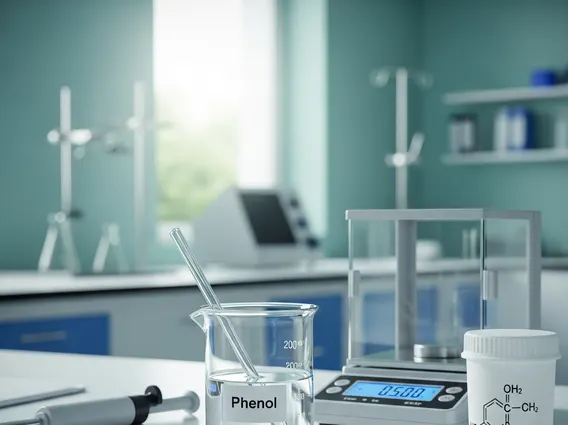
Phenol is an aromatic organic compound with the molecular formula C₆H₅OH. It is a white crystalline solid that is volatile and has a distinctive, pungent odor. This compound is widely utilized across various industries due to its unique chemical properties.
Key Takeaways
- Phenol is a versatile organic compound known for its acidic properties and solubility in organic solvents.
- It is primarily produced through industrial processes like the cumene process and is a crucial building block in manufacturing.
- Phenol serves as a key precursor for plastics, resins, pharmaceuticals, and disinfectants.
- Exposure to Phenol can lead to significant health effects, affecting the skin, respiratory system, and internal organs.
- Strict safety protocols are essential when handling Phenol to prevent adverse health outcomes.
What is Phenol? Definition and Chemical Properties
Phenol is an organic compound characterized by a hydroxyl group (-OH) directly attached to an aromatic hydrocarbon group (a phenyl group). It is also known as carbolic acid. In its pure form, Phenol appears as a white, crystalline solid, but it can turn pink or red upon exposure to air and light due to oxidation. It has a distinctive, somewhat sweet, yet acrid odor.
The phenol chemical properties are largely influenced by the hydroxyl group’s interaction with the benzene ring. It is weakly acidic, capable of reacting with strong bases to form phenoxide salts. Phenol is sparingly soluble in water but readily dissolves in organic solvents such as ethanol, ether, and chloroform. Its aromatic ring allows it to undergo electrophilic substitution reactions, making it a valuable intermediate in chemical synthesis. The presence of the hydroxyl group also contributes to its ability to form hydrogen bonds, affecting its boiling point and solubility.
How Phenol is Produced and Its Applications
The primary industrial method for how Phenol is produced is the cumene process, which accounts for approximately 95% of global production. This process involves the alkylation of benzene with propylene to produce cumene, which is then oxidized to cumene hydroperoxide. The hydroperoxide is subsequently cleaved in the presence of an acid catalyst to yield Phenol and acetone. Other historical or less common methods include the Raschig-Hooker process and the chlorobenzene hydrolysis process.
Phenol is a highly versatile chemical with extensive applications across numerous industries. It is a critical precursor for the production of various materials, including:
- Phenolic resins: Used in plywood, construction, automotive parts, and electrical components due to their heat resistance and durability.
- Bisphenol A (BPA): A key monomer for polycarbonate plastics and epoxy resins, found in CDs, DVDs, safety equipment, and protective coatings.
- Caprolactam: The precursor to Nylon 6, a widely used synthetic polymer for fibers and plastics.
- Salicylic acid: An important ingredient in aspirin and various dermatological products.
- Disinfectants and antiseptics: Due to its antimicrobial properties, Phenol derivatives are used in household cleaners and some medical preparations.
The widespread utility of Phenol underscores its importance as a fundamental building block in modern chemical manufacturing.
Phenol Health Effects and Safety
Exposure to phenol health effects can range from mild irritation to severe systemic toxicity, depending on the concentration, duration, and route of exposure. Phenol is corrosive and can cause chemical burns upon contact with skin or eyes. Skin exposure can lead to rapid absorption, potentially causing systemic effects even without extensive external damage. Symptoms of skin exposure include blanching, redness, pain, and blistering.
Inhalation of Phenol vapors can irritate the respiratory tract, leading to coughing, shortness of breath, and pulmonary edema in severe cases. Ingestion of Phenol is highly toxic and can cause severe gastrointestinal irritation, nausea, vomiting, abdominal pain, and internal burns. Systemic effects from absorption or ingestion can include central nervous system depression, cardiac arrhythmias, kidney damage, liver damage, and even death. Due to its rapid absorption and systemic toxicity, immediate medical attention is crucial following any significant exposure.
To mitigate these risks, strict safety measures are essential when handling Phenol. This includes using appropriate personal protective equipment (PPE) such as chemical-resistant gloves, eye protection, and protective clothing. Proper ventilation in work areas is necessary to minimize inhalation exposure. Storage should be in well-sealed containers, away from incompatible materials and sources of ignition. Emergency procedures for spills and exposures, including readily available eyewash stations and safety showers, are vital in any environment where Phenol is used or stored.