Phagocytosis
Phagocytosis is a fundamental biological process where specialized cells engulf and internalize foreign particles, dead cells, or microorganisms. This crucial mechanism plays a vital role in maintaining tissue homeostasis and defending the body against infections.
Key Takeaways
- Phagocytosis is a cellular process where cells engulf particles like bacteria, dead cells, and debris.
- Its primary function is to clear pathogens and cellular waste, contributing significantly to immune defense and tissue maintenance.
- The process involves several distinct steps: recognition, engulfment, phagosome formation, fusion with lysosomes, and degradation.
- Phagocytosis is a cornerstone of the innate immune system, providing immediate protection against invaders.
- Key types of phagocytic cells include macrophages, neutrophils, and dendritic cells, each with specialized roles.
What is Phagocytosis and Its Function?
Phagocytosis refers to the cellular process by which certain living cells, called phagocytes, engulf or ingest other cells or particles. This “cell eating” mechanism is essential for various biological functions, primarily in the immune system, but also in tissue remodeling and maintenance. The primary function of phagocytosis is to remove pathogens, such as bacteria, viruses, and fungi, as well as dead or dying cells, cellular debris, and foreign substances from the body.
This process is critical for both innate and adaptive immunity. In innate immunity, phagocytes provide an immediate, non-specific defense against invading microorganisms. In adaptive immunity, phagocytic cells, particularly dendritic cells and macrophages, act as antigen-presenting cells, processing engulfed material and presenting antigens to T lymphocytes, thereby initiating specific immune responses. Without efficient phagocytosis, the body would struggle to clear infections and maintain healthy tissues, leading to chronic inflammation and disease.
The Phagocytosis Process: Steps Explained
The phagocytosis process steps explained involve a coordinated series of events that allow a phagocyte to internalize and degrade a target particle. While the exact details can vary slightly depending on the phagocyte and the target, the general sequence is as follows:
- Chemotaxis and Adherence: Phagocytes are attracted to the site of infection or inflammation by chemical signals (chemotaxis). They then adhere to the surface of the target particle, often facilitated by receptors that recognize pathogen-associated molecular patterns (PAMPs) or opsonins (molecules like antibodies or complement proteins that coat the target).
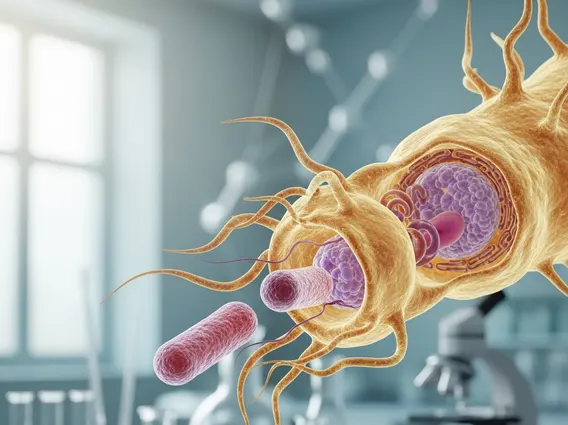
- Engulfment: Upon adherence, the phagocyte extends pseudopods (cytoplasmic extensions) around the target particle. These pseudopods gradually enclose the particle, eventually fusing to form a membrane-bound vesicle called a phagosome.
- Phagosome Maturation: The phagosome then undergoes a maturation process, acidifying its internal environment. It fuses with lysosomes, which are organelles containing a variety of hydrolytic enzymes. This fusion forms a phagolysosome.
- Killing and Digestion: Inside the phagolysosome, the engulfed particle is exposed to a harsh environment. Reactive oxygen species (like superoxide and hydrogen peroxide), reactive nitrogen species (like nitric oxide), and the lysosomal enzymes work together to kill and digest the pathogen or break down cellular debris into smaller, non-toxic components.
- Elimination: After digestion, any remaining indigestible material is either expelled from the cell via exocytosis or retained within residual bodies.
This intricate process ensures the efficient removal of harmful substances and contributes significantly to immune surveillance and tissue repair.
Phagocytosis in the Immune System and Phagocytic Cell Types
The role of phagocytosis in the immune system is paramount, serving as a primary defense mechanism against a wide array of threats. It is a cornerstone of the innate immune response, providing immediate, non-specific protection. Phagocytes act as the body’s clean-up crew, clearing away cellular debris, apoptotic cells, and foreign invaders before they can cause widespread damage. Beyond direct pathogen elimination, phagocytosis also links innate and adaptive immunity by presenting antigens to lymphocytes, thereby initiating specific, long-lasting immune responses.
Several specialized types of phagocytic cells contribute to these vital functions, each with distinct characteristics and roles:
- Neutrophils: These are the most abundant type of white blood cell and are typically the first responders to infection or inflammation. They are highly phagocytic and specialize in engulfing and destroying bacteria and fungi. Neutrophils have a short lifespan and contribute to pus formation at infection sites.
- Macrophages: Derived from monocytes, macrophages are long-lived phagocytes found in almost all tissues. They are highly versatile, capable of engulfing a wide range of targets, including pathogens, dead cells, and cellular debris. Macrophages also play crucial roles in antigen presentation, tissue repair, and immune regulation.
- Dendritic Cells: While also highly phagocytic, dendritic cells are primarily known for their role as the most potent antigen-presenting cells. They capture antigens in peripheral tissues, process them, and then migrate to lymph nodes to present them to T cells, initiating adaptive immune responses.
- Monocytes: These are precursors to macrophages and dendritic cells, circulating in the blood before migrating into tissues where they differentiate into their specialized forms.
These diverse phagocytic cells work in concert to protect the body, clear waste, and maintain immune homeostasis, highlighting the indispensable nature of phagocytosis in overall health.