Peau Dorange
Peau Dorange is a descriptive medical term used to characterize a specific skin appearance that resembles the dimpled, pitted texture of an orange peel. This distinctive presentation is often a crucial indicator of underlying medical conditions, ranging from benign issues to serious diseases.

Key Takeaways
- Peau Dorange describes skin with a pitted, dimpled texture similar to an orange peel.
- It results from lymphatic obstruction, fluid retention (edema), and fibrosis in the skin.
- While sometimes benign, it can be a significant sign of serious conditions like inflammatory breast cancer or lymphedema.
- Early recognition of this skin change is vital for timely diagnosis and appropriate medical intervention.
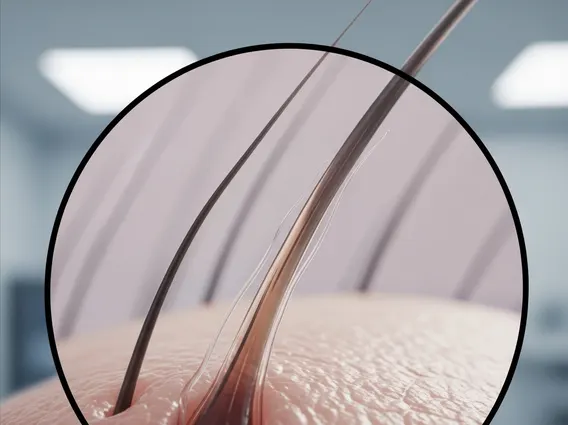
- The appearance is due to swelling that causes hair follicles and sweat glands to become depressed, while surrounding tissue remains elevated.
What is Peau Dorange?
Peau Dorange is a French term that literally translates to “orange peel skin.” In a medical context, it refers to a particular skin texture characterized by small depressions and raised areas, giving the skin a dimpled or pitted appearance. This distinctive texture arises when the lymphatic drainage system is compromised, leading to fluid accumulation (edema) and thickening of the skin. The edema causes the skin to swell, while the points where hair follicles or sweat glands are anchored to deeper tissues remain fixed, creating the characteristic depressions.
The peau d’orange skin texture explanation lies in the underlying physiological changes. When lymphatic vessels become blocked or damaged, fluid and proteins build up in the interstitial spaces of the skin. This fluid retention, combined with potential fibrosis (thickening and scarring of connective tissue), pulls on the skin at specific points, typically around hair follicles, causing them to appear sunken. The surrounding edematous tissue then bulges, creating the raised areas. This visual cue provides important information on peau d’orange appearance, guiding clinicians toward potential diagnoses.
Causes and Associated Conditions of Peau Dorange
The presence of Peau Dorange is not a condition in itself but rather a sign of an underlying issue. The primary mechanism involves lymphatic obstruction, which can stem from various causes. Understanding the peau d’orange causes and meaning is crucial for accurate diagnosis and treatment. While it can sometimes be a benign finding, it is often associated with more serious medical conditions.
Common conditions associated with Peau Dorange include:
- Inflammatory Breast Cancer (IBC): This is one of the most critical associations. IBC is a rare but aggressive form of breast cancer where cancer cells block the lymphatic vessels in the skin of the breast. This blockage leads to rapid swelling, redness, warmth, and the characteristic orange peel appearance. According to the American Cancer Society, IBC accounts for approximately 1-5% of all breast cancer cases in the United States, making Peau Dorange a significant warning sign that requires immediate medical attention.
- Lymphedema: This condition involves chronic swelling, typically in an arm or leg, due to a compromised lymphatic system. It can be primary (genetic) or secondary (caused by surgery, radiation, infection, or trauma). Severe or long-standing lymphedema can lead to skin thickening and the development of Peau Dorange texture.
- Cellulitis: A bacterial skin infection that causes redness, swelling, warmth, and pain. In severe cases or with significant edema, the skin may take on a Peau Dorange appearance.
- Graves’ Ophthalmopathy (Thyroid Eye Disease): In some cases, particularly in pretibial myxedema (a skin condition associated with Graves’ disease), the skin on the shins can develop a thickened, nodular, and sometimes orange peel-like texture due to the accumulation of hyaluronic acid.
- Other Localized Edema: Any condition causing significant localized fluid retention and skin thickening, such as severe allergic reactions or certain infections, could potentially manifest with a Peau Dorange texture.
Given the diverse range of potential causes, from relatively benign to life-threatening, any new onset of Peau Dorange warrants prompt medical evaluation to determine the underlying etiology and initiate appropriate management.