
Partial Nephrectomy
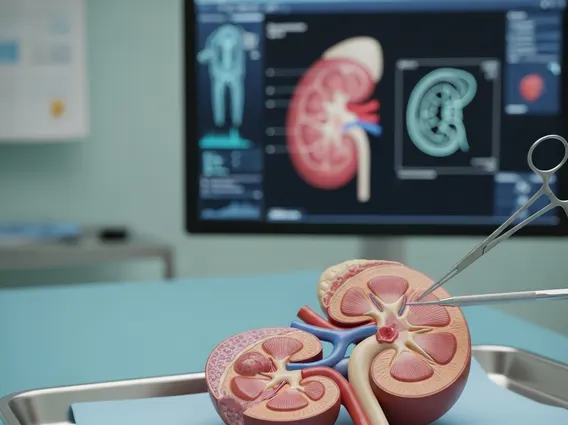
Partial nephrectomy is a surgical procedure designed to remove a cancerous or diseased portion of a kidney while preserving the healthy, functional tissue. This approach is increasingly favored over complete kidney removal, especially for smaller tumors, to maintain long-term kidney function.
Key Takeaways
- Partial nephrectomy is a kidney-sparing surgery that removes only the diseased part of the kidney.
- It is primarily performed to treat kidney tumors, particularly smaller ones, while preserving healthy kidney tissue.
- The procedure can be performed open, laparoscopically, or robotically, offering various benefits in terms of recovery.
- Key advantages include better preservation of kidney function and reduced risk of chronic kidney disease.
- Recovery typically involves a hospital stay, pain management, and a gradual return to normal activities, with long-term follow-up essential.
What is Partial Nephrectomy?
What is Partial Nephrectomy? It is a surgical intervention where a surgeon removes only the tumor or diseased section of a kidney, leaving the remaining healthy kidney tissue intact. This technique is often referred to as kidney-sparing surgery, as its primary goal is to preserve as much kidney function as possible. It stands in contrast to a radical nephrectomy, which involves the complete removal of the entire kidney.
This procedure is typically recommended for patients diagnosed with kidney tumors, especially those that are small and localized. By preserving healthy kidney tissue, partial nephrectomy aims to reduce the risk of developing chronic kidney disease (CKD) in the future, which is a significant concern for patients undergoing kidney surgery. The decision to perform a partial nephrectomy is made after careful consideration of the tumor’s size, location, and the patient’s overall health and kidney function.
Procedure Details and Benefits
The partial nephrectomy procedure can be performed using several surgical approaches, including open surgery, laparoscopic surgery, or robotic-assisted laparoscopic surgery. Open surgery involves a larger incision, while laparoscopic and robotic methods utilize smaller incisions, leading to potentially less pain and quicker recovery times. During the procedure, the surgeon carefully isolates the kidney, clamps the blood vessels supplying it to minimize bleeding, and then precisely excises the tumor along with a small margin of healthy tissue. The remaining kidney tissue is then repaired and the blood flow restored.
The partial nephrectomy benefits are significant, particularly in terms of long-term patient health. Preserving healthy kidney tissue is crucial for maintaining overall kidney function, which in turn reduces the likelihood of needing dialysis or a kidney transplant later in life. According to the American Urological Association, kidney-sparing surgery is the preferred treatment for small renal masses due to its comparable oncological outcomes to radical nephrectomy but with superior preservation of kidney function. This preservation is vital as it contributes to a better quality of life and reduces cardiovascular risks associated with impaired kidney function.
Key benefits of this kidney-sparing approach include:
- Preservation of Kidney Function: Minimizes the risk of developing chronic kidney disease post-surgery.
- Reduced Cardiovascular Risk: Better kidney function is associated with a lower risk of heart disease.
- Improved Quality of Life: Patients often experience better overall health outcomes and fewer long-term complications.
- Comparable Oncological Outcomes: For appropriate tumors, it is as effective as radical nephrectomy in treating cancer.
Recovery and Post-Procedure Outlook
Partial nephrectomy recovery involves a period of healing and careful monitoring. Patients typically remain in the hospital for a few days, during which pain management is provided, and they are encouraged to walk to aid recovery. The length of hospital stay and the overall recovery timeline can vary depending on the surgical approach used; laparoscopic and robotic procedures generally allow for a faster return home and to normal activities compared to open surgery.
Following discharge, patients are advised to avoid heavy lifting and strenuous activities for several weeks to allow the surgical site to heal properly. A gradual return to daily routines is recommended. Regular follow-up appointments with the urologist are crucial to monitor kidney function, check for any recurrence of the tumor, and manage potential complications. These follow-ups often include blood tests to assess kidney function and imaging scans to visualize the treated kidney and ensure its health. The long-term outlook for patients undergoing partial nephrectomy is generally positive, with many maintaining excellent kidney function and achieving successful cancer control.



















