Intermediate Grade Ductal Carcinoma In Situ
Intermediate Grade Ductal Carcinoma In Situ is a non-invasive form of breast cancer where abnormal cells are confined to the milk ducts. This condition represents a specific classification that guides treatment decisions and patient prognosis.
Key Takeaways
- Intermediate Grade DCIS is a non-invasive breast condition characterized by abnormal cell growth within the milk ducts.
- It is considered a precursor to invasive breast cancer, meaning it increases the risk of future invasive disease if untreated.
- Diagnosis typically occurs through routine mammography, often identifying microcalcifications.
- Treatment commonly involves surgical removal, potentially followed by radiation therapy or hormone therapy.
- The prognosis for Intermediate Grade DCIS is generally favorable with appropriate and timely medical intervention.
What is Intermediate Grade Ductal Carcinoma In Situ (DCIS)?
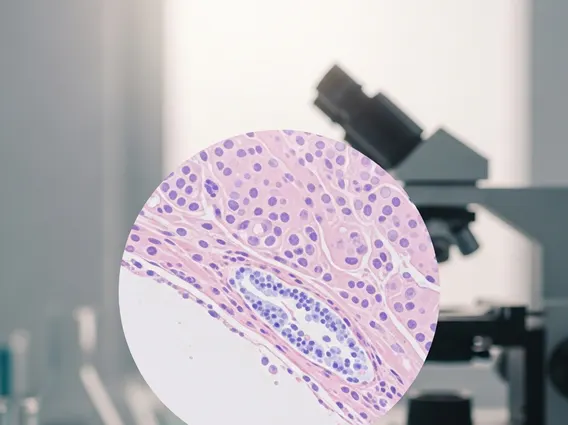
Intermediate Grade Ductal Carcinoma In Situ (DCIS) refers to a condition where abnormal cells are found within the milk ducts of the breast but have not spread into the surrounding breast tissue. It is considered a non-invasive form of breast cancer or a pre-cancerous lesion. The term “intermediate grade” specifically describes the cellular characteristics of these abnormal cells, such as their nuclear size, shape, and mitotic activity, placing them between low-grade (less aggressive) and high-grade (more aggressive) classifications. This grading helps clinicians assess the potential biological behavior of the lesion and guide treatment strategies, making it essential for understanding what is Intermediate Grade Ductal Carcinoma In Situ.
Understanding intermediate grade ductal carcinoma in situ explained is crucial, as it indicates a heightened risk for the development of invasive breast cancer if left untreated. While DCIS itself is not life-threatening because it has not invaded other tissues, its presence signals the need for careful management. According to the American Cancer Society, DCIS accounts for approximately 20-25% of all newly diagnosed breast cancers in the United States, with various grades contributing to this overall incidence.
Symptoms, Diagnosis, and Treatment for Intermediate Grade DCIS
The presence of intermediate grade dcis symptoms and treatment is a key area of focus for patients and healthcare providers. Most individuals with Intermediate Grade DCIS do not experience any noticeable symptoms. The condition is typically discovered incidentally during routine screening mammograms, which may reveal suspicious calcifications. These calcifications are tiny specks of calcium that can sometimes indicate the presence of abnormal cells within the breast ducts. Less commonly, DCIS might be detected as a palpable lump, though this is more characteristic of invasive cancers.
Diagnosis of Intermediate Grade DCIS usually begins with a mammogram showing suspicious microcalcifications. If a mammogram indicates abnormalities, further imaging such as diagnostic mammography or ultrasound may be performed. A definitive diagnosis requires a biopsy, most commonly a core needle biopsy, where a small tissue sample is extracted and examined by a pathologist. Once confirmed, treatment aims to remove the abnormal cells and reduce the risk of future invasive cancer. Common treatment approaches include:
- Lumpectomy: Surgical removal of the DCIS and a small margin of surrounding healthy tissue. This is often followed by radiation therapy.
- Mastectomy: Surgical removal of the entire breast, typically considered for extensive DCIS, multiple areas of DCIS, or if clear margins cannot be achieved with lumpectomy.
- Radiation Therapy: Often recommended after lumpectomy to reduce the risk of recurrence in the treated breast.
- Hormone Therapy: For DCIS that tests positive for hormone receptors (estrogen or progesterone), medications like tamoxifen or aromatase inhibitors may be prescribed to reduce the risk of recurrence in either breast.
Prognosis and Management of Intermediate Grade DCIS
The prognosis of intermediate grade ductal carcinoma is generally very good, especially with timely and appropriate treatment. Because Intermediate Grade DCIS is non-invasive, it does not metastasize (spread) to other parts of the body. The primary concern is the risk of local recurrence in the breast or progression to invasive breast cancer over time. Studies indicate that with effective treatment, the long-term survival rates for patients with DCIS are excellent, often exceeding 98-99%.
Management after initial treatment involves regular surveillance to monitor for any signs of recurrence or new breast abnormalities. This typically includes annual mammograms and clinical breast exams. Factors influencing the prognosis include the size and grade of the DCIS, the completeness of surgical removal (clear margins), and whether radiation or hormone therapy was used. Patients are encouraged to discuss their specific risk factors and follow-up plan with their oncology team to ensure personalized and comprehensive care. While alternative or complementary therapies may support overall well-being, they should not replace standard medical treatment for Intermediate Grade DCIS.