
Infiltrating Breast Cancer
Infiltrating breast cancer refers to a type of breast cancer that has grown beyond its original location and invaded surrounding breast tissue. Understanding this condition is crucial for early detection and effective treatment.
Key Takeaways
- Infiltrating breast cancer means cancer cells have spread from their initial site into adjacent tissues.
- The two most common types are Infiltrating Ductal Carcinoma (IDC) and Infiltrating Lobular Carcinoma (ILC).
- Symptoms can include lumps, skin changes, or nipple alterations, though ILC may present more subtly.
- Staging is critical for determining prognosis and guiding treatment, which often involves surgery, chemotherapy, radiation, and targeted therapies.
- Early detection and a personalized treatment plan significantly improve outcomes.
What is Infiltrating Breast Cancer?
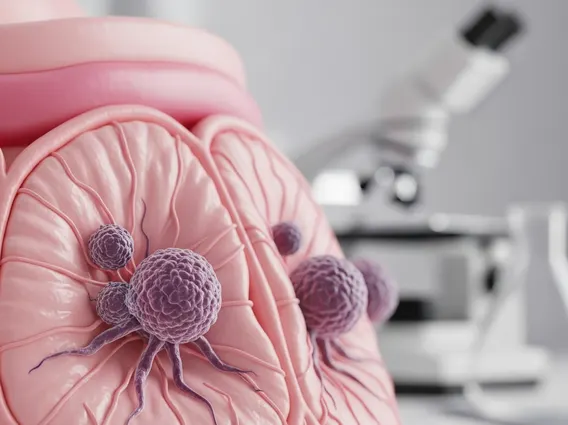
Infiltrating Breast Cancer, also known as invasive breast cancer, is a form of cancer where malignant cells have broken through the basement membrane of the milk ducts or lobules and spread into the surrounding breast tissue. Unlike non-invasive or in situ cancers, which remain confined to their original location, infiltrating breast cancer has the potential to metastasize, meaning it can spread to other parts of the body through the bloodstream or lymphatic system. This type accounts for the vast majority of all breast cancer diagnoses, with approximately 80% of all invasive breast cancers being infiltrating ductal carcinoma alone, according to the American Cancer Society.
The term “infiltrating” highlights the cancer’s ability to invade and grow within the breast’s connective tissue, fat, and other structures. This characteristic is what makes it a serious health concern, necessitating comprehensive diagnostic and treatment approaches to prevent further spread and manage the disease effectively.
Types and Symptoms of Infiltrating Breast Cancer
Infiltrating breast cancer primarily manifests in two main types, each with distinct characteristics and potential symptom presentations. The most common type is Infiltrating Ductal Carcinoma (IDC), which originates in the milk ducts and then invades the surrounding fibrous or fatty tissue of the breast. The second most common type is Infiltrating Lobular Carcinoma (ILC), which begins in the milk-producing glands (lobules) and spreads into the surrounding tissue.
Symptoms can vary depending on the type and stage of the cancer. Common infiltrating ductal carcinoma symptoms often include a palpable lump or mass in the breast, which may be firm and irregular. Other signs can involve changes in breast size or shape, skin dimpling or puckering, redness or scaling of the nipple or breast skin, and nipple discharge. In contrast, Infiltrating Lobular Carcinoma (ILC) can be more challenging to detect through self-examination or mammography because it tends to grow in a diffuse pattern, often presenting as a thickening or fullness in the breast rather than a distinct lump. This makes early detection of ILC particularly reliant on advanced imaging techniques and clinical vigilance.
Here are some general symptoms that may indicate the presence of infiltrating breast cancer:
- A new lump or mass in the breast or armpit.
- Swelling of all or part of the breast.
- Skin irritation or dimpling.
- Nipple pain or the nipple turning inward.
- Redness, scaliness, or thickening of the nipple or breast skin.
- Nipple discharge other than breast milk.
Management, Staging, and Prognosis
The management of infiltrating breast cancer is highly individualized, depending on the specific type, stage, and biological characteristics of the tumor, as well as the patient’s overall health. Understanding infiltrating breast cancer stages prognosis is crucial for guiding treatment decisions and predicting outcomes. Staging is typically determined using the TNM system, which assesses the size of the primary Tumor (T), involvement of nearby lymph Nodes (N), and presence or absence of distant Metastasis (M).
Treatment options often involve a combination of therapies:
| Treatment Type | Description |
|---|---|
| Surgery | Lumpectomy (removing the tumor and a margin of healthy tissue) or mastectomy (removing the entire breast). Lymph node dissection may also be performed. |
| Radiation Therapy | Uses high-energy rays to kill cancer cells remaining after surgery or to treat cancer that has spread. |
| Chemotherapy | Drugs administered intravenously or orally to kill cancer cells throughout the body, often used before or after surgery. |
| Hormone Therapy | Blocks hormones that fuel cancer growth, effective for hormone receptor-positive cancers. |
| Targeted Therapy | Drugs that target specific characteristics of cancer cells, such as HER2-positive breast cancer. |
For infiltrating lobular carcinoma treatment, specific considerations may apply due to its diffuse growth pattern and often hormone receptor-positive status. ILC may be less responsive to neoadjuvant chemotherapy (chemotherapy before surgery) compared to IDC, and hormone therapy often plays a significant role. The prognosis for infiltrating breast cancer varies widely based on factors such as stage at diagnosis, tumor grade, hormone receptor status, HER2 status, and lymph node involvement. Early detection, comprehensive staging, and a multidisciplinary approach to treatment are key to improving patient outcomes and quality of life. Regular follow-up and surveillance are also essential components of long-term management.



















