Chorioallantoic Membrane
The Chorioallantoic Membrane is a crucial extraembryonic membrane found in the developing embryos of reptiles, birds, and some mammals. It plays a vital role in facilitating gas exchange, waste removal, and nutrient transfer, essential for embryonic survival and growth.
Key Takeaways
- The Chorioallantoic Membrane (CAM) is a vital extraembryonic membrane in avian, reptilian, and some mammalian embryos.
- It is formed by the fusion of the chorion and the allantois, creating a highly vascularized structure.
- Primary functions include gas exchange (respiration), waste storage, and nutrient absorption.
- The CAM is extensively used in research as an in vivo model for studying angiogenesis, tumor growth, and drug delivery.
What is the Chorioallantoic Membrane?
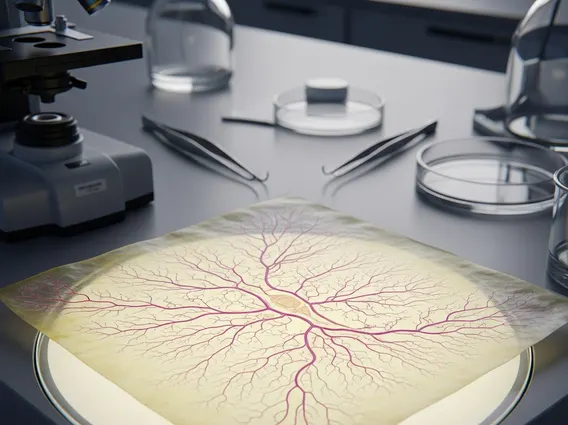
The Chorioallantoic Membrane (CAM) is a temporary, highly vascularized extraembryonic membrane that forms during the development of amniote embryos, specifically in birds, reptiles, and monotremes (egg-laying mammals). It represents a critical adaptation for terrestrial reproduction, allowing the embryo to develop within a shelled egg or uterus without direct maternal blood supply for certain functions. This membrane is formed by the fusion of two other extraembryonic membranes: the chorion, which is the outermost membrane, and the allantois, an outgrowth of the hindgut. The combined structure creates a large surface area for various physiological processes.
The primary chorioallantoic membrane function is multifaceted, serving as the embryo’s respiratory organ, a site for calcium absorption from the eggshell, and a reservoir for metabolic waste products. In avian embryos, for instance, it lies directly beneath the eggshell, facilitating the diffusion of oxygen into the embryo and carbon dioxide out. Its extensive capillary network is crucial for these exchanges, making it analogous to a primitive lung. Beyond its physiological roles, the CAM has become an invaluable tool in scientific research, particularly in fields like developmental biology, oncology, and pharmacology, due to its accessibility and rapid vascularization.
Development and Roles in Embryos
The chorioallantoic membrane development begins early in embryogenesis. In avian embryos, the allantois, an endodermal sac, rapidly expands and fuses with the overlying chorion, which is derived from trophectoderm and somatic mesoderm. This fusion typically occurs around day 4-5 of incubation in a chicken embryo, forming a bilaminar membrane that quickly becomes trilaminar with the invasion of mesodermal blood vessels. The extensive vascular network within the chorioallantoic membrane in embryos is essential for its diverse functions.
The roles of the Chorioallantoic Membrane are critical for the successful development of the embryo:
- Gas Exchange: It acts as the primary respiratory organ, allowing oxygen to diffuse from the external environment through the eggshell pores into the embryonic blood, and carbon dioxide to be released.
- Waste Storage: The allantoic sac, a component of the CAM, serves as a repository for nitrogenous waste products, primarily uric acid, which is relatively insoluble and can be safely stored without harming the embryo.
- Calcium Mobilization: In shelled eggs, the CAM facilitates the absorption of calcium from the eggshell, providing essential minerals for skeletal development.
- Nutrient Absorption: While the yolk sac is the primary source of nutrients, the CAM can also play a role in absorbing water and other substances.
The CAM’s rapid vascularization and immunodeficient nature also make it an excellent model for various research applications. For example, it is widely used to study angiogenesis (the formation of new blood vessels), tumor growth and metastasis, and the efficacy of anti-cancer drugs. Researchers graft tumor cells onto the CAM, observing their growth and response to treatments in a living, vascularized environment. This model provides a cost-effective and ethically less complex alternative to mammalian models for initial studies.