
Ileum
The ileum is a crucial segment of the small intestine, playing a vital role in the final stages of nutrient absorption before waste material moves into the large intestine. Understanding its structure and function is key to comprehending overall digestive health.
Key Takeaways
- The ileum is the final and longest section of the small intestine, connecting the jejunum to the large intestine.
- Its primary function is the absorption of vitamin B12, bile salts, and any remaining nutrients not absorbed in the duodenum and jejunum.
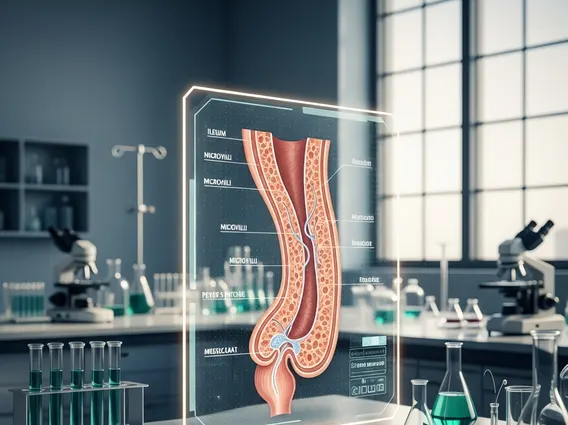
- The ileum’s inner lining features numerous villi and microvilli, significantly increasing its surface area for efficient absorption.
- Common conditions affecting the ileum include Crohn’s disease, ileitis, and various malabsorption syndromes.
- Maintaining ileal health is essential for proper digestion and nutrient uptake, impacting overall well-being.
What is the Ileum: Anatomy, Location, and Function
The Ileum is the terminal part of the small intestine, extending from the jejunum to the cecum, the first part of the large intestine. This vital segment is approximately 2 to 4 meters (6.5 to 13 feet) long in adults, making it the longest section of the small intestine. Its primary role in the digestive system is critical for overall nutrient assimilation.
Regarding ileum anatomy and purpose, the ileum’s wall is composed of four layers: the mucosa, submucosa, muscularis externa, and serosa. The mucosal layer is characterized by numerous folds, villi, and microvilli, which collectively create an enormous surface area essential for absorption. Peyer’s patches, which are large lymphoid nodules, are particularly abundant in the ileum, playing a significant role in the immune surveillance of the digestive tract.
The ileum function and location are intrinsically linked to its role in the digestive process. Located in the lower and right abdominal quadrants, it receives partially digested food (chyme) from the jejunum. Its main functions include the absorption of specific nutrients that were not absorbed earlier in the small intestine. This includes:
- Vitamin B12, which is crucial for nerve function and red blood cell formation.
- Bile salts, which are recycled back to the liver to aid in fat digestion.
- Any remaining water and electrolytes.
The ileocecal valve, a muscular sphincter, regulates the passage of contents from the ileum into the large intestine and prevents reflux of colonic material back into the ileum, maintaining a sterile environment in the small intestine.
Conditions and Diseases of the Ileum
The ileum, despite its robust structure, is susceptible to various conditions and diseases of the ileum that can impair its function and lead to significant health issues. One of the most well-known conditions affecting this segment is Crohn’s disease, a type of inflammatory bowel disease (IBD). Crohn’s disease frequently targets the terminal ileum, causing chronic inflammation, deep ulcers, and strictures, which can lead to abdominal pain, diarrhea, weight loss, and malnutrition.
Other conditions include ileitis, which is inflammation of the ileum that can result from infections (bacterial, viral, or parasitic), certain medications, or other inflammatory processes. Symptoms often mirror those of Crohn’s disease but may be acute rather than chronic. Malabsorption syndromes can also arise if the ileum’s absorptive capacity is compromised, leading to deficiencies in essential nutrients, particularly vitamin B12 and fat-soluble vitamins.
In some cases, the ileum can be affected by mechanical obstructions, known as ileus or bowel obstruction, which can be caused by adhesions from previous surgeries, tumors, or inflammatory strictures. These conditions require prompt medical attention as they can lead to severe complications. According to the Crohn’s & Colitis Foundation, approximately 70% of individuals with Crohn’s disease will require surgery at some point in their lives, often involving resection of the affected ileum.



















