
Helical Tomotherapy
Helical Tomotherapy is an advanced form of radiation therapy used in cancer treatment. It combines intensity-modulated radiation therapy (IMRT) with image-guided radiation therapy (IGRT) to deliver highly precise radiation doses.
Key Takeaways
- Helical Tomotherapy is a sophisticated radiation therapy technique for cancer.
- It delivers radiation continuously in a helical pattern, similar to a CT scan.
- The system uses daily imaging to precisely target tumors and spare healthy tissue.
- Benefits include enhanced precision, reduced side effects, and effective treatment of complex tumors.
- It integrates IMRT and IGRT for highly customized and accurate treatment plans.
What is Helical Tomotherapy?
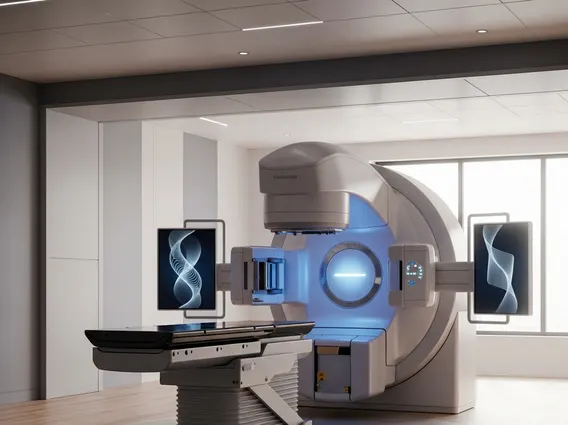
What is Helical Tomotherapy is a highly advanced form of external beam radiation therapy designed to treat a wide range of cancers. It integrates a linear accelerator (linac) with a CT scanner, allowing for continuous, 360-degree radiation delivery in a spiral, or helical, pattern. This innovative approach enables oncologists to precisely target tumors while minimizing radiation exposure to surrounding healthy tissues and organs.
The system combines two critical technologies: Intensity-Modulated Radiation Therapy (IMRT) and Image-Guided Radiation Therapy (IGRT). IMRT allows for the customization of radiation dose intensity across the treatment area, shaping the radiation beam to conform to the tumor’s exact shape. IGRT uses daily imaging before each treatment session to verify the tumor’s position, ensuring accurate delivery even if the tumor or patient’s anatomy shifts slightly. This combination makes Helical Tomotherapy particularly effective for complex or irregularly shaped tumors, as well as those located near critical organs.
How Helical Tomotherapy Works
The core principle of how helical tomotherapy works involves a linear accelerator mounted on a ring that continuously rotates around the patient, much like a CT scanner. As the patient slowly moves through the bore, the linac delivers thousands of narrow, fan-shaped radiation beams from various angles. Each beam’s intensity is modulated in real-time, allowing for a highly customized dose distribution that precisely matches the tumor’s contours.
Before each treatment, an integrated CT scan is performed to generate a 3D image of the tumor and surrounding anatomy. This daily imaging allows the medical team to compare the current tumor position with the planned treatment, making necessary adjustments to ensure optimal accuracy. This image-guided approach is crucial for adapting to changes in tumor size, shape, or patient positioning, which can occur over the course of treatment. The continuous helical delivery, coupled with real-time image guidance, ensures that radiation is delivered with exceptional precision, maximizing tumor control while sparing healthy tissues.
Benefits of Helical Tomotherapy
Helical Tomotherapy treatment benefits are numerous, offering significant advantages over conventional radiation therapy techniques. Its unique design and integrated technologies contribute to superior treatment outcomes and improved patient quality of life. One of the primary advantages is its remarkable precision. By delivering radiation in a continuous helical pattern and utilizing daily image guidance, it can target even complex or irregularly shaped tumors with sub-millimeter accuracy. This precision is particularly beneficial for tumors located near sensitive structures, such as the spinal cord, brain, or heart, where minimizing collateral damage is paramount.
The advanced capabilities of this system also allow for a highly personalized approach to treatment, adapting to the patient’s unique anatomy and tumor characteristics. The ability to modulate the intensity of thousands of individual radiation beams means that higher doses can be delivered to the tumor while significantly reducing exposure to adjacent healthy tissues. This often translates to fewer and less severe side effects for patients, allowing them to maintain a better quality of life during and after treatment.
The helical tomotherapy procedure explained offers several key advantages for patients:
- Enhanced Tumor Targeting: The continuous 360-degree delivery and daily imaging ensure radiation precisely conforms to the tumor, even if it moves slightly.
- Reduced Side Effects: By sparing healthy tissues, patients often experience fewer acute and long-term side effects compared to traditional methods.
- Treatment of Complex Cases: Its ability to treat large, multiple, or irregularly shaped tumors, and those previously deemed untreatable with other methods, is a significant benefit.
- Adaptive Radiation Therapy: Daily imaging allows for adjustments to the treatment plan, adapting to changes in tumor size or patient anatomy over time.
- Comprehensive Coverage: It can treat large areas or multiple tumor sites simultaneously, which can be beneficial for metastatic disease.
According to the American Society for Radiation Oncology (ASTRO), advanced techniques like IMRT and IGRT, which are integral to Helical Tomotherapy, have been shown to improve dose conformity and reduce toxicity in various cancer types, leading to better patient outcomes.



















