Gluconeogenesis
Gluconeogenesis is a vital metabolic pathway that allows the body to synthesize glucose from non-carbohydrate precursors. This process is crucial for maintaining blood glucose levels, especially during periods of fasting, starvation, or intense exercise, when carbohydrate intake is insufficient.
Key Takeaways
- Gluconeogenesis is the metabolic process of synthesizing glucose from non-carbohydrate sources.
- It primarily occurs in the liver and, to a lesser extent, in the kidneys.
- This pathway is essential for maintaining stable blood glucose levels, especially when dietary carbohydrates are scarce.
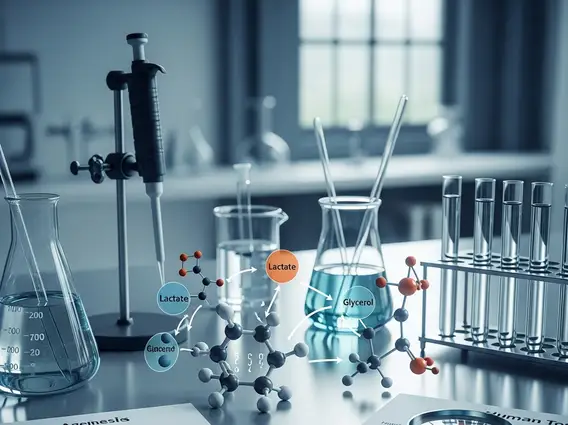
- Key precursors include lactate, amino acids, and glycerol.
- It ensures glucose supply to glucose-dependent organs like the brain and red blood cells.
What is Gluconeogenesis and Its Function?
Gluconeogenesis refers to the metabolic pathway that generates glucose from certain non-carbohydrate carbon substrates. This process is essentially the reverse of glycolysis, but it bypasses several irreversible steps of glycolysis using different enzymes. The primary function of gluconeogenesis is to ensure a continuous supply of glucose to tissues that rely heavily on it for energy, such as the brain, red blood cells, and renal medulla, especially when dietary carbohydrate intake is low or absent.
The human body typically stores glucose as glycogen in the liver and muscles. However, these glycogen stores are limited and can be depleted within 12-24 hours of fasting. When glycogen stores are exhausted, gluconeogenesis becomes the main mechanism for maintaining normoglycemia, preventing hypoglycemia, which can be detrimental to brain function. This intricate process allows the body to convert molecules like lactate, certain amino acids, and glycerol into glucose, ensuring metabolic stability.
The Gluconeogenesis Pathway Explained
The **gluconeogenesis pathway** involves a series of enzymatic reactions that convert non-carbohydrate precursors into glucose. While many steps are shared with glycolysis (in reverse), three irreversible steps in glycolysis are bypassed by unique enzymes in gluconeogenesis. This ensures that both pathways can be independently regulated. The primary site for this pathway is the liver, with a minor contribution from the kidneys, particularly during prolonged fasting.
Key precursors that enter the gluconeogenesis pathway include:
- Lactate: Produced by anaerobic glycolysis in muscle and red blood cells, it is transported to the liver and converted to pyruvate.
- Amino Acids: Glucogenic amino acids (derived from protein breakdown) can be converted into pyruvate or intermediates of the citric acid cycle.
- Glycerol: Released from the breakdown of triglycerides (fats) in adipose tissue, it is converted to dihydroxyacetone phosphate.
The pathway begins with the conversion of pyruvate to oxaloacetate, then to phosphoenolpyruvate (PEP), bypassing the pyruvate kinase step of glycolysis. Subsequent steps largely mirror glycolysis in reverse until fructose-1,6-bisphosphate is converted to fructose-6-phosphate by fructose-1,6-bisphosphatase, bypassing the phosphofructokinase-1 step. Finally, glucose-6-phosphate is converted to free glucose by glucose-6-phosphatase, bypassing the hexokinase/glucokinase step. These bypass reactions are critical for the metabolic control and direction of glucose synthesis.
Role of Gluconeogenesis in the Human Body
The **role of gluconeogenesis in the human body** is fundamentally about maintaining glucose homeostasis. It serves as a critical survival mechanism during periods of glucose scarcity, such as prolonged fasting, starvation, or intense, sustained exercise. Without this pathway, glucose-dependent organs, most notably the brain, would quickly run out of fuel, leading to severe neurological dysfunction and potentially coma or death.
During fasting, the liver’s glycogen stores are depleted within hours. At this point, gluconeogenesis ramps up significantly to produce glucose from available precursors. Hormones like glucagon and cortisol stimulate this pathway, while insulin inhibits it, ensuring tight regulation based on the body’s energy needs. This continuous glucose production helps stabilize blood sugar levels, preventing hypoglycemia and supporting the metabolic demands of vital organs. For instance, the adult human brain alone consumes approximately 120 grams of glucose per day, highlighting the immense importance of a constant supply.