Folliculin Gene
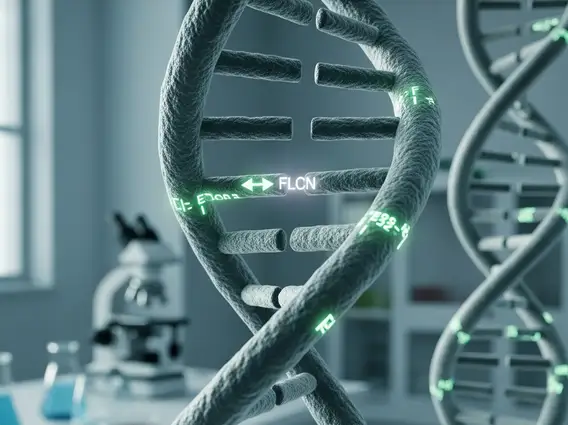
The Folliculin Gene, often abbreviated as FLCN, plays a crucial role in regulating various cellular processes essential for normal tissue development and function. Understanding this gene is vital for comprehending its impact on human health, particularly in the context of certain genetic disorders.
Key Takeaways
- The Folliculin Gene (FLCN) encodes the folliculin protein, which acts as a tumor suppressor.
- FLCN is critical for regulating cell growth, metabolism, and differentiation, primarily through its interaction with the mTOR pathway.
- Mutations in the Folliculin Gene are directly linked to Birt-Hogg-Dubé (BHD) syndrome, a rare inherited disorder.
- BHD syndrome manifests with skin lesions, lung cysts, and an increased risk of kidney tumors.
- Research into FLCN continues to provide insights into cancer development and potential therapeutic strategies.
What is the Folliculin Gene?
The Folliculin Gene (FLCN) is a gene located on chromosome 17 (17p11.2) in humans. It provides instructions for making a protein called folliculin. This protein is widely expressed throughout the body, with notable presence in the skin, lungs, and kidneys. Folliculin is recognized as a tumor suppressor protein, meaning it helps to control cell growth and division, preventing the uncontrolled proliferation that can lead to tumor formation. Its discovery and characterization have been instrumental in understanding the genetic basis of certain inherited conditions.
Folliculin Gene Function in Cellular Processes
The folliculin protein, encoded by the Folliculin Gene, is integral to several fundamental cellular processes. Its primary role involves regulating the mammalian target of rapamycin (mTOR) pathway, a critical signaling network that controls cell growth, proliferation, survival, and metabolism. Folliculin acts as a negative regulator of mTOR complex 1 (mTORC1), effectively dampening its activity. This regulatory function ensures that cells grow and divide appropriately, responding to nutrient availability and energy status.
Beyond mTOR pathway modulation, the folliculin protein contributes to other vital cellular functions, including:
- Cellular Metabolism: It influences metabolic pathways, such as glucose and lipid metabolism, by regulating the activity of key enzymes and transporters.
- Cell Differentiation: Folliculin plays a role in guiding cells to specialize into different types, which is essential for tissue development and repair.
- Autophagy: This process, where cells break down and recycle damaged components, is also influenced by folliculin, contributing to cellular health and stress response.
- Immune Response: Emerging research suggests a role for folliculin in modulating immune cell function and inflammatory responses.
Disruptions in these functions due to alterations in the Folliculin Gene can have profound effects on cellular homeostasis and overall organismal health.
Mutations and Disorders Linked to the Folliculin Gene
Mutations in the Folliculin Gene are primarily associated with Birt-Hogg-Dubé (BHD) syndrome, a rare inherited disorder characterized by specific clinical manifestations. BHD syndrome is an autosomal dominant condition, meaning that only one copy of the mutated gene is sufficient to cause the disorder. The prevalence of BHD syndrome is estimated to be around 1 in 200,000 individuals, though it may be underdiagnosed due to its variable presentation and rarity. (Source: National Organization for Rare Disorders – NORD).
Individuals with BHD syndrome typically present with a triad of symptoms:
- Benign Skin Tumors: Fibrofolliculomas, trichodiscomas, and acrochordons (skin tags) are common, particularly on the face, neck, and upper trunk.
- Lung Cysts and Spontaneous Pneumothorax: Patients often develop multiple lung cysts, which can rupture and lead to spontaneous pneumothorax (collapsed lung).
- Kidney Tumors: There is an increased risk of developing various types of kidney tumors, including chromophobe renal cell carcinoma and oncocytoma. These tumors can be bilateral and multifocal.
The underlying mechanism for these manifestations stems from the impaired tumor suppressor function of the mutated folliculin protein. When the Folliculin Gene mutation prevents the protein from properly regulating the mTOR pathway, cells can grow and divide uncontrollably, leading to the formation of benign and malignant tumors, as well as the structural abnormalities seen in the lungs and skin. Early diagnosis and regular surveillance are crucial for managing BHD syndrome, particularly for monitoring kidney health and preventing complications from lung cysts.