Ependymal Cell
Ependymal cells are a crucial type of glial cell found within the central nervous system, playing a vital role in maintaining the brain’s internal environment. These specialized cells contribute significantly to the production and circulation of cerebrospinal fluid, which is essential for brain health and function.
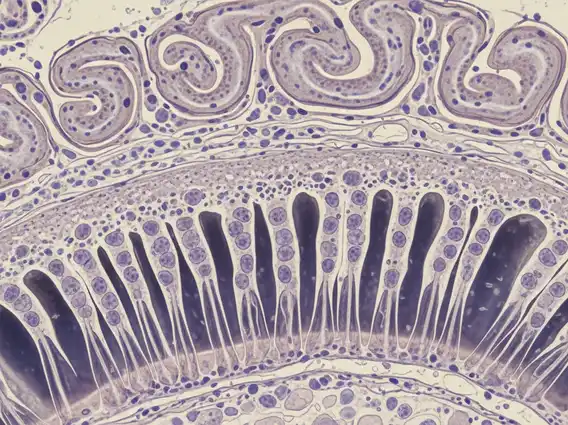
Key Takeaways
- Ependymal Cell is a type of neuroglial cell that lines the ventricles of the brain and the central canal of the spinal cord.
- They are primarily involved in the production and circulation of cerebrospinal fluid (CSF).
- These cells possess cilia that help move CSF and microvilli that facilitate absorption.
- Ependymal cells form a selective barrier between the CSF and the underlying nervous tissue.
- Their proper function is critical for nutrient delivery, waste removal, and mechanical protection of the brain and spinal cord.
What is Ependymal Cell?
An Ependymal Cell is a specialized type of glial cell that forms the epithelial lining of the ventricular system of the brain and the central canal of the spinal cord. These cells are derived from radial glia and are characterized by their cuboidal to columnar shape, often possessing cilia and microvilli on their apical surfaces. The ependymal cells definition highlights their role as a critical interface between the cerebrospinal fluid (CSF) and the underlying nervous tissue, forming a selective barrier known as the ependymal barrier.
Unlike typical epithelial cells, ependymal cells do not have tight junctions between them, allowing for some permeability. However, they are interconnected by gap junctions and adherens junctions, which contribute to their structural integrity and coordinated function. Their unique morphology and cellular connections are essential for their multifaceted roles in maintaining the delicate balance within the central nervous system.
Ependymal Cell Function and Location
The ependymal cell function is multifaceted and critical for the health and proper operation of the central nervous system. One of their primary roles is in the production of cerebrospinal fluid (CSF), particularly within specialized structures called choroid plexuses, where modified ependymal cells actively secrete CSF. Beyond production, ependymal cells are instrumental in the circulation of CSF. Their apical surfaces are often covered with cilia, which beat rhythmically to facilitate the movement of CSF through the ventricles and the central canal, ensuring its continuous flow and distribution throughout the brain and spinal cord.
Furthermore, ependymal cells contribute to the maintenance of the CSF-brain barrier. While not as impermeable as the blood-brain barrier, this ependymal barrier regulates the exchange of substances between the CSF and the neural tissue. The microvilli present on their surfaces increase the surface area for absorption and secretion, further supporting their role in regulating the CSF composition. The ependymal cells location is precisely within the ventricles of the brain—specifically the lateral, third, and fourth ventricles—and extending down into the central canal of the spinal cord. This strategic positioning allows them to effectively line these fluid-filled spaces, directly interacting with the CSF and the underlying neural parenchyma, thereby enabling their vital functions in nutrient transport, waste removal, and mechanical protection of the brain and spinal cord.