Electrolarynx
An Electrolarynx is a medical device that helps individuals who have lost the ability to speak due to vocal cord removal or damage to produce speech. It serves as an external vibratory source, allowing users to communicate effectively.
Key Takeaways
- An Electrolarynx is an external medical device providing an alternative voice for individuals without functional vocal cords.
- It operates by generating vibrations that are transferred to the user’s neck or cheek, which are then modulated into speech sounds by the mouth and tongue.
- The device is a non-invasive, portable solution for speech rehabilitation.
- It offers immediate communication capabilities, aiding in social interaction and daily activities.
- Proper training and practice are essential for effective and clear speech production with an Electrolarynx.
What is an Electrolarynx?
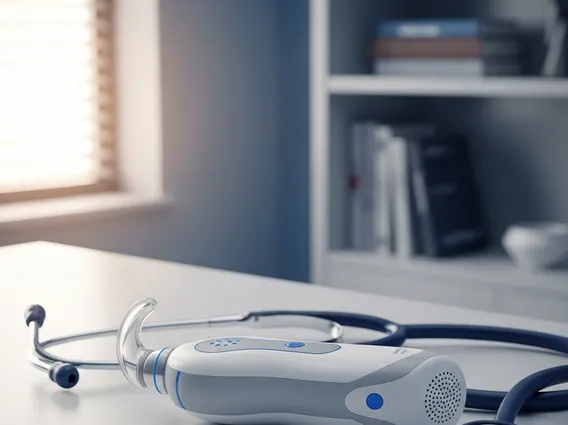
Electrolarynx refers to a battery-operated medical device designed to produce an artificial voice for individuals who have undergone a laryngectomy (surgical removal of the larynx) or who have severely damaged vocal cords. This device is a crucial tool in speech rehabilitation, enabling users to communicate verbally. It is a handheld device that generates sound vibrations, which are then articulated into speech.
The primary function of an Electrolarynx is to replace the sound production capabilities of the vocal cords. When the device is held against the neck or cheek, its vibrations travel through the tissues into the oral cavity. The user then shapes these vibrations into words using their tongue, lips, and teeth, much like normal speech articulation, but without the need for airflow through the vocal cords. This electrolarynx speech device explanation highlights its role as an external sound source.
How Does an Electrolarynx Work?
An Electrolarynx operates on a relatively simple principle: it provides an external source of vibration that mimics the sound produced by the vocal cords. When activated, the device generates a steady, monotone sound. The user places the vibrating head of the device against a soft spot on their neck or, in some cases, against their cheek. The vibrations from the device are then transmitted through the skin and into the pharynx (throat) and oral cavity.
Once these vibrations enter the mouth, the user articulates words by moving their tongue, lips, and jaw, just as they would with natural speech. The vibrations are shaped into distinct speech sounds, allowing for verbal communication. Modern Electrolarynx devices often include controls for pitch and volume, enabling users to add some intonation to their voice, making their speech more expressive and easier to understand. This process allows individuals to produce intelligible speech without relying on their own vocal cords.
Benefits and Uses of an Electrolarynx
The electrolarynx benefits and uses are significant for individuals facing vocal cord impairment or loss. One of the most immediate advantages is the ability to communicate verbally shortly after surgery or diagnosis, which is crucial for psychological well-being and social reintegration. This device offers a portable and relatively easy-to-learn method of speech production.
Key benefits include:
- Immediate Communication: Provides an immediate means of verbal communication, often available soon after surgery.
- Portability: Most devices are compact and battery-operated, allowing for use in various settings.
- Non-Invasive: It is an external device, requiring no surgical implantation.
- Ease of Learning: While practice is required, many users can achieve functional speech relatively quickly.
- Versatility: Can be used in many daily situations, from personal conversations to professional interactions.
The primary use of an Electrolarynx is for individuals who have undergone a total laryngectomy due to head and neck cancer or other conditions resulting in the permanent loss of vocal cord function. According to the American Cancer Society, laryngeal cancer is a significant concern, and laryngectomy is a common treatment, making devices like the Electrolarynx vital for post-treatment quality of life. It serves as a primary method of alaryngeal speech, helping users regain their voice and maintain an active role in society.