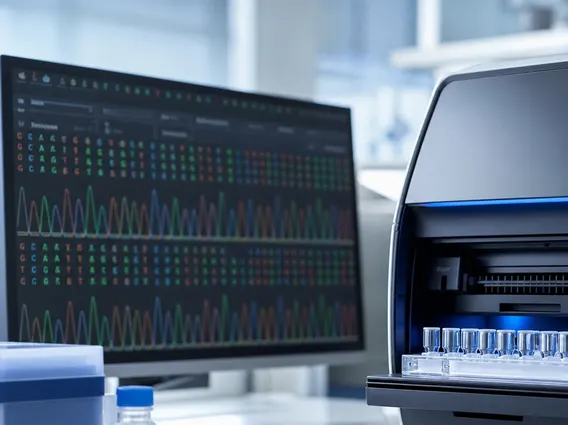
DNA Gene Expression Microarray
DNA Gene Expression Microarray is a powerful laboratory tool used to study the expression levels of thousands of genes simultaneously. This technology plays a crucial role in understanding cellular processes, disease mechanisms, and potential therapeutic targets.

Key Takeaways
- DNA Gene Expression Microarrays allow for the simultaneous measurement of the activity of thousands of genes.
- The technology relies on the hybridization of fluorescently labeled cDNA samples to specific DNA probes immobilized on a solid surface.
- It provides insights into gene expression patterns, which are vital for understanding biological processes and disease states.
- Applications span from disease diagnosis and prognosis to drug discovery and toxicology studies.
- The principle involves comparing gene activity between different cell types or conditions, often highlighting differential expression.
What is DNA Gene Expression Microarray?
DNA Gene Expression Microarray refers to a high-throughput laboratory technique used to measure the expression levels of large numbers of genes simultaneously. This technology allows researchers to determine which genes are turned “on” or “off” in a particular cell or tissue sample, and to what extent. By analyzing these gene expression patterns, scientists can gain insights into cellular functions, disease progression, and responses to various treatments. It is particularly valuable in medical research for comparing gene activity between healthy and diseased tissues, identifying biomarkers, and understanding the molecular basis of complex conditions like cancer.
How DNA Microarray Works: Principle and Process
The fundamental gene expression microarray principle involves the hybridization of nucleic acids. In essence, a DNA microarray consists of a solid surface, typically a glass slide, onto which thousands of microscopic spots of DNA probes are arranged in an ordered array. Each spot contains a specific DNA sequence corresponding to a known gene.
The process generally follows these steps:
- Sample Preparation: Messenger RNA (mRNA) is extracted from two different biological samples, such as a healthy tissue and a diseased tissue.
- Reverse Transcription and Labeling: The extracted mRNA is reverse transcribed into complementary DNA (cDNA). During this process, fluorescent dyes (e.g., red for diseased, green for healthy) are incorporated into the newly synthesized cDNA.
- Hybridization: The labeled cDNA samples are mixed and applied to the microarray slide. The cDNA molecules from the samples bind, or hybridize, to their complementary DNA probes on the array.
- Washing and Scanning: After hybridization, the slide is washed to remove unbound cDNA. A scanner then detects the fluorescence intensity at each spot. The intensity of the fluorescence indicates the level of gene expression.
- Data Analysis: Specialized software analyzes the scanned images, comparing the ratio of red to green fluorescence at each spot. A higher red signal indicates upregulation in the diseased sample, a higher green signal indicates upregulation in the healthy sample, and a yellow signal (equal red and green) suggests similar expression levels.
This method allows for a comprehensive comparison of gene activity between the two samples, revealing genes that are differentially expressed.
Applications of DNA Gene Expression Microarrays
The applications of DNA microarray technology are extensive, particularly in biomedical research and clinical diagnostics. This technique provides a snapshot of gene activity, making it invaluable for understanding complex biological systems and disease states.
Key applications include:
- Disease Diagnosis and Prognosis: Microarrays can identify specific gene expression signatures associated with various diseases, including different types of cancer, cardiovascular diseases, and infectious diseases. This helps in accurate diagnosis, classification of disease subtypes, and predicting patient outcomes or response to therapy.
- Drug Discovery and Development: Researchers use microarrays to study how cells respond to new drugs. By observing changes in gene expression patterns after drug treatment, they can identify potential drug targets, evaluate drug efficacy, and assess toxicity.
- Biomarker Discovery: The ability to screen thousands of genes simultaneously makes microarrays ideal for discovering novel biomarkers for disease detection, progression, and therapeutic response.
- Toxicology Studies: Microarrays are employed to understand the molecular mechanisms of toxicity by analyzing gene expression changes in response to exposure to various chemicals or environmental toxins.
- Basic Biological Research: Beyond clinical applications, microarrays are widely used to explore fundamental biological processes, such as cell differentiation, development, and immune responses, by mapping gene activity under different conditions.
According to the National Human Genome Research Institute, microarray technology has significantly advanced our understanding of gene function and its role in health and disease.