Diagnosis, Screening, and Early Detection of Skin Cancer
Understanding the processes of skin cancer diagnosis, effective screening methods, and the critical importance of early detection is vital for improving health outcomes. This guide provides comprehensive information on identifying, evaluating, and managing potential skin cancer concerns.
Key Takeaways
- Early and accurate skin cancer diagnosis methods are crucial for effective treatment and improved prognosis.
- Regular self-exams and professional screenings are essential for detecting skin cancer at an early stage.
- Familiarity with the early signs of skin cancer detection, such as the ABCDEs of melanoma, empowers individuals to seek timely medical advice.
- Adhering to skin cancer screening recommendations from dermatologists can significantly reduce the risk of advanced disease.
- The importance of early skin cancer diagnosis cannot be overstated, as it dramatically increases survival rates and treatment success.
Skin Cancer Diagnosis Methods
Accurate skin cancer diagnosis methods are fundamental to initiating timely and effective treatment. The diagnostic process typically begins with a thorough visual examination by a dermatologist, who assesses suspicious moles, lesions, or growths. This initial inspection is often followed by more specific procedures to confirm the presence of cancerous cells.
Types of Biopsies
If a dermatologist identifies a suspicious lesion, a biopsy is usually performed to obtain a tissue sample for microscopic examination by a pathologist. This is the definitive method for confirming a skin cancer diagnosis. Several types of biopsies are commonly used:
- Shave Biopsy: A sterile razor blade is used to shave off the top layers of the skin lesion. This method is often used for suspected basal cell carcinoma (BCC) or squamous cell carcinoma (SCC) and for lesions that appear confined to the epidermis.
- Punch Biopsy: A circular tool is used to remove a small core of skin, including deeper layers. This provides a more comprehensive sample and is frequently employed for suspected melanomas or when deeper tissue analysis is required.
- Excisional Biopsy: The entire suspicious lesion, along with a small margin of surrounding healthy skin, is surgically removed. This method is often preferred for suspected melanoma, as it allows for complete removal and accurate staging if cancer is confirmed.
Dermatoscopic Examination
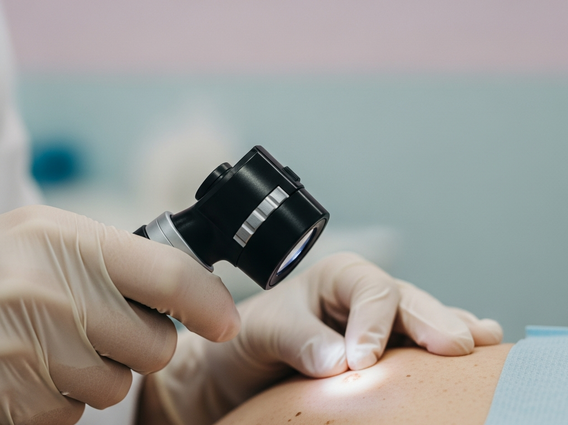
Dermatoscopy, also known as dermoscopy, is a non-invasive diagnostic technique that uses a handheld device to provide a magnified, illuminated view of skin lesions. This allows dermatologists to visualize structures and patterns beneath the skin’s surface that are not visible to the naked eye. Dermatoscopy significantly enhances the ability to differentiate between benign moles and malignant lesions, aiding in the early signs of skin cancer detection and guiding the decision for biopsy. It helps in assessing characteristics like pigment networks, streaks, dots, and regression structures, which are crucial indicators for various types of skin cancer.
Recognizing Early Skin Cancer Symptoms
Being aware of what are the symptoms of skin cancer is crucial for early intervention. Skin cancer often presents as changes in existing moles or the appearance of new, unusual skin growths. Regular self-examination and understanding key warning signs can lead to early signs of skin cancer detection, which is critical for successful treatment.
The ABCDEs of Melanoma
Melanoma, the most dangerous form of skin cancer, can often be identified by changes in moles or new pigmented lesions. The “ABCDEs” rule is a widely recognized guide for identifying potential melanoma:
- A – Asymmetry: One half of the mole does not match the other half.
- B – Border Irregularity: The edges are ragged, notched, blurred, or poorly defined.
- C – Color Variation: The mole has uneven color, with shades of brown, black, tan, white, red, or blue.
- D – Diameter: The mole is larger than 6 millimeters (about the size of a pencil eraser). However, melanomas can sometimes be smaller.
- E – Evolving: The mole is changing in size, shape, color, or elevation, or any new symptom like bleeding, itching, or crusting appears.
Any mole exhibiting one or more of these characteristics warrants immediate medical evaluation.
Signs of Non-Melanoma Skin Cancers
Basal cell carcinoma (BCC) and squamous cell carcinoma (SCC) are the most common types of skin cancer. Their symptoms differ from melanoma:
- Basal Cell Carcinoma (BCC): Often appears as a pearly or waxy bump, a flat, flesh-colored or brown lesion, or a bleeding or scabbing sore that heals and then returns. It commonly develops on sun-exposed areas like the face, neck, and arms.
- Squamous Cell Carcinoma (SCC): May present as a firm, red nodule, or a flat, scaly, crusty lesion. These can also bleed or become tender. SCCs are frequently found on sun-exposed skin, such as the face, ears, lips, and hands.
Any persistent, non-healing sore or unusual growth should be examined by a healthcare professional.
Professional Skin Cancer Screening
Professional skin cancer screening recommendations emphasize regular check-ups, especially for individuals at higher risk. These screenings are performed by dermatologists who are trained to identify suspicious lesions that might otherwise go unnoticed. The goal is to facilitate detecting skin cancer at an early stage, when it is most treatable.
Who Should Get Screened?
While everyone can benefit from professional skin exams, certain individuals have a higher risk of developing skin cancer and should adhere to more frequent screening schedules. Risk factors include:
- A personal or family history of skin cancer, particularly melanoma.
- Numerous moles (more than 50) or atypical moles.
- Fair skin, light hair, and light eye color.
- History of severe sunburns, especially during childhood.
- Extensive sun exposure or use of tanning beds.
- A weakened immune system.
The American Academy of Dermatology (AAD) recommends that adults perform regular skin self-exams and consult a dermatologist if they notice any suspicious lesions. Annual professional screenings are often advised for high-risk individuals, while others may follow their doctor’s specific recommendations based on their personal risk profile.
What to Expect During a Visit
During a professional skin cancer screening, a dermatologist will conduct a thorough full-body skin examination. This typically involves:
- Medical History Review: The dermatologist will ask about your personal and family history of skin cancer, sun exposure habits, and any new or changing moles.
- Visual Inspection: You will be asked to undress to allow for a comprehensive examination of your skin from head to toe, including areas often overlooked, such as the scalp, soles of the feet, between fingers and toes, and genital areas.
- Dermatoscopy: The dermatologist may use a dermatoscope to closely examine any suspicious moles or lesions, as described in the diagnosis methods section.
- Discussion and Recommendations: After the exam, the dermatologist will discuss any findings, recommend further action if necessary (e.g., biopsy), and provide personalized skin cancer screening recommendations and sun protection advice.
The entire process is usually quick, typically lasting 10-20 minutes, and is a vital component of preventive healthcare.
How to Perform a Skin Self-Exam
Regularly performing a skin self-exam is a powerful tool for early signs of skin cancer detection. It empowers individuals to become familiar with their skin and notice any changes promptly. Learning how to perform skin cancer self-exam effectively can significantly contribute to catching potential issues early.
Step-by-Step Guide
Performing a skin self-exam should be done monthly, ideally after a shower or bath. You will need a full-length mirror, a hand mirror, and good lighting. Follow these steps:
- Examine Your Face: Look at your face, nose, lips, mouth, and ears (front and back).
- Check Your Scalp and Neck: Use a comb or hairdryer to part your hair and examine your scalp. Use the hand mirror to check your neck and ears.
- Inspect Your Hands and Arms: Look at your palms, backs of your hands, between your fingers, and under your fingernails. Then, examine your forearms, upper arms, and underarms.
- Review Your Torso: In the full-length mirror, check your chest, abdomen, and back. Use the hand mirror for your back and buttocks.
- Examine Your Legs and Feet: Sit down and examine your thighs, shins, ankles, and tops of your feet. Don’t forget between your toes and the soles of your feet.
- Check Genital Area: Use a hand mirror to examine your genital area.
Pay close attention to any new moles, changes in existing moles, or any suspicious lesions that fit the ABCDE criteria or signs of non-melanoma skin cancers.
Key Areas to Check
While a full-body check is essential, some areas are commonly overlooked during self-exams but are still susceptible to skin cancer. These include:
- Scalp: Often hidden by hair, this area can be exposed to significant sun.
- Behind the Ears and Neck: These areas receive sun exposure and can be hard to see.
- Soles of the Feet and Between Toes: Melanoma can occur in these non-sun-exposed areas, especially in individuals with darker skin tones.
- Under Fingernails and Toenails: Subungual melanoma can appear as a dark streak or bruise that doesn’t heal.
- Genital Area and Buttocks: These areas, though not typically sun-exposed, can still develop skin cancers.
Regularly practicing how to perform skin cancer self-exam in these key areas is vital for comprehensive surveillance.
Why Early Detection Matters
The importance of early skin cancer diagnosis cannot be overstated. When skin cancer is identified and treated at its earliest stages, the prognosis is significantly better, and treatment options are generally less invasive and more successful. Detecting skin cancer at an early stage is the most critical factor in improving survival rates and reducing the burden of the disease.
For melanoma, the most aggressive form of skin cancer, early detection is particularly crucial. According to the American Academy of Dermatology (AAD), the estimated five-year survival rate for patients whose melanoma is detected and treated before it spreads to the lymph nodes is 99%. This rate drops significantly once the cancer has spread to regional lymph nodes or distant organs. Similarly, for basal cell carcinoma and squamous cell carcinoma, early detection usually allows for complete removal with minimal scarring and a very high cure rate.
Early diagnosis often means that the cancer is localized to the skin’s surface, making surgical excision a highly effective treatment. In contrast, advanced skin cancers may require more extensive surgeries, radiation therapy, chemotherapy, or targeted therapies, which can be more complex, have greater side effects, and are less likely to result in a complete cure. Therefore, proactive screening and awareness of symptoms are paramount in the fight against skin cancer.
Frequently Asked Questions
What are the most common types of skin cancer?
The three most common types of skin cancer are basal cell carcinoma (BCC), squamous cell carcinoma (SCC), and melanoma. BCC and SCC are often grouped as non-melanoma skin cancers and are the most prevalent, typically appearing on sun-exposed areas. Melanoma is less common but is the most aggressive and potentially life-threatening type, known for its ability to spread rapidly if not detected early. Each type presents with distinct characteristics, making awareness of their specific signs crucial for timely identification and treatment.
How often should I get a professional skin cancer screening?
The frequency of professional skin cancer screenings depends on individual risk factors. For individuals with an average risk of skin cancer, annual screenings are generally recommended, especially after the age of 40. However, those with higher risk factors, such as a personal or family history of skin cancer, numerous moles, or significant sun exposure, may require more frequent examinations, sometimes every six months. It is always best to consult with a dermatologist to determine a personalized screening schedule based on your specific health profile and risk assessment.
Can skin cancer be prevented?
While not all skin cancers are entirely preventable, the risk can be significantly reduced through consistent sun protection practices. This includes seeking shade, especially during peak sun hours (10 AM to 4 PM), wearing sun-protective clothing, wide-brimmed hats, and UV-blocking sunglasses, and regularly applying broad-spectrum sunscreen with an SPF of 30 or higher. Avoiding tanning beds and artificial UV radiation sources is also crucial. Regular self-exams and professional screenings further aid in prevention by enabling the earliest possible detection and treatment of any suspicious lesions.