
Ct Guided Biopsy
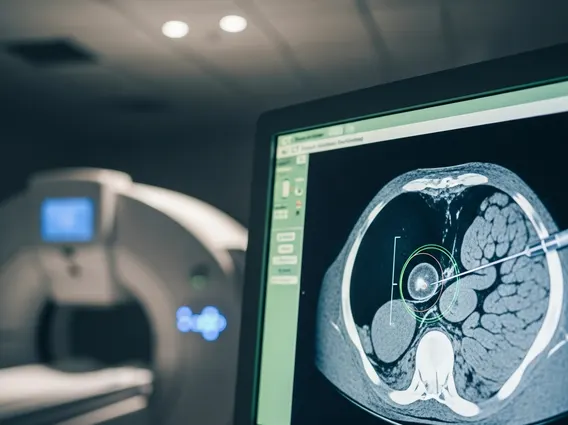
A CT guided biopsy is a precise medical procedure that utilizes computed tomography (CT) imaging to accurately locate and obtain tissue samples from abnormal areas within the body. This minimally invasive technique is crucial for diagnosing various conditions, including cancers and infections, by providing detailed insights into the nature of suspicious lesions.
Key Takeaways
- CT guided biopsy uses advanced imaging to precisely target and sample abnormal tissues.
- The procedure is minimally invasive, often performed on an outpatient basis.
- It helps diagnose conditions like tumors and infections by providing tissue for pathological analysis.
- Benefits include high accuracy and reduced recovery time compared to open surgery.
- Potential risks, though generally low, include bleeding, infection, and discomfort.
What is CT Guided Biopsy (Computed Tomography Guided Biopsy)?
CT guided biopsy, also known as Computed Tomography guided biopsy, refers to a diagnostic medical procedure where a physician uses real-time CT imaging to guide a biopsy needle to a specific area within the body. This technique is particularly valuable for reaching deep-seated lesions or abnormalities that cannot be easily accessed through palpation or other imaging methods like ultrasound. The primary goal of this procedure is to obtain a small tissue sample, or biopsy, from a suspicious mass or lesion for subsequent pathological examination. This examination is critical for determining whether the tissue is benign or malignant, identifying the type of cancer if present, or diagnosing other conditions such as infections or inflammatory diseases.
The precision offered by CT guidance significantly enhances the diagnostic accuracy, allowing for targeted sampling while minimizing damage to surrounding healthy tissues. This method is widely employed across various medical specialties, including oncology, pulmonology, and gastroenterology, to investigate abnormalities detected on prior imaging scans, such as X-rays, MRI, or even initial CT scans. The ability to visualize the needle’s path in three dimensions ensures that the sample is taken from the most representative part of the lesion, leading to more reliable diagnostic results.
How CT Guided Biopsy Works: The Procedure Explained
The process of a CT guided biopsy is a carefully orchestrated sequence designed to ensure accuracy and patient safety. Before the procedure, patients typically undergo a consultation where the risks and benefits are discussed, and any necessary pre-biopsy blood tests are performed. On the day of the procedure, the patient lies on a CT scanner table, and an initial CT scan is performed to pinpoint the exact location of the target lesion.
Once the target is identified, the skin over the biopsy site is cleaned and sterilized, and a local anesthetic is administered to numb the area, ensuring patient comfort throughout the procedure. The radiologist then makes a small incision, often just a few millimeters, through which the biopsy needle will be inserted. Using continuous CT imaging, the radiologist meticulously guides the needle through the soft tissues to the precise location of the abnormality. Multiple images are taken to confirm the needle’s position and trajectory, ensuring it reaches the intended target without damaging vital structures. Once the needle is correctly positioned, several small tissue samples are collected. After the samples are secured, the needle is carefully withdrawn, and pressure is applied to the biopsy site to minimize bleeding. A small bandage is then placed over the incision. The entire process, from initial scan to bandage, typically takes between 30 to 90 minutes, depending on the complexity and location of the lesion.
Key steps in the procedure include:
- Patient Positioning: Lying comfortably on the CT scanner table.
- Initial CT Scan: To precisely locate the target lesion.
- Anesthesia: Local anesthetic administered to numb the biopsy site.
- Needle Insertion: A small biopsy needle is inserted through a tiny skin incision.
- CT Guidance: Real-time CT images guide the needle to the exact target.
- Tissue Sample Collection: Multiple small tissue samples are obtained.
- Needle Withdrawal & Post-Procedure Care: Needle removed, pressure applied, and bandage placed.
Benefits and Risks of CT Guided Biopsy
CT guided biopsy offers several significant advantages over more invasive surgical biopsies, making it a preferred diagnostic tool in many clinical scenarios. However, like any medical procedure, it also carries potential risks that patients should be aware of. The benefits primarily revolve around its minimally invasive nature and high diagnostic accuracy.
| Benefits | Risks |
|---|---|
| High Accuracy: Precise targeting of lesions, even deep-seated ones, ensures representative tissue samples. | Bleeding: Minor bleeding at the biopsy site is common; significant hemorrhage is rare but possible. |
| Minimally Invasive: Avoids large incisions, leading to less pain and scarring compared to open surgery. | Infection: Though sterile techniques are used, there’s a small risk of infection at the biopsy site. |
| Outpatient Procedure: Most biopsies are performed on an outpatient basis, allowing patients to return home the same day. | Pain or Discomfort: Patients may experience some pain or soreness at the biopsy site, managed with medication. |
| Quicker Recovery: Shorter recovery times mean patients can often resume normal activities sooner. | Pneumothorax: A collapsed lung is a specific risk for lung biopsies, often requiring a chest tube. |
| Reduced Cost: Generally less expensive than surgical biopsies due to shorter hospital stays and less extensive anesthesia. | Radiation Exposure: Involves exposure to ionizing radiation from the CT scans, though minimized for diagnostic purposes. |
While the benefits often outweigh the risks, particularly when a definitive diagnosis is crucial, it is important for patients to discuss these factors with their healthcare provider. The decision to proceed with a CT guided biopsy is made after careful consideration of the individual patient’s condition, the location and nature of the lesion, and the potential diagnostic yield versus the associated risks. For instance, the incidence of significant complications from image-guided biopsies is generally low, with major complications occurring in less than 5% of procedures, according to various medical studies.



















