Causes and Risk Factors for Pheochromocytoma
Pheochromocytoma is a rare tumor that originates in the adrenal glands, leading to the overproduction of hormones called catecholamines. Understanding pheochromocytoma causes and the factors that increase one’s susceptibility is crucial for early diagnosis and effective management.
Key Takeaways
- Pheochromocytoma develops when chromaffin cells in the adrenal medulla grow abnormally and release excess catecholamines into the bloodstream.
- According to the National Cancer Institute, roughly 35% of cases occur in someone with an inherited syndrome — MEN2, VHL disease, NF1, or a change in one of the SDH genes — the remaining cases are sporadic.
- No known environmental, dietary, or lifestyle cause has been pinned down for the sporadic form of the tumor.
- Hereditary and sporadic cases tend to be diagnosed at different average ages, which is one reason personal and family history both factor into risk assessment.
- Symptom flare-ups are usually set off by physical exertion, anesthesia, certain procedures, or tyramine-rich foods — a sudden release of existing hormone, not a new cause.
What Causes Pheochromocytoma?
At its core, pheochromocytoma begins with the abnormal growth of chromaffin cells inside the adrenal medulla, the inner portion of the adrenal gland. These cells normally produce and release catecholamines — hormones such as epinephrine and norepinephrine that drive the body’s fight-or-flight response. Once a tumor forms, that release becomes uncontrolled and often excessive, no longer tied to an actual stressor.
What actually disrupts the normal growth of these cells differs from person to person. In some cases the trigger is an inherited gene change; in others, no clear cause is ever identified. Either way, the resulting tumor can affect several body systems at once because of the volume of hormones it produces.
Adrenal Gland Tumor Formation
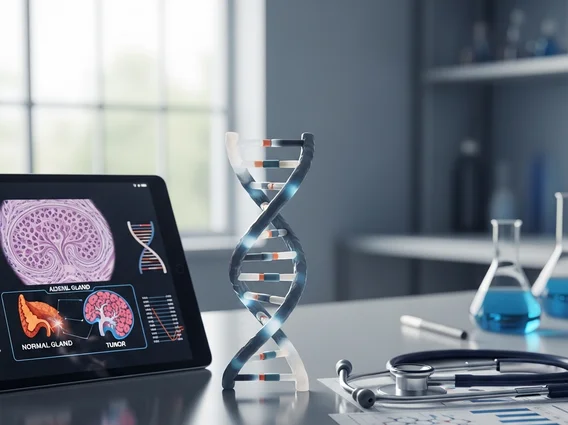
The adrenal glands sit atop each kidney and are essential endocrine organs. Their inner core, the medulla, is made up of chromaffin cells with a neuroendocrine function. A pheochromocytoma forms when these cells multiply abnormally, creating a tumor that behaves like an unregulated hormone factory, releasing catecholamines into the bloodstream continuously or in bursts. This is what produces the episodic or ongoing symptoms associated with the condition.
Sporadic vs. Inherited Cases
Most pheochromocytomas are sporadic, meaning they arise without a known family history or identifiable inherited cause. According to the National Cancer Institute, about 35% of pheochromocytomas and related paragangliomas occur in someone with a hereditary cancer syndrome. Even when a case initially looks sporadic, further evaluation can still turn up a hereditary syndrome — in up to about one in four people diagnosed without an obvious family history. This is a major reason genetic counseling and testing are now recommended for most people diagnosed with the tumor, since identifying an inherited cause changes both ongoing surveillance and family screening.
Genetic Risk Factors for Pheochromocytoma
A meaningful share of pheochromocytoma risk traces back to inherited syndromes and specific gene changes. These hereditary patterns matter most for younger patients and for those with a family history of the tumor or a related condition.
Common Hereditary Syndromes
- MEN2 (Multiple Endocrine Neoplasia type 2): this syndrome traces back to mutations in the RET gene. Both major subtypes, MEN2A and MEN2B, raise pheochromocytoma risk, and the tumor is bilateral — affecting both adrenal glands — in at least half of these cases, though it is rarely malignant.
- Von Hippel-Lindau (VHL) disease: linked to mutations in the VHL tumor-suppressor gene. Like MEN2, it carries a high rate of bilateral pheochromocytoma with low malignant potential, and it also raises the risk of clear cell renal cell carcinoma and other tumors.
- Neurofibromatosis type 1 (NF1): caused by mutations in the NF1 gene. This condition mainly affects the nervous system and skin but also carries a smaller risk of pheochromocytoma.
- Hereditary paraganglioma-pheochromocytoma syndromes: caused by mutations in one of the succinate dehydrogenase (SDH) genes — SDHB, SDHC, SDHD, SDHA, or SDHAF2. These raise the risk of both pheochromocytoma and paraganglioma, a related tumor that forms outside the adrenal glands.
Specific Gene Mutations Involved
Beyond these named syndromes, specific gene changes are directly implicated in pheochromocytoma, whether inherited or arising spontaneously within the tumor itself. The genes most often identified include RET, VHL, NF1, SDHB, SDHC, SDHD, SDHA, TMEM127, and MAX. Mutations in these genes disrupt how chromaffin cells sense oxygen and regulate their own growth, allowing a tumor to form. SDHB changes carry particular significance: they are linked to a higher chance that a pheochromocytoma or paraganglioma will become malignant and spread, and according to the National Cancer Institute, they are found in more than 40% of tumors that do metastasize — one reason genetic testing is emphasized for anyone diagnosed with the condition.
Non-Genetic Factors Increasing Pheochromocytoma Risk
Not every case of pheochromocytoma has a genetic explanation. Non-genetic factors also shape overall risk, though they are far less well defined than the inherited syndromes described above.
Age and Associated Health Conditions
According to the National Cancer Institute, pheochromocytoma can appear at any age, but hereditary and sporadic forms tend to surface at different points in life — on average, around 25 for hereditary cases and 44 for sporadic ones, with most people overall diagnosed sometime between their twenties and fifties. Sporadic cases still lack any identified environmental, dietary, or lifestyle cause — there are no established connections to diet, smoking, or particular toxins. Long-standing, treatment-resistant high blood pressure is better understood as a clinical clue than a cause: pheochromocytoma is found in roughly 0.1% to 1% of people evaluated for hypertension, and in about 5% of adrenal masses discovered incidentally on imaging done for unrelated reasons. In both situations, the high blood pressure is typically a symptom of the tumor rather than something that caused it, but it is often what prompts the testing that leads to diagnosis.
How Pheochromocytoma Develops and Manifests
The way pheochromocytoma develops and manifests is tied directly to how much catecholamine the tumor produces and how that hormone is released.
Tumor Growth and Hormone Release
As a pheochromocytoma grows, its chromaffin cells keep synthesizing and storing catecholamines — mainly epinephrine and norepinephrine, and sometimes dopamine — which are then released into the bloodstream. Some tumors release hormones fairly steadily, producing more constant effects; others release them in bursts, causing distinct episodes. Either pattern overstimulates the sympathetic nervous system, the body’s stress-response network, which is why the resulting effects can touch the heart, blood vessels, and metabolism all at once.
Triggers for Symptom Onset
Because episodes reflect a sudden release of already-elevated hormones rather than a new cause, certain situations can set them off:
- Physical exertion or trauma: Strenuous activity, injury, or direct pressure on the tumor — including during a medical procedure — can prompt a surge.
- Anesthesia and surgery: Induction of anesthesia is a recognized trigger, which is why clinicians are alerted before any procedure in someone with a known or suspected pheochromocytoma.
- Childbirth: Labor and delivery can also set off an episode.
- Tyramine-rich foods: Items such as aged cheese, chocolate, and red wine have been linked to triggering symptoms in some people.
These triggers add to hormone levels that are often already elevated, which is why they can bring on sudden high blood pressure, palpitations, sweating, and severe headache.
Frequently Asked Questions
Are all pheochromocytomas cancerous?
No. The large majority of pheochromocytomas are benign, and only a small proportion become malignant. Because benign and malignant tumors often look alike under a microscope, malignancy usually only becomes clear if the tumor recurs or spreads elsewhere in the body. Certain gene changes, including the SDHB mutations described above, raise the chance of a malignant, spreading tumor, which is one more reason genetic testing is often recommended after diagnosis.
How common is pheochromocytoma?
Pheochromocytoma is rare enough that most doctors will see very few cases, if any, over an entire career. That rarity is part of why diagnosis can be delayed — the symptoms often resemble far more common conditions such as anxiety or ordinary high blood pressure, so pheochromocytoma is usually considered only after those more likely explanations have been ruled out.
Can lifestyle choices influence the risk of pheochromocytoma?
Not in any way that’s currently established. There is no proven link between diet, exercise habits, or typical environmental exposures and the risk of developing pheochromocytoma, and no specific lifestyle change is known to prevent it. Risk is driven mainly by genetics or, in sporadic cases, by a cause that is never identified — a generally healthy lifestyle still supports overall health, just not as a targeted defense against this particular tumor.