Antigen Presenting Cell
Antigen Presenting Cells (APCs) are a crucial component of the immune system, acting as a bridge between the innate and adaptive immune responses. They are specialized cells that capture, process, and display antigens to T lymphocytes, initiating specific immune reactions.
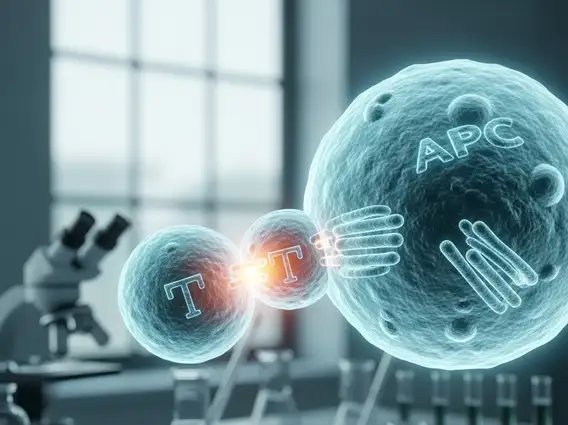
Key Takeaways
- Antigen Presenting Cells (APCs) are vital immune cells that process and present foreign antigens.
- Their primary role is to activate T cells, thereby initiating adaptive immune responses.
- Key functions include antigen uptake, processing, and presentation, along with providing co-stimulatory signals.
- Major types of antigen presenting cells include dendritic cells, macrophages, and B lymphocytes.
- APCs are essential for the body’s ability to recognize and fight off pathogens and abnormal cells.
What is an Antigen Presenting Cell?
An Antigen Presenting Cell (APC) is a diverse group of immune cells that play a pivotal role in the adaptive immune system. Their fundamental function is to internalize foreign particles or cellular debris, break them down into smaller peptide fragments, and then display these fragments—known as antigens—on their cell surface using major histocompatibility complex (MHC) molecules. This process is essential for alerting T cells to the presence of pathogens or abnormal cells, thereby orchestrating a targeted immune response. Understanding what is an antigen presenting cell is key to comprehending how the body mounts specific defenses against threats.
How APCs Function in Immunity
The intricate process of antigen presenting cell function involves several coordinated steps, ensuring that the immune system effectively identifies and responds to threats. This complex mechanism explains how antigen presenting cells work to maintain immune surveillance and activate specific T cell responses.
Antigen Uptake and Processing
APCs continuously survey their environment for potential threats. When they encounter foreign substances, such as bacteria, viruses, or toxins, they internalize these antigens through various mechanisms like phagocytosis (engulfing large particles), endocytosis (taking in smaller molecules), or pinocytosis (cell drinking). Once inside the APC, the antigens are processed, meaning they are broken down into smaller peptide fragments within specialized compartments. These fragments are then loaded onto MHC molecules.
Presenting Antigens to T Cells
After processing, the APCs migrate to lymphoid organs, such as lymph nodes, where T cells reside. Here, the APCs display the antigen-MHC complex on their cell surface. T cells, particularly helper T cells (CD4+) and cytotoxic T cells (CD8+), recognize these specific antigen presentations via their T cell receptors. This recognition is highly specific, ensuring that only T cells capable of responding to that particular antigen are activated.
Co-stimulation and Immune Activation
Antigen presentation alone is often insufficient to fully activate a T cell. APCs also provide crucial co-stimulatory signals through additional surface molecules. These signals act as a “second signal” alongside the antigen presentation, ensuring that T cells are only activated in the presence of genuine threats, preventing autoimmune reactions. The combination of antigen presentation and co-stimulation leads to the full activation, proliferation, and differentiation of T cells, which then orchestrate specific immune responses to eliminate the pathogen.
Major Types of Antigen Presenting Cells
While various cells can present antigens under certain conditions, three primary types of antigen presenting cells are recognized for their specialized and critical roles in initiating and shaping adaptive immunity.
Dendritic Cells: Primary Initiators
Dendritic cells (DCs) are considered the most potent and professional APCs. They are strategically located in tissues that are common sites of pathogen entry, such as the skin (Langerhans cells), mucous membranes, and lymphoid organs. Their primary role is to capture antigens in peripheral tissues, mature, and then migrate to lymph nodes, where they efficiently present antigens to naive T cells, initiating primary immune responses. Their exceptional ability to activate T cells makes them crucial for vaccine development and anti-cancer immunity.
Macrophages: Phagocytes and Presenters
Macrophages are large phagocytic cells found in almost all tissues. While their primary function is to engulf and digest cellular debris, pathogens, and foreign substances, they also serve as APCs. Macrophages are particularly effective at presenting antigens to activated T cells, playing a significant role in sustaining and amplifying ongoing immune responses, especially in chronic infections or inflammation. They are essential for clearing pathogens and presenting antigens from intracellular bacteria and parasites.
B Lymphocytes: Specific Antigen Presenters
B lymphocytes (B cells) are unique among APCs because they can directly bind specific soluble antigens via their B cell receptors (BCRs). Once an antigen binds to the BCR, it is internalized, processed, and presented on MHC class II molecules to helper T cells. This interaction is crucial for the full activation of B cells, leading to their differentiation into plasma cells that produce antibodies. B cells are highly efficient at presenting antigens to T cells that recognize the same antigen, fostering a strong, specific humoral immune response.