Renal Glomerulus
The renal glomerulus is a vital component of the kidney’s filtration system, playing a crucial role in maintaining the body’s fluid and electrolyte balance. Understanding its structure and function is fundamental to comprehending overall kidney health.
Key Takeaways
- The renal glomerulus is a network of capillaries within the kidney’s nephron, essential for filtering blood.
- Its primary function is to initiate urine formation by filtering plasma, removing waste products while retaining essential substances.
- The filtration process relies on a specialized barrier composed of endothelial cells, a glomerular basement membrane, and podocytes.
- Dysfunction or damage to the glomeruli can lead to various kidney diseases, impairing the kidney’s ability to filter blood effectively.
- Monitoring glomerular health is critical for diagnosing and managing kidney conditions.
What is the Renal Glomerulus?
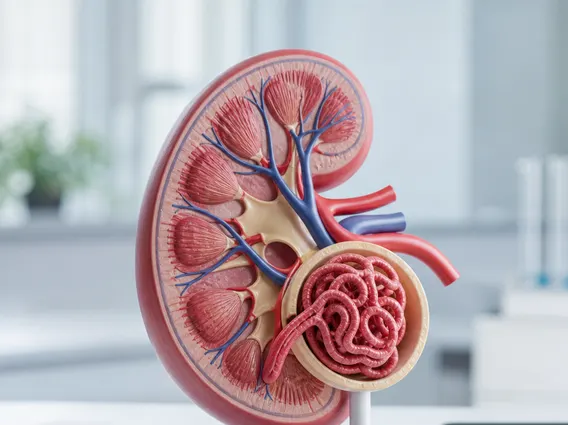
The Renal Glomerulus refers to a tiny, intricate network of capillaries located at the beginning of each nephron in the kidney. This specialized capillary tuft is encased within a cup-shaped structure known as Bowman’s capsule. Together, the glomerulus and Bowman’s capsule form the renal corpuscle, which is the initial filtering unit of the kidney. Its primary role is to filter blood, separating waste products and excess water from essential substances like proteins and blood cells, which are retained in the bloodstream.
The unique **structure of the kidney glomerulus** facilitates this selective filtration. Blood enters the glomerulus through the afferent arteriole and exits via the efferent arteriole. The capillaries within the glomerulus are fenestrated, meaning they have small pores that allow fluid and small solutes to pass through, but restrict larger molecules. This anatomical arrangement, combined with specific cellular components, creates an efficient filtration barrier.
Glomerular Filtration: Process and Function
The **renal glomerulus filtration process explained** involves the movement of fluid and solutes from the blood into Bowman’s capsule, forming a substance called glomerular filtrate. This process is driven by hydrostatic pressure within the glomerular capillaries, which forces water and small solutes across a sophisticated filtration barrier. This barrier is highly selective, ensuring that vital components of the blood, such as proteins and blood cells, remain in circulation.
The filtration barrier consists of three main layers:
- Fenestrated Endothelium: The innermost layer, forming the capillary wall, contains numerous pores that allow plasma components to pass through while blocking blood cells.
- Glomerular Basement Membrane (GBM): A gel-like layer composed of collagen and proteoglycans, which acts as a physical barrier and an electrostatic barrier, repelling negatively charged proteins.
- Podocytes: Specialized epithelial cells that wrap around the capillaries, forming filtration slits between their foot processes. These slits provide the final size-selective filter, preventing the passage of most proteins.
The **renal glomerulus function** is to produce an ultrafiltrate of blood plasma. Approximately 180 liters of fluid are filtered by the glomeruli each day, though most of this is reabsorbed later in the nephron. This initial filtration step is critical for removing metabolic waste products, regulating blood volume, and maintaining electrolyte balance, thereby ensuring the body’s internal environment remains stable.
Role of Glomeruli in Kidney Disease
The **Role of Glomeruli in Kidney Disease** is profound, as damage or dysfunction of these delicate filtering units is a leading cause of various renal pathologies. When glomeruli are compromised, their ability to selectively filter blood is impaired, leading to a range of symptoms and complications. Conditions affecting the glomeruli are broadly termed glomerulopathies or glomerulonephritis, depending on the presence of inflammation.
Damage to the glomeruli can result from various factors, including autoimmune diseases (e.g., lupus nephritis), infections (e.g., post-streptococcal glomerulonephritis), high blood pressure, and diabetes. When the filtration barrier is damaged, proteins (proteinuria) and red blood cells (hematuria) can leak into the urine, which are key indicators of glomerular injury. Over time, persistent glomerular damage can lead to a progressive decline in kidney function, potentially advancing to chronic kidney disease (CKD) and ultimately end-stage renal disease (ESRD), requiring dialysis or kidney transplantation.