Electromagnetic Spectrum
The Electromagnetic Spectrum encompasses the entire range of electromagnetic radiation, which is a form of energy that travels in waves. Understanding this spectrum is crucial across various scientific and medical disciplines, revealing how energy interacts with matter.
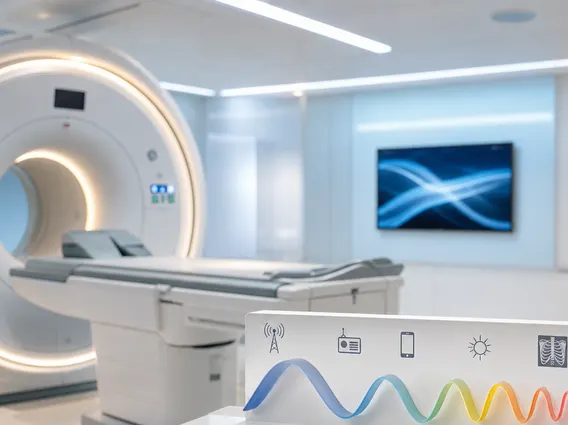
Key Takeaways
- The Electromagnetic Spectrum is the full range of electromagnetic radiation, ordered by wavelength and frequency.
- It includes radio waves, microwaves, infrared, visible light, ultraviolet, X-rays, and gamma rays.
- All electromagnetic waves travel at the speed of light in a vacuum, differing only in their energy levels.
- Each type of wave has distinct characteristics and unique applications in technology, medicine, and daily life.
- From medical imaging to wireless communication, the spectrum plays a vital role in modern society.
What is the Electromagnetic Spectrum?
The Electromagnetic Spectrum refers to the continuum of all electromagnetic waves arranged according to frequency and wavelength. These waves are oscillations of electric and magnetic fields that propagate through space, carrying energy. An electromagnetic spectrum explanation highlights that while all these waves travel at the speed of light in a vacuum, they differ significantly in their wavelength, frequency, and energy. Shorter wavelengths correspond to higher frequencies and greater energy, while longer wavelengths have lower frequencies and less energy.
This spectrum is not just a theoretical concept; it represents the fundamental way energy is transmitted throughout the universe, from the heat we feel from the sun to the signals that power our mobile phones. It forms the basis for many diagnostic and therapeutic tools in medicine, allowing for non-invasive examination and treatment of various conditions.
Types of Electromagnetic Waves
The Electromagnetic Spectrum is broadly categorized into several distinct regions, each with unique properties and applications. The types of electromagnetic waves are classified based on their wavelength and frequency, ranging from very long radio waves to extremely short gamma rays. These categories include:
- Radio Waves: Longest wavelengths, lowest frequencies, used in broadcasting, communication, and MRI scans.
- Microwaves: Shorter than radio waves, used in radar, telecommunications (e.g., cell phones), and microwave ovens.
- Infrared (IR): Associated with heat, used in thermal imaging, remote controls, and fiber optics.
- Visible Light: The only part of the spectrum detectable by the human eye, responsible for colors.
- Ultraviolet (UV): Shorter wavelengths than visible light, can cause sunburn, used in sterilization and some medical therapies.
- X-rays: High-energy waves capable of penetrating soft tissues, widely used in medical imaging for bones and internal structures.
- Gamma Rays: Highest energy, shortest wavelengths, produced by radioactive decay and nuclear reactions, used in radiation therapy for cancer treatment.
Each segment of the spectrum has specific characteristics that dictate its interaction with matter, making it suitable for particular scientific, industrial, and medical applications. For example, the penetrating power of X-rays and gamma rays makes them invaluable in oncology and diagnostic imaging, while the lower energy waves are critical for communication technologies.
Applications of the Electromagnetic Spectrum
The uses of electromagnetic spectrum are vast and integral to modern life, spanning from everyday technologies to advanced medical procedures. In the medical field, the spectrum provides essential tools for diagnosis and treatment. For instance, X-rays are routinely used to visualize bone fractures and detect certain diseases, while magnetic resonance imaging (MRI) utilizes radio waves in a strong magnetic field to produce detailed images of soft tissues.
Beyond diagnostics, specific parts of the spectrum are employed therapeutically. Gamma rays, for example, are a cornerstone of radiation therapy, precisely targeting and destroying cancerous cells while minimizing damage to surrounding healthy tissue. Ultraviolet light is used for sterilization of medical equipment and in some dermatological treatments. In communication, radio waves and microwaves enable wireless internet, mobile phone networks, and broadcasting, connecting people globally. Infrared technology is vital for night vision, remote sensing, and even in some medical devices for monitoring body temperature. The versatility of the Electromagnetic Spectrum underscores its profound impact on health, technology, and our understanding of the physical world.