Dermatoscope
A dermatoscope is a specialized medical device used by dermatologists and other healthcare professionals for the detailed examination of skin lesions. This non-invasive tool significantly enhances the ability to differentiate between benign and malignant skin conditions, particularly in the early detection of skin cancer.
Key Takeaways
- A dermatoscope is a crucial medical instrument for visualizing subsurface skin structures.
- It employs magnification and various illumination techniques to aid in the diagnosis of skin lesions.
- Dermatoscopy is essential for the early detection and differentiation of skin cancers, including melanoma.
- The device operates by reducing surface glare, allowing for clearer visualization of epidermal and dermal features.
- Various types of dermatoscopes exist, ranging from handheld models to advanced video systems, each offering distinct advantages.
What is a Dermatoscope?
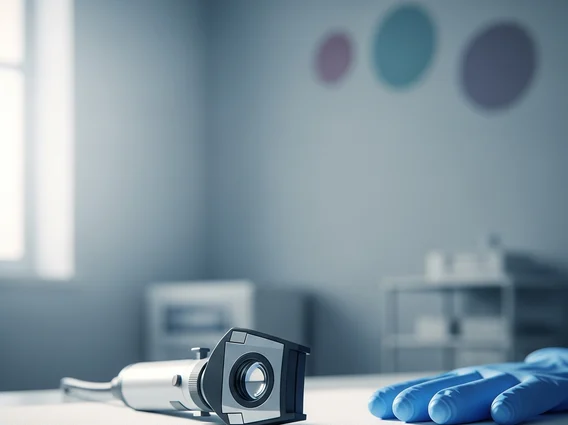
A Dermatoscope is a handheld or digital medical instrument designed to examine skin lesions with enhanced magnification and illumination. It allows clinicians to visualize structures and patterns within the epidermis and superficial dermis that are not visible to the naked eye. By providing a magnified, illuminated, and often polarized view, it helps in the accurate assessment of moles, pigmented lesions, and other skin abnormalities. This technology is fundamental in modern dermatology for improving diagnostic accuracy and guiding treatment decisions.
The primary purpose of a dermatoscope is to aid in the early detection of skin cancers, especially melanoma, basal cell carcinoma, and squamous cell carcinoma. It achieves this by revealing specific dermatoscopic criteria such as pigment networks, dots, globules, streaks, and vascular patterns, which are indicative of either benign or malignant processes. Its non-invasive nature makes it a valuable tool for routine skin examinations and monitoring suspicious lesions over time.
Dermatoscope Function and Operation
Dermatoscopes operate on the principle of magnifying skin lesions while providing specialized illumination to reduce surface reflection. Typically, a dermatoscope features a magnification lens, commonly 10x, combined with a powerful light source, often light-emitting diodes (LEDs). Modern dermatoscopes often incorporate polarized light, which effectively cancels out surface glare caused by the stratum corneum, allowing for a clearer view of deeper structures within the skin. This polarization is crucial for visualizing the intricate pigment patterns and vascular morphology beneath the skin’s surface.
There are generally two modes of operation: contact and non-contact. In contact dermatoscopy, the device is placed directly onto the skin, often with an interface medium like alcohol or gel, to eliminate air-skin interface reflections and enhance visualization. Non-contact dermatoscopy, typically using polarized light, allows examination without direct skin contact, making it quicker and suitable for larger areas or sensitive lesions. The ability to switch between polarized and non-polarized light on some devices offers clinicians flexibility in assessing different lesion characteristics.
Uses, Benefits, and Types of Dermatoscopes
The **dermatoscope uses and benefits** are extensive, primarily revolving around the diagnosis and monitoring of skin conditions. Its most critical application is in the early detection of melanoma, significantly improving diagnostic accuracy compared to examination with the naked eye. According to a meta-analysis published in the British Journal of Dermatology, dermatoscopy can improve the diagnostic accuracy of melanoma by 20-30% compared to clinical examination alone, leading to earlier intervention and improved patient outcomes. Beyond melanoma, it is invaluable for identifying other skin cancers, assessing inflammatory dermatoses, and examining hair and nail disorders.
Key benefits include:
- Enhanced Diagnostic Accuracy: Improves the ability to distinguish between benign and malignant lesions.
- Early Detection: Facilitates the identification of skin cancers at their earliest, most treatable stages.
- Non-Invasive: Provides detailed information without the need for immediate biopsy.
- Reduced Unnecessary Biopsies: Helps clinicians avoid excising benign lesions, reducing patient anxiety and healthcare costs.
- Monitoring: Allows for photographic documentation and tracking of lesion changes over time.
Several **types of dermatoscopes explained** are available, each suited for different clinical needs. Handheld dermatoscopes are portable, battery-operated devices commonly used in clinics and for mobile screenings. Video dermatoscopes, on the other hand, connect to computers or digital cameras, enabling high-resolution imaging, digital storage, and mapping of lesions. These systems are particularly useful for long-term monitoring of multiple moles and for teaching purposes. Hybrid dermatoscopes offer the flexibility of both polarized and non-polarized light, providing a comprehensive view of various skin structures. The choice of dermatoscope often depends on the clinician’s specific practice requirements and the complexity of the cases they manage.