Death Cap
The Death Cap (Amanita phalloides) is one of the most poisonous mushrooms in the world, responsible for the majority of fatal mushroom poisonings globally. Its innocuous appearance often leads to tragic misidentification by foragers.
Key Takeaways
- The Death Cap is an extremely toxic mushroom, frequently mistaken for edible varieties.
- It contains amatoxins, which cause severe liver and kidney damage, often leading to organ failure.
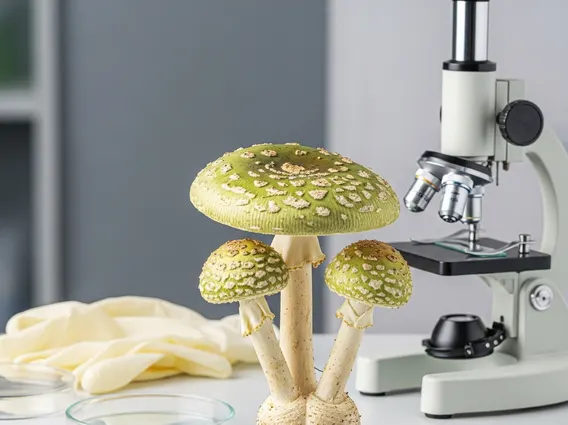
- Identification involves observing its greenish-yellow cap, white gills, volva, and ring, but expertise is crucial.
- Symptoms typically appear 6-24 hours after ingestion, starting with gastrointestinal distress, followed by a deceptive remission, and then severe organ damage.
- Immediate medical attention is critical for anyone suspected of ingesting a Death Cap mushroom.
What is Death Cap and Where Does It Grow?
The Death Cap, scientifically known as Amanita phalloides, is a highly toxic mushroom responsible for an estimated 90% of mushroom-related fatalities worldwide. This dangerous fungus contains potent amatoxins, which are heat-stable and not destroyed by cooking, making any ingestion potentially lethal. These toxins primarily target the liver and kidneys, causing irreversible damage.
Regarding where do death cap mushrooms grow, they are widely distributed across Europe, North America, Asia, and Australia, having been introduced to new regions through imported trees. They typically form a symbiotic relationship with various trees, particularly oaks, but can also be found near pines, chestnuts, and other broadleaf trees. These mushrooms thrive in forests and woodlands, often appearing from late summer through autumn, especially after periods of rain.
Identifying the Death Cap Mushroom
Death Cap mushroom identification is crucial but challenging due to its resemblance to several edible species, such as paddy straw mushrooms, Caesar’s mushrooms, and various green russulas. Foragers must exercise extreme caution and possess expert knowledge before consuming any wild mushroom. Key features that aid in identifying the Death Cap include:
- Cap: Typically 5-15 cm (2-6 inches) in diameter, ranging from greenish-yellow to olive-brown, often with a slight sheen when wet.
- Gills: Pure white, free from the stem, and closely spaced. They do not change color with age.
- Stem: White to pale greenish, usually 5-15 cm (2-6 inches) tall, with a distinctive skirt-like ring (annulus) near the top.
- Volva: A crucial identifying feature, the base of the stem is enclosed in a sac-like cup (volva), which is often buried in the ground. This volva is a remnant of the universal veil that encased the young mushroom.
It is imperative to note that visual identification alone can be insufficient, and any uncertainty should lead to discarding the mushroom. Never consume a wild mushroom unless its identity is 100% confirmed by an experienced mycologist.
Death Cap Mushroom Poisoning Symptoms
Death Cap mushroom poisoning symptoms typically manifest in distinct phases, often making early diagnosis difficult. The most dangerous aspect is the delayed onset of initial symptoms, which can occur anywhere from 6 to 24 hours, or even up to 48 hours, after ingestion. This delay means that by the time symptoms appear, the toxins have already been absorbed and begun damaging internal organs.
The poisoning progresses through several stages:
- Gastrointestinal Phase: This initial phase is characterized by severe abdominal pain, nausea, vomiting, and profuse watery diarrhea. These symptoms can lead to significant dehydration and electrolyte imbalance.
- Remission Phase: After 2-4 days, symptoms may deceptively improve, leading the patient to believe they are recovering. However, during this period, the amatoxins are actively destroying liver and kidney cells.
- Hepatic and Renal Failure Phase: Within 4-6 days post-ingestion, severe liver damage becomes evident, leading to jaundice, dark urine, and a rapid decline in liver function. Kidney failure may also occur. Without aggressive medical intervention, including liver transplantation in severe cases, this phase often progresses to coma and death.
The fatality rate for Death Cap poisoning is significant, with estimates ranging from 10% to 30% even with modern medical care, according to data from various toxicology centers. Immediate medical attention is paramount for anyone suspected of ingesting this mushroom. Treatment often involves activated charcoal, intravenous fluids, supportive care, and specific antidotes like silibinin or penicillin G, aimed at reducing toxin absorption and mitigating liver damage. Early diagnosis and intervention significantly improve the chances of survival.