Cvp
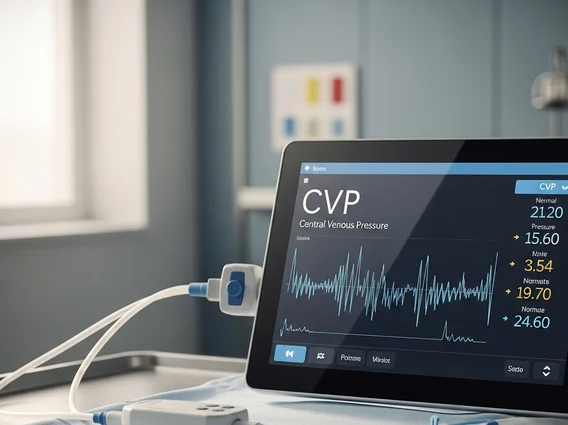
Central Venous Pressure (CVP) is a vital physiological measurement used in clinical settings to assess a patient’s fluid status and cardiac function. It provides crucial insights into the pressure within the large veins leading to the heart.
Key Takeaways
- Central Venous Pressure (CVP) is a measurement of blood pressure in the vena cava, reflecting right atrial pressure.
- It is a critical indicator of a patient’s fluid volume status and the function of the right side of the heart.
- CVP measurements guide clinical decisions, particularly in managing fluid resuscitation and assessing cardiac performance in critically ill patients.
- The medical term CVP is distinct from Cost-Volume-Profit (CVP) analysis used in business and finance.
What is CVP (Central Venous Pressure)?
Central Venous Pressure (CVP) refers to the pressure of blood in the thoracic vena cava, near the right atrium of the heart. This measurement is a direct reflection of the pressure in the right atrium and serves as an important indicator of right ventricular preload – the volume of blood stretching the right ventricle at the end of diastole. Essentially, CVP provides insight into the amount of blood returning to the heart and the heart’s ability to pump it forward.
CVP is typically measured using a central venous catheter, a thin tube inserted into a large vein (such as the internal jugular, subclavian, or femoral vein) and advanced until its tip rests in the superior vena cava, near the right atrium. The pressure is then measured either electronically or via a fluid manometer. Normal CVP values generally range between 2 and 6 mmHg, though these can vary based on patient condition and specific clinical context.
Medical Relevance and Interpretation of CVP
The medical relevance of CVP lies in its utility for assessing a patient’s hemodynamic status, particularly in critical care environments. Clinicians use CVP to evaluate fluid balance, guide fluid resuscitation, and monitor the effectiveness of various treatments. For instance, a low CVP often suggests hypovolemia (insufficient blood volume), indicating a need for fluid administration. Conversely, an elevated CVP can point towards fluid overload, right-sided heart failure, or conditions that impede venous return to the heart, such as tricuspid valve stenosis or pulmonary hypertension.
The process of interpreting CVP values in conjunction with other clinical data is often referred to as CVP analysis explained. This involves not just looking at a single number, but observing trends over time and correlating them with the patient’s overall clinical picture, including urine output, blood pressure, heart rate, and lung sounds. For example, in a patient with sepsis, a low CVP might prompt aggressive fluid resuscitation, while a rising CVP in a patient with heart failure could signal worsening cardiac function or fluid retention, necessitating diuretic therapy.
According to the American Heart Association, accurate hemodynamic monitoring, including CVP, is crucial for managing patients in shock or with severe cardiovascular conditions, helping to optimize fluid management and improve patient outcomes.
Distinguishing Medical CVP from Business CVP
While “CVP” is a critical acronym in medicine, it is important to distinguish it from its unrelated counterpart in the business world. In business and finance, CVP stands for Cost-Volume-Profit (CVP) analysis. This is a management accounting tool used to analyze the relationships between costs, sales volume, and profit. Business CVP analysis helps companies make informed decisions regarding pricing strategies, production levels, and cost structures to achieve desired profit targets.
Despite sharing the same three letters, the two terms are entirely distinct in their meaning, application, and context. Medical CVP pertains to a physiological measurement within the human body, vital for clinical assessment and patient management. Business CVP, on the other hand, is an analytical framework for financial planning and decision-making within an organization. Understanding this distinction is crucial to avoid confusion, especially when encountering the acronym in different professional contexts.
To further clarify the differences, consider the following comparison:
| Aspect | Medical CVP (Central Venous Pressure) | Business CVP (Cost-Volume-Profit Analysis) |
|---|---|---|
| Field | Medicine, Critical Care, Cardiology | Business, Management Accounting, Finance |
| Purpose | Assess fluid status, cardiac function, guide treatment | Analyze financial performance, aid strategic decision-making |
| What it Measures | Blood pressure in the vena cava/right atrium | Relationship between costs, sales volume, and profit |
| Key Indicators | Fluid overload, hypovolemia, right heart failure | Break-even point, margin of safety, target profit |